Radiasi Gelombang Elektromagnetik • Part 2: Spektrum, Kegunaan, dan Bahaya Gelombang Elektromagnetik
Summary
TLDRThis video explores the electromagnetic spectrum, explaining the relationship between frequency and wavelength, and highlighting each type of wave from radio to gamma rays. It details practical applications, such as TV and radio signals, radar detection, microwave heating, infrared sensors, visible light for solar cells and lasers, ultraviolet for disinfection, X-rays for medical imaging, and gamma rays for cancer treatment. The video also addresses the potential dangers of excessive exposure, including skin cancer from UV, cellular damage from X-rays, and radiation hazards from gamma rays. Clear examples and a radar distance calculation illustrate the concepts for high school science students.
Takeaways
- 📡 Electromagnetic waves are classified based on their frequency and wavelength, where frequency and wavelength are inversely proportional.
- 🌊 The relationship between electromagnetic wave speed, wavelength, and frequency is expressed by the formula c = λf, with the speed of light in vacuum equal to 3 × 10^8 m/s.
- 📻 Radio and TV waves have the lowest frequencies and are commonly used for broadcasting, mobile phones, communication systems, and television signals.
- 🛰️ Radar waves are used to detect the position and distance of objects by transmitting and receiving reflected electromagnetic signals.
- 📏 The radar distance formula is s = cΔt/2 because the measured time includes the wave traveling to the object and back.
- 🍲 Microwaves are used to heat food quickly without fire by utilizing electromagnetic wave energy.
- 🌡️ Infrared waves are applied in remote controls, thermal cameras, night vision devices, medical detection, and chemical bond analysis in laboratories.
- 👀 Visible light is the only part of the electromagnetic spectrum detectable by the human eye and includes the colors of the rainbow.
- ☀️ Visible light is widely used in solar cells, photovoltaic devices, and laser technology.
- 🧪 Ultraviolet (UV) rays are used for sterilization, detecting counterfeit money, identifying metal cracks, and supporting polymerization reactions.
- 🏥 X-rays are important in medicine for imaging bones and internal organs and are also used to study crystal structures.
- ☢️ Gamma rays have the highest frequencies and are used for cancer treatment, sterilizing medical equipment, and genetic engineering.
- ⚠️ Excessive exposure to ultraviolet radiation can cause skin cancer, eye damage, and ecological disturbances.
- 🚨 Overuse of X-rays may damage cells, alter genetic structures, and increase cancer risk.
- ☣️ Gamma radiation from nuclear sources can cause severe health effects such as permanent disability or death.
- 🧮 The example radar problem in the lesson calculated the distance to an enemy ship as 900 meters using electromagnetic wave principles.
Q & A
What is the relationship between wavelength and frequency in electromagnetic waves?
-Wavelength (λ) and frequency (f) are inversely proportional in electromagnetic waves. This means that if the wavelength is large, the frequency is small, and if the frequency is large, the wavelength is small, according to the formula c = λ × f, where c is the speed of light.
What frequency range is used by radio and TV waves, and what are their main uses?
-Radio and TV waves have frequencies ranging from 10^8 to 10^9 Hz. Their main uses include broadcasting radio and television signals, telephony, and communication for mobile phones.
How does a radar system determine the distance of an object?
-A radar system emits electromagnetic waves that reflect off an object. By measuring the time interval (Δt) from when the wave is transmitted to when the reflected wave is received, the distance to the object can be calculated using s = (c × Δt)/2, where c is the speed of light.
What is the frequency range and application of microwaves?
-Microwaves have frequencies between 10^10 and 10^11 Hz. They are used in heating food quickly without fire and in communication technologies.
List some uses of infrared waves mentioned in the script.
-Infrared waves are used in remote controls, alarm sensors, night-vision cameras, thermal cameras, and in laboratories to identify chemical bonds in molecules.
Why is visible light called 'visible,' and what are its applications?
-Visible light is called 'visible' because it is the only part of the electromagnetic spectrum that the human eye can detect. Its applications include solar cells, photovoltaic batteries in calculators, and lasers.
What are the benefits of ultraviolet (UV) radiation?
-Ultraviolet radiation is used as an activator in polymerization reactions, for detecting cracks in metals, checking counterfeit money, disinfecting bacteria, and in certain medical therapies.
What are the potential dangers of excessive exposure to X-rays and gamma rays?
-Excessive exposure to X-rays can damage cells, alter genetic structures, and cause cancer. Gamma rays from nuclear sources can lead to death or permanent disabilities.
Explain how the formula s = (c × Δt)/2 works for radar distance measurement.
-In radar distance measurement, Δt is the total time taken for the wave to travel to the object and back. Dividing by 2 gives the one-way distance. Multiplying by the speed of light (c) converts the travel time into a distance.
What is the frequency range of X-rays and gamma rays, and what are their primary uses?
-X-rays have a frequency range of 10^16 to 10^20 Hz and are used in medical imaging and crystal structure analysis. Gamma rays have frequencies from 10^20 to 10^25 Hz and are used for killing cancer cells, sterilizing medical equipment, and in genetic engineering.
What is the significance of the inverse relationship between wavelength and frequency in practical applications?
-The inverse relationship helps in selecting the appropriate type of electromagnetic wave for a specific application. For example, long-wavelength, low-frequency waves like radio are suitable for communication over long distances, while short-wavelength, high-frequency waves like X-rays are suitable for medical imaging and sterilization.
Outlines

Этот раздел доступен только подписчикам платных тарифов. Пожалуйста, перейдите на платный тариф для доступа.
Перейти на платный тарифMindmap

Этот раздел доступен только подписчикам платных тарифов. Пожалуйста, перейдите на платный тариф для доступа.
Перейти на платный тарифKeywords

Этот раздел доступен только подписчикам платных тарифов. Пожалуйста, перейдите на платный тариф для доступа.
Перейти на платный тарифHighlights

Этот раздел доступен только подписчикам платных тарифов. Пожалуйста, перейдите на платный тариф для доступа.
Перейти на платный тарифTranscripts

Этот раздел доступен только подписчикам платных тарифов. Пожалуйста, перейдите на платный тариф для доступа.
Перейти на платный тарифПосмотреть больше похожих видео

O QUE É RADIAÇÃO ELETROMAGNÉTICA

WAVELENGTHS AND FREQUENCIES OF EM WAVES TAGALOG | GRADE 10 SCIENCE QUARTER 2 MODULE 1 LESSON 3
SCIENCE 10 (Quarter 2-Module 1): DIFFERENT FORMS OF ELECTROMAGNETIC WAVES

Espectro Eletromagnético | ciências 9º ano

Ondas Electromagnéticas
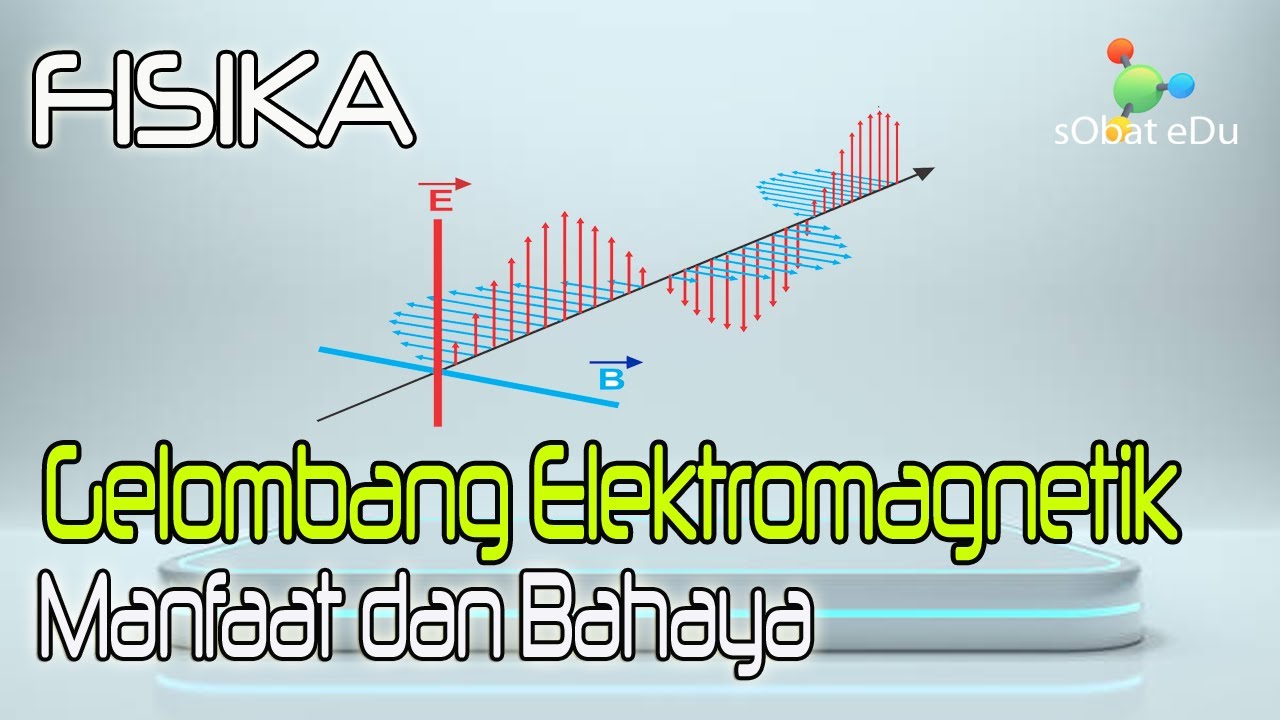
Electromagnetic waves: definition, types, benefits and harms ||Physics
5.0 / 5 (0 votes)

