Green Chemistry atau Kimia Hijau dalam Pembangunan Berkelanjutan 2030
Summary
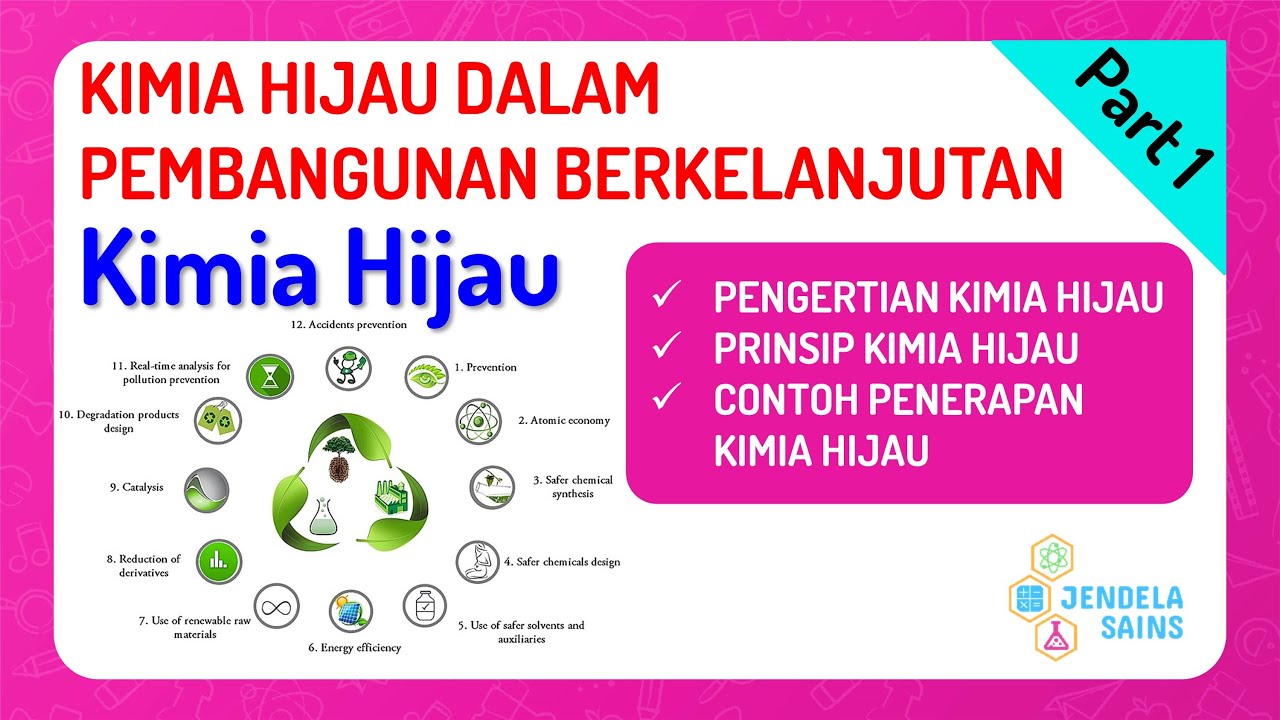
TLDRThis educational video introduces Green Chemistry, emphasizing sustainable chemical practices for 2030. Developed by Paul Anastas and John Warner, Green Chemistry focuses on preventing pollution at its source rather than managing waste afterward. The video explains the 12 guiding principles, including waste prevention, safer synthesis, energy efficiency, use of renewable materials, and safer solvents. It also highlights practical applications, such as eco-friendly dry cleaning, biodegradable plastics from cassava, organic farming, and biofuel B30. Through these examples, viewers learn how both scientists and the general public can adopt environmentally responsible practices to protect human health and the planet.
Takeaways
- 🌱 Green Chemistry, also called sustainable chemistry, focuses on designing chemical products and processes that prevent pollution at the source rather than cleaning it up after it occurs.
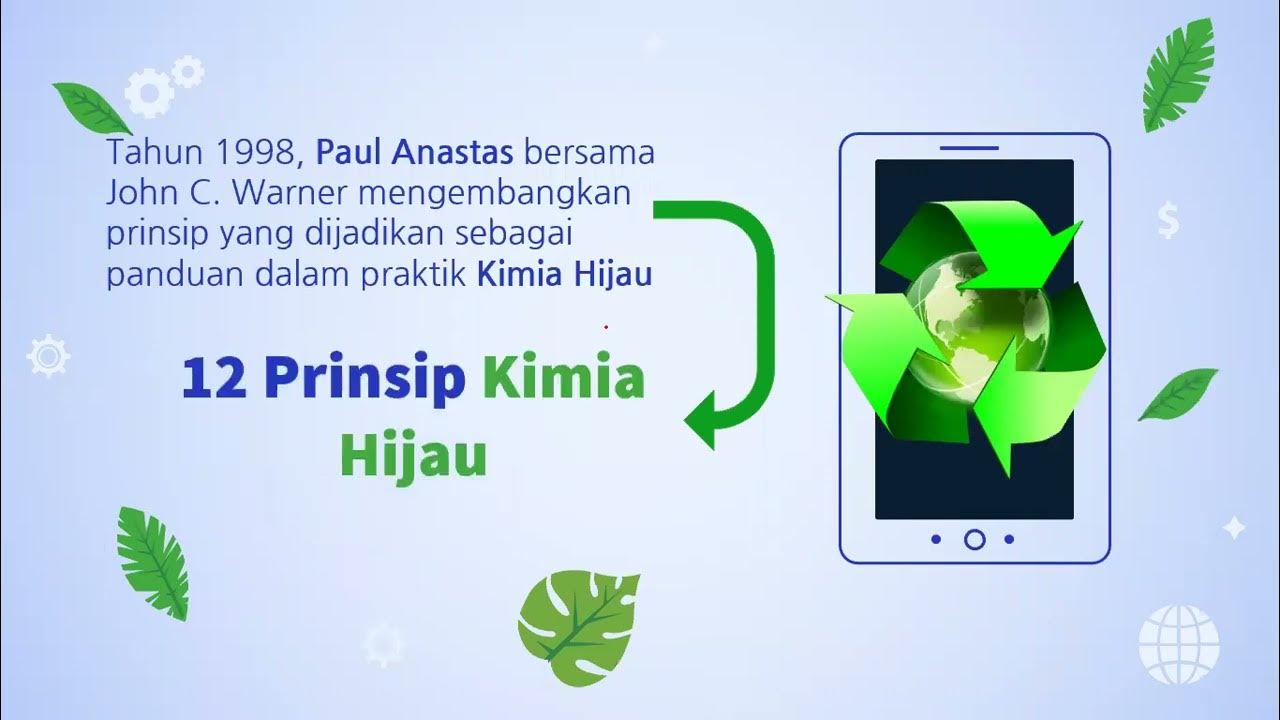
- 👨🔬 The concept of Green Chemistry was developed by Paul Anastas and John Warner in 1998, providing a framework to manage chemicals in industry, research, and daily life sustainably.
- ♻️ Green Chemistry emphasizes reducing waste by designing processes that minimize the generation of harmful by-products and maximize the use of atoms from reactants.
- ⚠️ Safety is a core principle: chemical syntheses should minimize hazards by carefully designing reactions and selecting safer reagents and processes.
- 💡 Energy efficiency is crucial in Green Chemistry, encouraging processes that require minimal heating, cooling, or pressure and avoiding unnecessary derivatization steps.
- 🛡️ Real-time monitoring and safe procedures help prevent chemical accidents and environmental pollution, ensuring processes remain controlled and non-hazardous.
- 🌿 Green Chemistry promotes the use of renewable raw materials, such as plant-based substances, instead of non-renewable resources like fossil fuels.
- 🧪 Catalysts are preferred over stoichiometric reagents to increase reaction efficiency and selectivity while reducing energy use and waste production.
- -
- 🧴 Products should be designed to degrade into non-toxic substances after use, reducing their long-term environmental impact.
- -
- 🌾 Practical applications of Green Chemistry include dry cleaning with CO2 and surfactants, biodegradable plastics from cassava starch, organic farming, and biodiesel B30, demonstrating its relevance in daily life.
Q & A
What is Green Chemistry and how is it different from Environmental Chemistry?
-Green Chemistry, or Sustainable Chemistry, focuses on designing chemical products and processes that prevent pollution at the source. Unlike Environmental Chemistry, which often deals with managing or cleaning up pollution, Green Chemistry emphasizes proactive prevention of waste and harmful substances.
Who developed the principles of Green Chemistry and when?
-Paul Anastas and John Warner developed the 12 principles of Green Chemistry in 1998 as a guide for managing chemicals safely and sustainably in industry, research, education, and everyday life.
What is the first principle of Green Chemistry?
-The first principle is Waste Prevention: chemical processes should prioritize preventing waste rather than dealing with it after it is created.
What is the concept of 'atom economy' in Green Chemistry?
-Atom economy, part of the second principle, refers to maximizing the number of atoms from the reactants that end up in the final product, reducing unnecessary waste in chemical reactions.
Why is the use of catalysis important in Green Chemistry?
-Catalysis accelerates chemical reactions without being consumed, increasing efficiency and selectivity, reducing energy use, and minimizing by-products, as emphasized in the tenth principle.
Can you give an example of Green Chemistry applied in dry cleaning?
-Modern dry cleaning can use liquid carbon dioxide and surfactants instead of perkloroethylene. This method is safer, non-carcinogenic, and produces biodegradable waste, applying principles of safe chemical design and safer solvents.
How does producing biodegradable plastics from cassava contribute to Green Chemistry?
-Plastics made from cassava use renewable, plant-based resources and are easily degradable, aligning with principles of renewable feedstocks, waste prevention, safer chemical design, and product degradability.
What role does organic farming play in Green Chemistry?
-Organic farming avoids chemical fertilizers and pesticides, using natural alternatives like compost or plant-based insecticides. This approach prevents harmful waste, uses renewable resources, and reduces pollution.
How does B30 biodiesel reflect Green Chemistry principles?
-B30 biodiesel uses renewable plant-based feedstocks instead of fossil fuels, contributing to sustainability. It also produces biodegradable fuel waste, reflecting the principles of renewable feedstocks and product degradability.
Why is energy efficiency emphasized in Green Chemistry processes?
-Energy-efficient processes reduce environmental impact and operational costs. Principles include avoiding unnecessary heating, cooling, or high-pressure reactions, as excessive energy use can generate additional waste or hazards.
How are chemical products designed to minimize hazards according to Green Chemistry?
-Chemicals are designed to be inherently safer by selecting non-toxic or less hazardous substances and reaction pathways, reducing risks to human health and the environment during synthesis, handling, and disposal.
What is the importance of monitoring chemical reactions in real-time?
-Real-time monitoring helps prevent the formation or release of toxic chemicals and pollutants, allowing immediate corrective action, which aligns with the principle of pollution prevention at the source.
Outlines

Этот раздел доступен только подписчикам платных тарифов. Пожалуйста, перейдите на платный тариф для доступа.
Перейти на платный тарифMindmap

Этот раздел доступен только подписчикам платных тарифов. Пожалуйста, перейдите на платный тариф для доступа.
Перейти на платный тарифKeywords

Этот раздел доступен только подписчикам платных тарифов. Пожалуйста, перейдите на платный тариф для доступа.
Перейти на платный тарифHighlights

Этот раздел доступен только подписчикам платных тарифов. Пожалуйста, перейдите на платный тариф для доступа.
Перейти на платный тарифTranscripts

Этот раздел доступен только подписчикам платных тарифов. Пожалуйста, перейдите на платный тариф для доступа.
Перейти на платный тарифПосмотреть больше похожих видео

KIMIA HIJAU . Kimia SMA Kelas X kurikulum merdeka

🔴KIMIA HIJAU (GREEN CHEMISTRY) DALAM PEMBANGUNAN BERKELANJUTAN 2030 BAGIAN-1 KIMIA KLS X (FASE-E)
KIMIA HIJAU : 12 Prinsip Kimia Hijau dan Penerapannya

Apa Itu Kimia Hijau
Kimia Hijau dalam Pembangunan Berkelanjutan • Part 1: Kimia Hijau

PRINSIP KIMIA HIJAU DAN APLIKASI NYATA DALAM KEHIDUPAN SEHARI-HARI
5.0 / 5 (0 votes)

