Análise Instrumental - Aula 03 - Introdução aos métodos espectrométricos
Summary
TLDRThis lesson introduces spectrometric methods and spectroscopy, focusing on how electromagnetic radiation interacts with matter. It explains the dual nature of light, combining wave and particle properties, and describes key parameters like amplitude, frequency, and wavelength. The video covers the electromagnetic spectrum, highlighting how different radiation energies induce electronic, vibrational, or rotational transitions in atoms and molecules. It also explains absorption and emission processes, showing how energy changes allow quantitative and qualitative analysis of samples. Examples of atomic and molecular emission and absorption spectra illustrate how spectrometric techniques reveal important chemical information about substances.
Takeaways
- 🌟 Spectroscopy is the study of the interaction between radiation and matter, and spectrometric methods measure the intensity of radiation absorbed or emitted by molecules or atoms in a sample.
- 💡 Electromagnetic radiation is a form of energy transmitted through space, and light is considered a type of electromagnetic radiation.
- 🔬 Newton proposed a particle model of light, Maxwell introduced the wave theory, and Einstein unified these ideas with the concept of photons, showing light has dual wave-particle characteristics.
- 📏 Wave characteristics of electromagnetic radiation include amplitude, period, frequency, and wavelength, which are inversely related between frequency and wavelength.
- ⚛️ Particle characteristics involve photons, the smallest units of electromagnetic radiation, each with quantized energy proportional to its frequency.
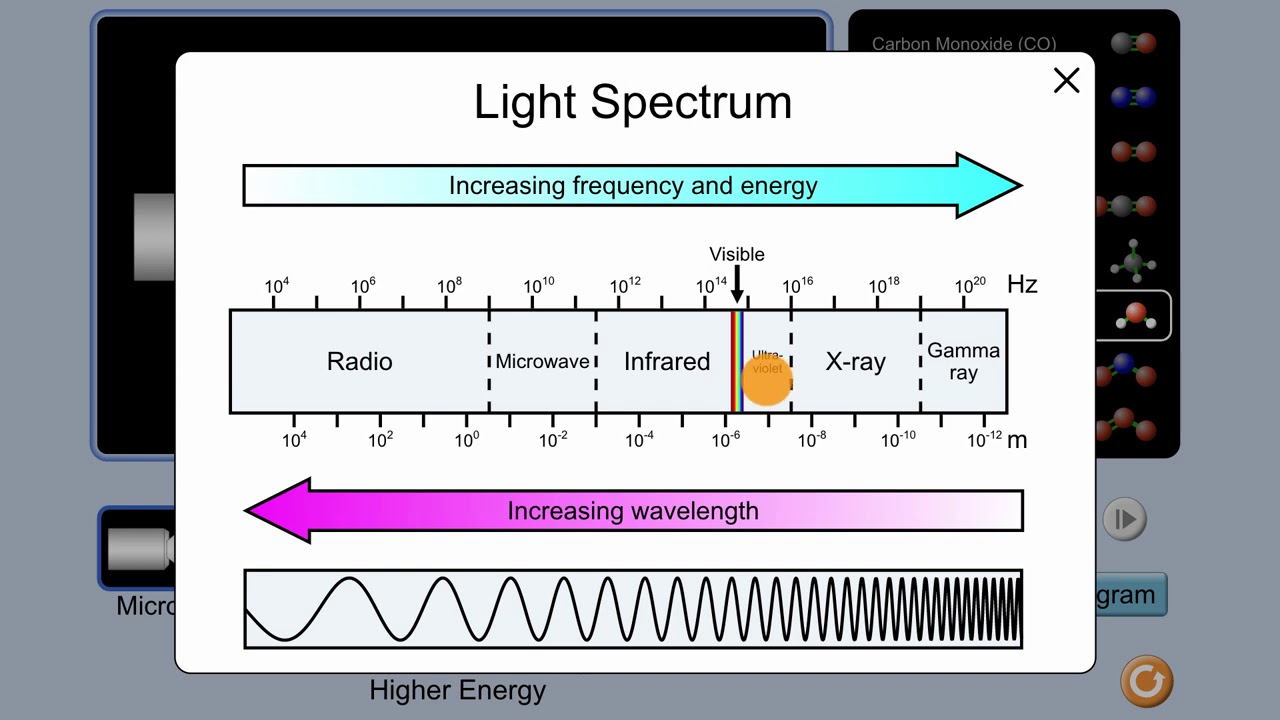
- 📊 The electromagnetic spectrum spans a wide range of energies, with high-energy radiation (e.g., gamma rays, X-rays) having short wavelengths and low-energy radiation (e.g., microwaves, radio waves) having long wavelengths.
- 🔹 Different types of radiation cause different molecular or atomic interactions: UV and visible light induce electronic transitions, infrared causes vibrational changes, and microwaves induce rotational movements.
- 🧪 Atoms and molecules have discrete energy levels; absorption of radiation moves electrons to excited states, while returning to the ground state results in emission of radiation.
- 📈 Emission spectra differ between atomic and molecular sources: atomic spectra show sharp peaks, whereas molecular spectra show broader bands.
- 📉 Absorption spectra show how a sample absorbs radiation at specific wavelengths; unabsorbed radiation can be measured to quantify the sample's properties, as seen in examples like chlorophyll absorption peaks.
Q & A
What is spectroscopy and what does it study?
-Spectroscopy is the science that studies the interactions of radiation with matter. It focuses on how molecules or atoms absorb or emit radiation and how this can be measured to gain information about a sample.
What are spectrometric methods based on?
-Spectrometric methods are based on measuring the intensity of radiation either produced or absorbed by molecules or atoms of interest in a sample using specific instruments.
How did Newton, Maxwell, and Einstein contribute to the understanding of light?
-Newton proposed a corpuscular model of light as particles. Maxwell described light as electromagnetic waves. Einstein introduced the concept of photons, combining both particle and wave characteristics, explaining absorption and emission phenomena.
What are the main parameters that describe a wave in electromagnetic radiation?
-The main parameters are amplitude (intensity of the electromagnetic field), period (time for two successive maxima or minima), frequency (number of oscillations per second), and wavelength (distance between successive maxima or minima).
How are frequency and wavelength related?
-Frequency and wavelength are inversely proportional: higher frequency corresponds to shorter wavelength, and lower frequency corresponds to longer wavelength.
What does it mean that light has a particle nature, and what is a photon?
-The particle nature of light refers to the quantized transfer of energy during emission or absorption, which cannot be explained by waves alone. A photon is the smallest discrete unit of electromagnetic radiation, with a defined energy related to its frequency.
What types of molecular or atomic transitions are caused by different regions of the electromagnetic spectrum?
-High-energy radiation like X-rays or ultraviolet causes electronic transitions. Infrared radiation induces vibrational and rotational motions. Microwaves mainly cause rotational transitions in molecules.
How does an atom or molecule emit radiation after absorbing energy?
-When an atom or molecule absorbs energy, its electrons move to a higher-energy excited state. When they return to the ground state, they release the excess energy as electromagnetic radiation (photons).
What is the difference between atomic and molecular emission spectra?
-Atomic emission spectra show sharp, narrow lines, while molecular emission spectra display broader bands due to more complex vibrational and rotational transitions.
How does absorption spectroscopy work and what information does it provide?
-In absorption spectroscopy, radiation passes through a sample, and certain wavelengths are absorbed. Measuring the absorbance at different wavelengths provides information about the presence and concentration of specific molecules in the sample.
Why do different types of radiation affect molecules and atoms differently?
-Because each type of radiation has a specific energy related to its frequency. Only energy matching the energy gap of molecular or atomic transitions can induce specific electronic, vibrational, or rotational changes.
What is the electromagnetic spectrum and how does energy relate to wavelength?
-The electromagnetic spectrum includes all types of electromagnetic radiation, from gamma rays to radio waves. Energy is inversely proportional to wavelength: shorter wavelengths have higher energy, and longer wavelengths have lower energy.
Outlines

Этот раздел доступен только подписчикам платных тарифов. Пожалуйста, перейдите на платный тариф для доступа.
Перейти на платный тарифMindmap

Этот раздел доступен только подписчикам платных тарифов. Пожалуйста, перейдите на платный тариф для доступа.
Перейти на платный тарифKeywords

Этот раздел доступен только подписчикам платных тарифов. Пожалуйста, перейдите на платный тариф для доступа.
Перейти на платный тарифHighlights

Этот раздел доступен только подписчикам платных тарифов. Пожалуйста, перейдите на платный тариф для доступа.
Перейти на платный тарифTranscripts

Этот раздел доступен только подписчикам платных тарифов. Пожалуйста, перейдите на платный тариф для доступа.
Перейти на платный тарифПосмотреть больше похожих видео
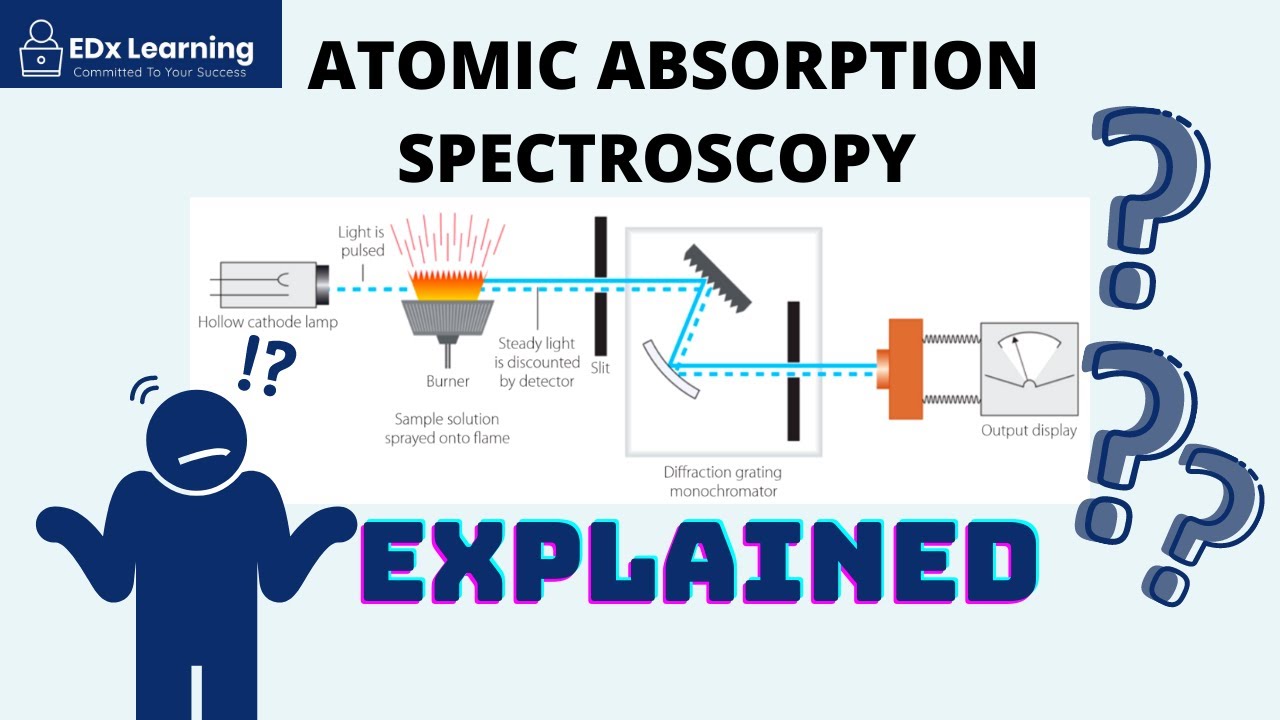
Atomic Absorption Spectroscopy (AAS) Explained - PART 1
Introduction to spectroscopy | Intermolecular forces and properties | AP Chemistry | Khan Academy
UAD - Kuliah Online 1475530 Karakterisasi Material Lanjut (Lecture 2a - part 1)
Chemistry Class 12 | Chapter 12 | Topic 3b | UV-VIS Spectroscopy | in urdu | tutoria.pk

Spectroscopy Basics | Engineering Chemistry
Lesson 3: Uses and Effects of EM Waves
5.0 / 5 (0 votes)

