AUTO PAHAM!! SOAL-SOAL SUDUT PUSAT & SUDUT KELILING - LINGKARAN PART 2
Summary
TLDRIn this educational video, Kak Devi guides students through solving problems related to central and inscribed angles in circles. She reviews essential rules: a central angle is twice the inscribed angle, and inscribed angles facing the same arc can be calculated from the central angle. She demonstrates step-by-step solutions for various scenarios, including angles facing diameters, isosceles triangles, and multiple inscribed angles summing to a total. Emphasizing careful analysis and methodical calculations, the video provides clear examples to help students understand and apply these geometric principles effectively, ensuring they can confidently tackle related circle problems.
Takeaways
- 😀 Central angles are double the size of inscribed angles.
- 😀 Inscribed angles are half the size of central angles.
- 😀 An inscribed angle subtended by a diameter is always 90°.
- 😀 The central angle and the inscribed angle must subtend the same arc for the angle relationships to apply.
- 😀 To find an inscribed angle, divide the central angle by 2.
- 😀 To find a central angle, multiply the inscribed angle by 2.
- 😀 If two angles share the same arc, their central and inscribed angles will follow the angle relationships.
- 😀 If two angles are supplementary (add to 180°), use this fact to solve problems with straight lines.
- 😀 The sum of the interior angles of a triangle is always 180°.
- 😀 Symmetry in isosceles triangles can be used to find angles when two sides are equal.
- 😀 Always check if the central and inscribed angles share the same arc before applying formulas.
Q & A
What is the relationship between central angles and inscribed angles in a circle?
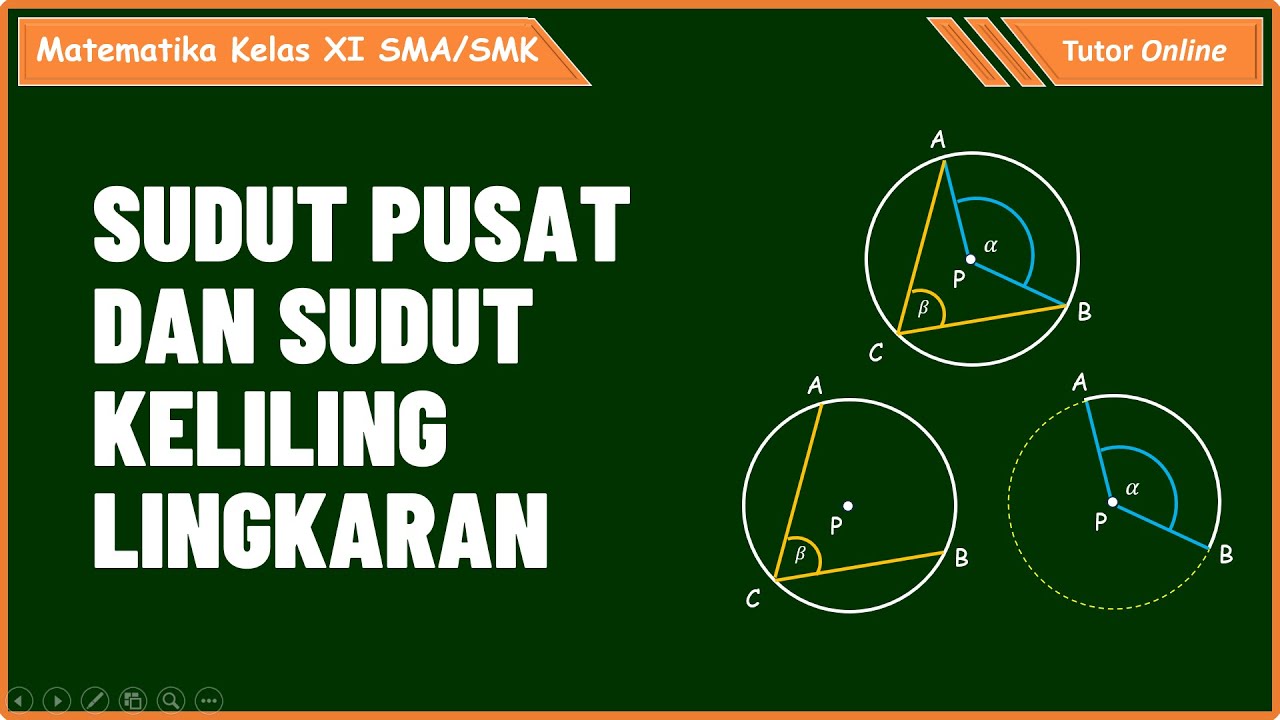
-The central angle is twice the size of the inscribed angle that subtends the same arc. Conversely, the inscribed angle is half the size of the central angle that subtends the same arc.
What is the size of an inscribed angle that subtends a diameter of a circle?
-An inscribed angle that subtends a diameter of the circle is always 90°.
What is the general rule for calculating an inscribed angle based on a central angle?
-To calculate an inscribed angle, divide the central angle that subtends the same arc by 2. The inscribed angle is always half of the central angle.
How do you determine the central angle from an inscribed angle?
-To find the central angle, simply multiply the inscribed angle by 2, since the central angle is twice the size of the inscribed angle.
In a problem where the central angle is 50°, what is the corresponding inscribed angle?
-If the central angle is 50°, the inscribed angle would be 25° because the inscribed angle is half of the central angle.
What is the first step in solving a problem involving central and inscribed angles?
-The first step is to check if the central angle and inscribed angle are subtending the same arc. If they do, the relationship between them can be applied.
What should you do if the central angle and inscribed angle do not subtend the same arc?
-If the central angle and inscribed angle do not subtend the same arc, you will need to calculate the central angle that corresponds to the same arc as the inscribed angle before proceeding with the usual calculations.
How do you calculate the central angle that corresponds to a given inscribed angle in a non-equal arc case?
-First, determine the supplementary angle (if any) and adjust the angle of the arc accordingly. For example, if the central angle is on a straight line, subtract it from 180° to find the missing central angle.
In a situation where the central angle is 106°, what would be the corresponding central angle for another arc that is supplementary?
-If the central angle is 106°, and it is supplementary to another central angle (on a straight line), subtract 106° from 180° to get the other central angle, which would be 74°.
What is the total of all angles in a triangle, and how does this relate to solving angle problems in circles?
-The total of all angles in a triangle is always 180°. This property is used when solving for unknown angles in a circle, particularly when dealing with inscribed angles or central angles that form parts of triangles within the circle.
Outlines

Этот раздел доступен только подписчикам платных тарифов. Пожалуйста, перейдите на платный тариф для доступа.
Перейти на платный тарифMindmap

Этот раздел доступен только подписчикам платных тарифов. Пожалуйста, перейдите на платный тариф для доступа.
Перейти на платный тарифKeywords

Этот раздел доступен только подписчикам платных тарифов. Пожалуйста, перейдите на платный тариф для доступа.
Перейти на платный тарифHighlights

Этот раздел доступен только подписчикам платных тарифов. Пожалуйста, перейдите на платный тариф для доступа.
Перейти на платный тарифTranscripts

Этот раздел доступен только подписчикам платных тарифов. Пожалуйста, перейдите на платный тариф для доступа.
Перейти на платный тарифПосмотреть больше похожих видео
Lingkaran [Part 2] - Sudut Pusat dan Sudut Keliling
Lingkaran kelas 11 / Video Teorema Lingkaran
Materi Lingkaran dan Busur Lingkaran Bab 2 Matematika Umum Kelas 11 SMA Kurikulum Merdeka

Lingkaran dan Busur Lingkaran | #PekanBuktiKarya
MATERI UTBK SNBT PENALARAN MATEMATIKA - LINGKARAN
Sudut Pusat dan Sudut Keliling Lingkaran | Latihan 2.1 Halaman 57
5.0 / 5 (0 votes)

