Inside a Wind Turbine: How It Really Works
Summary
TLDRThis video offers an in-depth look at the fascinating world of wind turbines, exploring how these towering machines convert the invisible force of wind into clean electricity. From the aerodynamic design of their massive three blades to the complex mechanics inside the nacelle, including the gearbox, rotor, and generator, the video explains how engineering and physics work together to maintain consistent power output. Viewers learn about the yaw system, blade twist, and doubly fed induction generator that ensure efficiency and grid stability. The journey concludes with the electricity traveling down the tower to a transformer, demonstrating how a simple breeze becomes a powerful source of renewable energy.
Takeaways
- 🌬️ Wind turbines convert the kinetic energy of wind into electricity, powering thousands of homes.
- 🏗️ Modern utility-scale turbines almost always have three blades, balancing efficiency, stability, and cost.
- 📏 Turbine blades are enormous, typically 80–120 meters long, with some exceeding 140 meters.
- 🛠️ Blades are made from composite materials like fiberglass or carbon fiber, combining strength and lightness.
- 💨 Blades are aerodynamically shaped and twisted to maximize lift and minimize drag along their length.
- 🧭 The yaw system ensures turbines face the wind, using anemometers, wind vanes, and motors to adjust direction.
- ⚙️ The hub connects the blades to the main shaft and contains mechanisms to rotate blades along their axis.
- 🔧 Inside the nacelle, the gearbox increases rotation speed from 15 rpm to over 1,500 rpm to generate electricity.
- ⚡ The doubly fed induction generator and controller maintain a consistent 60 Hz electricity output despite variable wind speeds.
- 🔌 Power travels down the tower through thick cables to a transformer, which boosts voltage for efficient transmission to the grid.
- 🌍 Wind turbines are essential for clean energy, transforming a simple breeze into powerful, reliable electricity.
Q & A
Why do modern utility-scale wind turbines typically have three blades?
-Three blades strike the optimal balance between aerodynamic efficiency, structural stability, and cost. Fewer blades rotate faster but create more noise, vibration, and stress on the tower, while more than three blades increase weight and cost without significant benefits.
What materials are commonly used to construct wind turbine blades, and why?
-Blades are usually made from composite materials like fiberglass or carbon fiber reinforced epoxy. These materials are lightweight yet strong, allowing the blades to withstand millions of rotations and extreme weather conditions.
How does the twisting of turbine blades improve efficiency?
-Blade twisting compensates for the difference in speed along the blade's length. Near the hub, blades move slower and experience less apparent wind, while near the tip, they move faster. Twisting aligns the blade with the relative wind, minimizing drag and vibration while maximizing lift.
What is the purpose of the yaw system in a wind turbine?
-The yaw system steers the turbine to face the wind. Sensors detect wind direction and trigger motors that rotate the turbine, ensuring the blades capture the maximum energy from the wind.
Describe the function of the gearbox in a wind turbine.
-The gearbox increases the slow rotational speed of the main shaft (around 15 RPM) to a much higher speed (over 1,500 RPM) needed to drive the generator and produce electricity efficiently.
What is a doubly-fed induction generator and why is it used in wind turbines?
-A doubly-fed induction generator allows the turbine to produce electricity at a stable frequency despite fluctuating wind speeds. It injects electrical current into the rotor to adjust the magnetic field, ensuring a consistent output for the electrical grid.
How do wind turbines maintain a steady 60 Hz electrical frequency?
-The controller adjusts the rotor's magnetic field by injecting or subtracting frequency as needed. For example, if the rotor speed drops, additional frequency is added; if it is too fast, excess frequency is subtracted, keeping the output at 60 Hz.
What role does the nacelle play in a wind turbine?
-The nacelle houses critical components like the main shaft, gearbox, generator, brakes, and other machinery. It protects these expensive and sensitive parts from weather and allows the turbine to function efficiently.
Why is a transformer used at the base of a wind turbine tower?
-The transformer steps up the voltage of electricity from around 690 volts to 33,000 volts or higher, allowing it to travel long distances without losing energy as heat, making transmission to the power grid efficient.
How do wind turbines convert wind energy into mechanical and then electrical energy?
-The wind spins the blades, which rotate the hub and main shaft. The gearbox increases the rotational speed, driving the generator. Inside the generator, mechanical motion induces electrical current in the rotor and stator coils, producing electricity that is then transmitted through cables and transformers.
Why are airfoil sections of turbine blades thicker near the root and thinner near the tip?
-The root needs extra thickness for structural strength to support the blade and handle stress, while the tip is thinner to reduce weight, improve speed, and generate lift more efficiently.
How do wind sensors like anemometers and wind vanes assist in turbine operation?
-Anemometers measure wind speed, and wind vanes detect wind direction. This information is sent to the controller, which adjusts the yaw system to align the turbine with the wind, maximizing energy capture.
Outlines

Этот раздел доступен только подписчикам платных тарифов. Пожалуйста, перейдите на платный тариф для доступа.
Перейти на платный тарифMindmap

Этот раздел доступен только подписчикам платных тарифов. Пожалуйста, перейдите на платный тариф для доступа.
Перейти на платный тарифKeywords

Этот раздел доступен только подписчикам платных тарифов. Пожалуйста, перейдите на платный тариф для доступа.
Перейти на платный тарифHighlights

Этот раздел доступен только подписчикам платных тарифов. Пожалуйста, перейдите на платный тариф для доступа.
Перейти на платный тарифTranscripts

Этот раздел доступен только подписчикам платных тарифов. Пожалуйста, перейдите на платный тариф для доступа.
Перейти на платный тарифПосмотреть больше похожих видео

CARA KERJA PLTB

PLTB Pembangkit Listrik Tenaga Bayu / Angin (sg)

What is Wind Energy | Science for Kids
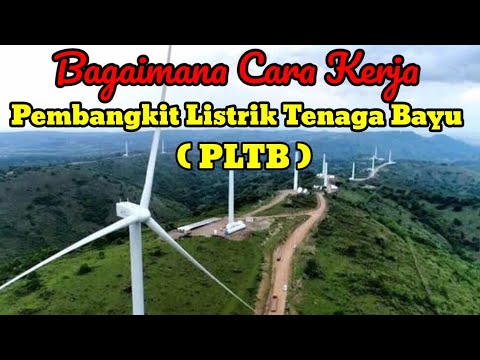
PLTB || Sejarah, Komponen Utama dan Cara Kerja Pembangkit Listrik Tenaga Bayu (Angin)

Química - Energia eólica (QEF0066)

Video Animasi mengenal Pembangkit Listrik Tenaga Bayu (Angin) dalam versi English
5.0 / 5 (0 votes)

