Semua Materi Teknik Dasar Renang Dijelaskan - Gaya Dada, Bebas, Punggung, Kupu (Ringkasan/Rangkuman)
Summary
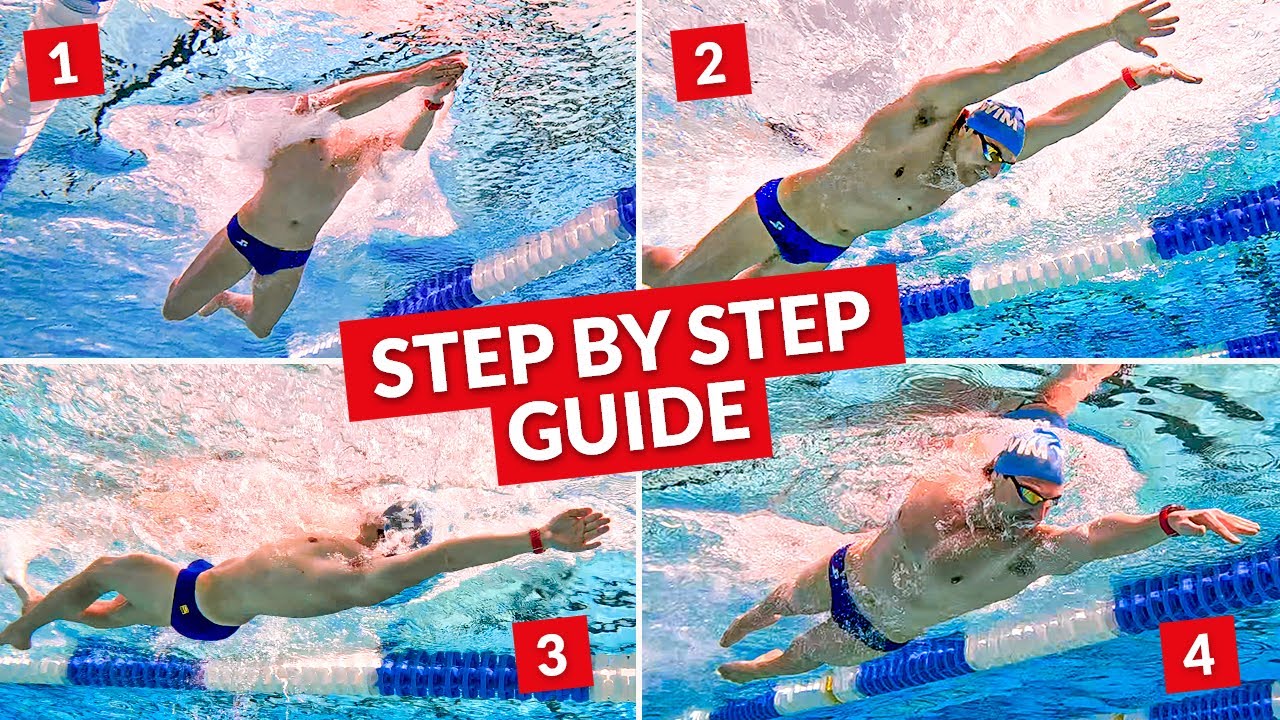
TLDRThis video provides a comprehensive guide to the techniques of four popular swimming strokes: breaststroke, freestyle, backstroke, and butterfly. It covers key aspects such as body position, arm and leg movements, and breathing techniques for each stroke. From the glide and whip kick in the breaststroke to the rhythmic breathing in the freestyle, the video ensures swimmers understand how to execute each move efficiently. It also highlights essential tips for improving swimming technique and performance, making it a valuable resource for swimmers of all skill levels.
Takeaways
- 🏊♂️ Proper body position is essential in all swimming styles to reduce drag and improve efficiency.
- 💨 Breathing techniques differ for each style: in breaststroke, lift the head forward; in freestyle, turn to the side; in backstroke, breathe with the face up; in butterfly, lift the head forward during the arm recovery.
- 🦵 Leg movements are style-specific: whip kick in breaststroke, flutter kick in freestyle and backstroke, and dolphin kick in butterfly.
- ✋ Arm movements are divided into phases: entry, pull, push, and recovery, with timing coordinated to maximize propulsion.
- -
- 🌊 Butterfly stroke emphasizes a wave-like body motion to enhance forward momentum.
- -
- 📏 Maintaining streamline and horizontal body alignment is crucial in freestyle and backstroke for efficiency.
- -
- ⏱️ Synchronization of arms and legs is vital, particularly in breaststroke and butterfly, to maintain smooth propulsion.
- -
- 🤿 Exhaling underwater allows for quick and effective inhalation during the breathing phase.
- -
- 🔄 Recovery phases in arm strokes help prepare for the next pull while minimizing resistance.
- -
- 💪 Proper technique in every stroke—body position, leg kick, arm movement, and breathing—directly affects speed and energy efficiency.
Q & A
What is the correct body position for the breaststroke swim style?
-In the breaststroke, the body should remain horizontal and flat, just above the water's surface. This minimizes resistance and helps in smoother movement.
What are the phases of the leg movement in breaststroke?
-The leg movement in breaststroke consists of three phases: 1) 'Outsep' where the legs are bent at the knees and the feet are turned outward in a half-circle, 2) 'Whip kick' where the feet then kick backward and inward simultaneously, and 3) 'Glide' where the legs are straightened to prepare for the next kick.
How is the breathing technique executed in breaststroke?
-In breaststroke, breathing is done by lifting the head out of the water during the 'outsep' and 'push' phases of the arm movement. Exhalation occurs when the arms are extended forward in the glide phase.
What should the body position be for freestyle swimming?
-In freestyle, the body should be as horizontal and streamlined as possible, with the swimmer facing downward in the water.
How do the legs move in freestyle swimming?
-In freestyle, the legs move in an alternating up-and-down kicking motion, originating from the hip. The knees are slightly bent at the start of the downward kick and straightened at the end of each kick.
What are the key phases of the arm movement in freestyle?
-The arm movement in freestyle has three main phases: 1) 'Pull' where the hand enters the water, followed by a pull with the elbow slightly bent, 2) 'Push' where the arm pushes the water backward, and 3) 'Recovery' where the arm exits the water and moves back to the front in preparation for the next stroke.
How does the breathing technique work in freestyle swimming?
-In freestyle, the swimmer breathes by turning their head to the side, usually when the arm on that side is recovering. The head turns to inhale, then returns to face the water for the exhalation.
What is the correct body position for backstroke swimming?
-For backstroke, the body should be kept straight and level on the water's surface, with the head facing upward, and the face slightly above the water.
What is the movement pattern for the legs in backstroke?
-In backstroke, the legs alternate in an up-and-down motion, initiated from the hip. The knees remain slightly bent during the kicking motion, and the feet should flick at the end of each kick to provide extra propulsion.
How do the arms move in backstroke swimming?
-In backstroke, the arm movement includes three phases: 1) 'Pull' where the arm enters the water near the ear and pulls down and back, 2) 'Push' where the arm continues to push water backward until it reaches the hip, and 3) 'Recovery' where the arm is lifted out of the water and moved back to the front.
What is the breathing technique used in backstroke?
-Breathing in backstroke is done continuously, as the swimmer's head remains above water. Inhalation occurs as the arms are recovering above the water, and exhalation happens when the arms are pulling through the water.
What distinguishes the butterfly stroke in terms of body movement?
-The butterfly stroke is characterized by a wave-like body motion, where the chest and hips rise and fall together. The legs perform simultaneous kicks, providing propulsion and helping to lift the body during the stroke.
What are the key phases of the leg movement in butterfly stroke?
-In butterfly, the legs perform two key movements: 1) 'Down kick' where the legs are slightly bent and kicked downward, helping propel the body forward, and 2) 'Up kick' where the legs are swung together to generate a strong upward thrust.
How does the arm movement in butterfly differ from other strokes?
-The arm movement in butterfly consists of four phases: 1) 'Entry' where the arms enter the water together, 2) 'Pull' where the arms pull water back with slightly bent elbows, 3) 'Push' where the arms continue to push water toward the hips, and 4) 'Recovery' where the arms are lifted above water and moved forward together for the next stroke.
What is the breathing technique for butterfly stroke?
-In butterfly, the swimmer breathes by lifting their head out of the water when the arms move forward in the 'recovery' phase. The exhalation occurs while the arms are underwater during the pull and push phases.
Outlines

Этот раздел доступен только подписчикам платных тарифов. Пожалуйста, перейдите на платный тариф для доступа.
Перейти на платный тарифMindmap

Этот раздел доступен только подписчикам платных тарифов. Пожалуйста, перейдите на платный тариф для доступа.
Перейти на платный тарифKeywords

Этот раздел доступен только подписчикам платных тарифов. Пожалуйста, перейдите на платный тариф для доступа.
Перейти на платный тарифHighlights

Этот раздел доступен только подписчикам платных тарифов. Пожалуйста, перейдите на платный тариф для доступа.
Перейти на платный тарифTranscripts

Этот раздел доступен только подписчикам платных тарифов. Пожалуйста, перейдите на платный тариф для доступа.
Перейти на платный тариф




5.0 / 5 (0 votes)

