Experimental and Theoretical Probability (4th) Fourth Quarter Grade 8 Matatag Revised K-12 Math
Summary
TLDRThis educational video tutorial on the 'Math Easy' YouTube channel introduces viewers to the concepts of experimental and theoretical probability in a simple and engaging way. The lesson covers the basic principles of probability, including key terms such as experiment, outcome, sample space, and event. It demonstrates the difference between theoretical probability, which is mathematically calculated, and experimental probability, which is based on actual trials. Through examples such as coin tossing and spinning a wheel, the video explains how probabilities are calculated and how experimental results can approach theoretical predictions over time. The lesson concludes with exercises for viewers to practice their understanding.
Takeaways
- 😀 Probability is a branch of mathematics that studies uncertainty and predicts the likelihood of random events.
- 😀 Probability can be expressed in different forms: fractions, decimals, or percentages, ranging from 0 (impossible) to 1 (certain).
- 😀 An experiment is an action or process that leads to an outcome that cannot be precisely predicted, such as tossing a coin or rolling a die.
- 😀 An outcome is a possible result of a single trial of an experiment, e.g., getting a head or tail when flipping a coin.
- 😀 The sample space is the set of all possible outcomes of an experiment, often represented using the roster method.
- 😀 An event is one or more outcomes of an experiment, and favorable outcomes are the specific outcomes that define the event.
- 😀 Theoretical probability is calculated based on mathematical reasoning: P(event) = number of favorable outcomes / total possible outcomes.
- 😀 Experimental probability is determined by conducting an experiment and observing actual results: P(event) = number of times event occurs / total number of trials.
- 😀 As the number of trials increases, experimental probability tends to approach theoretical probability, illustrating the law of large numbers.
- 😀 Practice problems and examples, such as coin flips, spinning wheels, and drawing marbles, help reinforce understanding of theoretical and experimental probabilities.
Q & A
What is the main topic of the lesson discussed in the video?
-The main topic is about experimental and theoretical probability.
How is probability defined in the video?
-Probability is defined as a branch of mathematics that studies uncertainty and chances, dealing with predicting possible outcomes of random events.
What is the difference between experimental and theoretical probability?
-Theoretical probability is what is expected to happen based on mathematics, while experimental probability is determined by repeating an experiment and observing the outcome.
What does the 'sample space' refer to in probability?
-The sample space refers to the set of all possible outcomes in an experiment.
What are favorable outcomes in probability?
-Favorable outcomes are the specific outcomes that match the event of interest in a probability experiment.
What is the formula for theoretical probability?
-The formula for theoretical probability is the number of favorable outcomes divided by the total number of possible outcomes.
How does experimental probability differ from theoretical probability in terms of calculation?
-Experimental probability is calculated by dividing the number of times an event occurs by the total number of trials, while theoretical probability is based on the possible outcomes in theory.
What example is used in the video to explain theoretical probability?
-The example of flipping a coin is used, where the theoretical probability of getting heads is 1/2, or 50%.
What is the law of large numbers mentioned in the video?
-The law of large numbers states that the more trials you perform in an experiment, the closer the experimental probability will approach the theoretical probability.
How does the video suggest calculating experimental probability using a spinning wheel?
-The video provides an example where the wheel is spun 50 times, and the experimental probability is calculated by dividing the number of times a specific color, like blue, appeared by the total number of spins.
Outlines

Этот раздел доступен только подписчикам платных тарифов. Пожалуйста, перейдите на платный тариф для доступа.
Перейти на платный тарифMindmap

Этот раздел доступен только подписчикам платных тарифов. Пожалуйста, перейдите на платный тариф для доступа.
Перейти на платный тарифKeywords

Этот раздел доступен только подписчикам платных тарифов. Пожалуйста, перейдите на платный тариф для доступа.
Перейти на платный тарифHighlights

Этот раздел доступен только подписчикам платных тарифов. Пожалуйста, перейдите на платный тариф для доступа.
Перейти на платный тарифTranscripts

Этот раздел доступен только подписчикам платных тарифов. Пожалуйста, перейдите на платный тариф для доступа.
Перейти на платный тарифПосмотреть больше похожих видео

Peluang (Part 2) | Kejadian Majemuk | Saling Lepas, Tidak Saling Lepas, Saling Bebas, dan Bersyarat
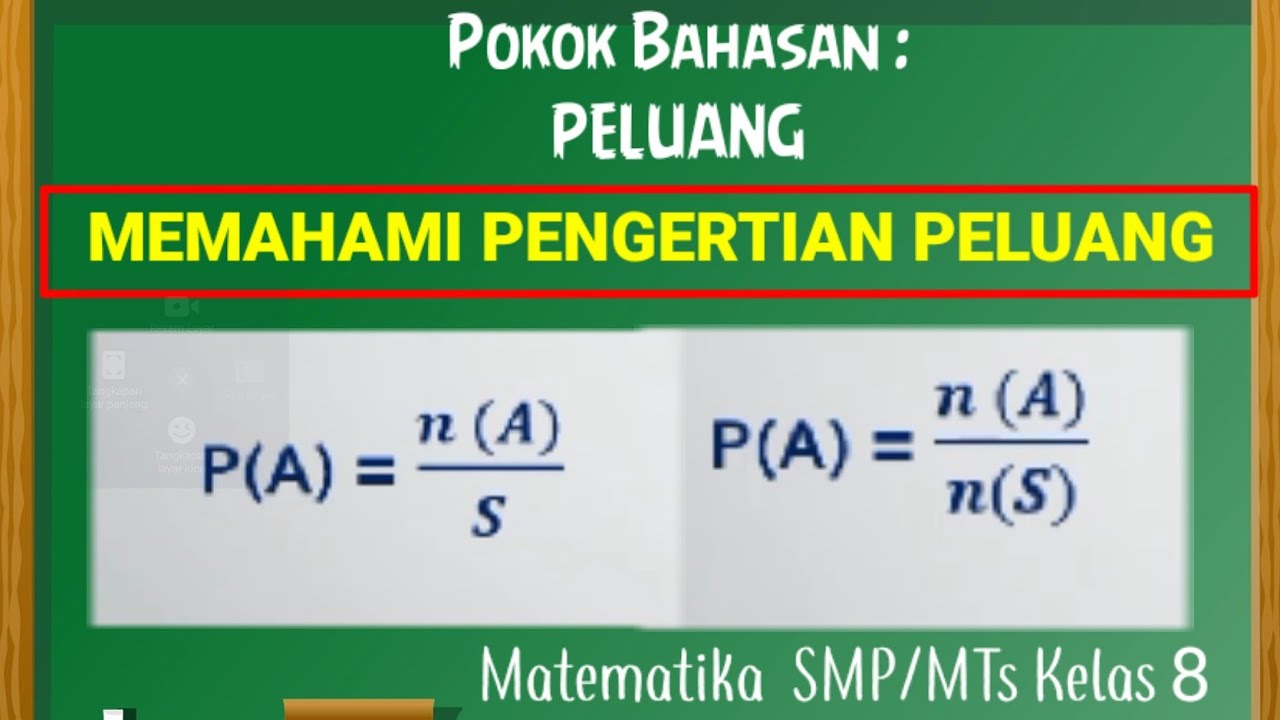
MEMAHAMI PENGERTIAN PELUANG | Matematika SMP/MTs Kelas 8
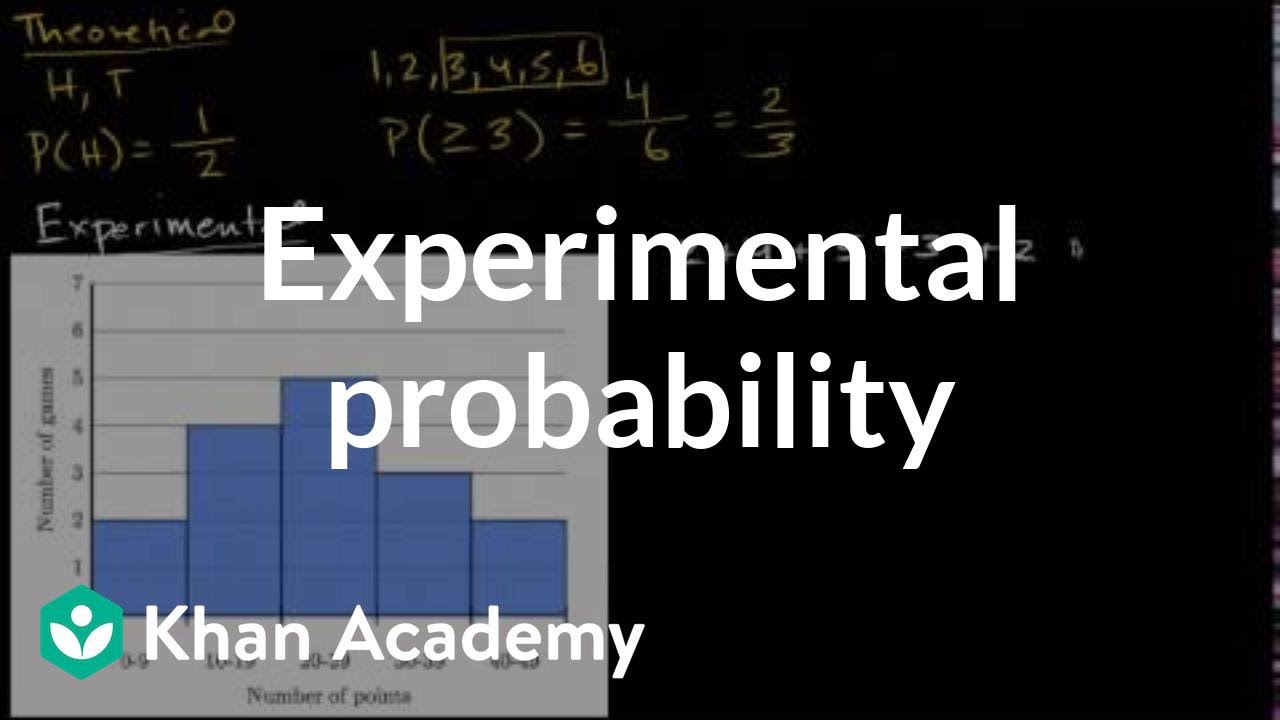
Experimental probability | Statistics and probability | 7th grade | Khan Academy
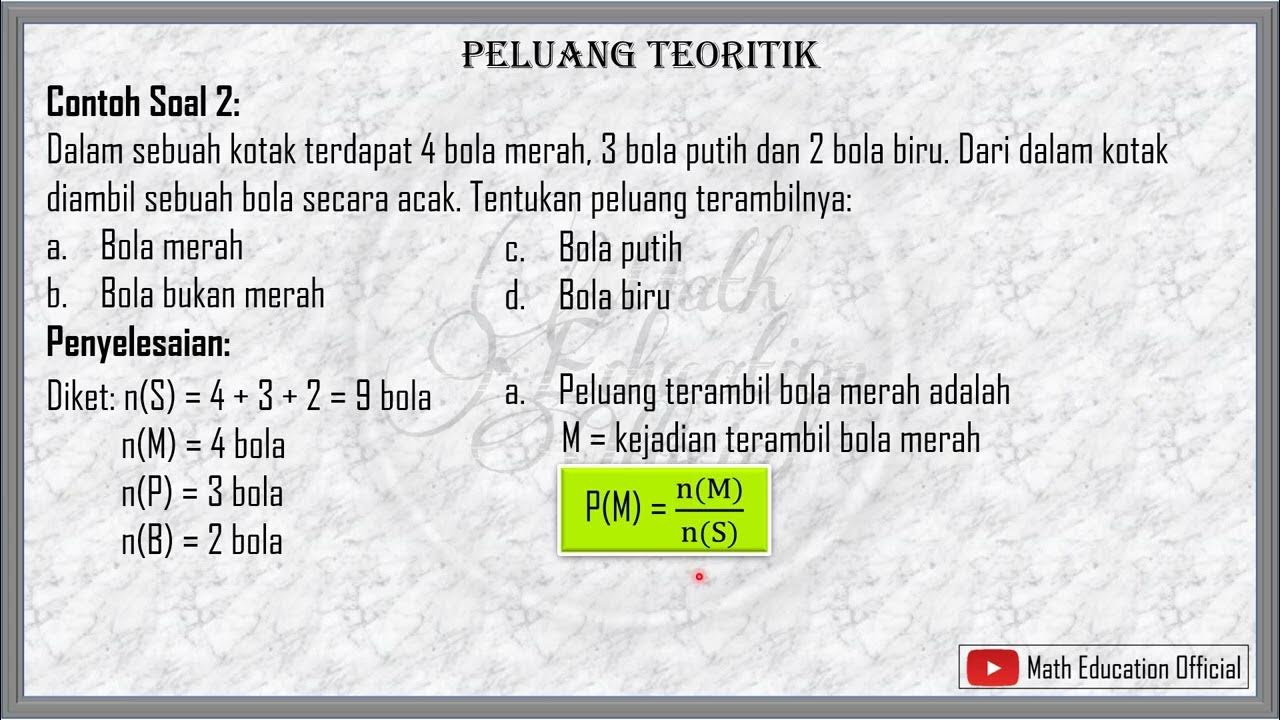
Peluang Teoritik

Informática Básica: O que é um computador? Conheça alguns conceitos fundamentais da computação.
Addition and Subtraction with Dinosaurs - Math for Kids - Math Operations
5.0 / 5 (0 votes)

