Samudera Pasai | Dari Peristiwa ke Peradaban
Summary
TLDRThis script explores the rise of Samudra Pasai as more than just the first Islamic sultanate in the Indonesian archipelago, portraying it as a pivotal civilizational hub that connected East and West. Strategically located at the gateway of the Malacca Strait, Pasai thrived by merging global trade networks with the peaceful spread of Islamic ideas. Through commerce, scholarship, and cultural exchange, it became a cosmopolitan society that reshaped social structures, language, and knowledge systems. Its legacy endured long after its political decline, serving as a blueprint for later Islamic kingdoms and helping shape the maritime, open, and globally connected identity of Nusantara.
Takeaways
- 😀 The Samudra Pasai was a strategically located kingdom that bridged the East and West, leaving a lasting global influence.
- 😀 Unlike other regions where religion spread through conquest, in Nusantara, Islam was spread mainly through trade and intellectual discourse.
- 😀 The Sultanate of Samudra Pasai was not just a political entity, but a cultural and economic powerhouse, connecting major global trade routes.
- 😀 Samudra Pasai controlled the Malacca Strait, the busiest waterway in the world, facilitating trade between Europe, Asia, and the Middle East.
- 😀 The intersection of trade and faith in Samudra Pasai led to the birth of the first Islamic kingdom in the region, creating a new socio-cultural identity.
- 😀 The transformation from Merah Silu to Sultan Malik Assaleh symbolizes the shift towards a global Islamic identity for the region.
- 😀 The kingdom's active role in trade allowed it to become a dynamic international marketplace, integrating goods, capital, and people from all over the world.
- 😀 Samudra Pasai’s cosmopolitan nature made it one of the most diverse and prosperous cities of its time, as described by the renowned traveler Ibn Batuta.
- 😀 The kingdom's economic prosperity fostered the rise of a new merchant class, which helped shape a more open and dynamic coastal society.
- 😀 Samudra Pasai's legacy is seen in the continued influence of its systems in the Sultanates of Aceh, Malacca, and Demak, shaping regional administration, law, and ethics.
- 😀 The foundational values of Samudra Pasai, including peaceful spread of faith, the role of scholars, and global connectivity, laid the groundwork for the modern maritime identity of Indonesia.
Q & A
What makes Samudra Pasai's location so strategically significant?
-Samudra Pasai's location, at the northern tip of Sumatra, was crucial because it controlled the busy Malacca Strait, one of the world's busiest shipping routes. This allowed Pasai to regulate and profit from global trade, as all ships carrying goods from the East or China to India, Persia, and Arabia had to pass through this narrow passage.
How did Samudra Pasai play a unique role in the spread of Islam in Nusantara?
-Unlike the common narrative of religious spread through conquest, the spread of Islam in Nusantara was facilitated by trade and intellectual exchanges. Pasai became a center where Islamic ideas were shared by scholars and merchants, creating a peaceful and intellectual flow of Islam rather than through military means.
What was the role of Sultan Malik Assaleh in the rise of Samudra Pasai?
-Sultan Malik Assaleh, originally a local leader named Merah Silu, embraced Islam and became the founder of the Sultanate of Samudra Pasai. His conversion marked a significant shift, bringing Pasai into the broader Islamic world and creating a political and cultural transformation.
How did Samudra Pasai turn its geographical advantage into an economic powerhouse?
-By controlling the Malacca Strait, Samudra Pasai capitalized on global trade, transforming its ports into bustling international marketplaces. It facilitated the movement of commodities like spices, gold, and luxury goods, which helped its economy thrive.
What were the two major forces at play in Samudra Pasai's success?
-The two major forces that drove Samudra Pasai's success were trade and religious belief. The flow of goods from around the world and the spread of Islam through intellectual discourse and religious teachings created a unique cultural and economic environment.
What evidence supports the idea that Samudra Pasai was a cosmopolitan center?
-Historical accounts, such as those from the famous traveler Ibn Battuta, describe Samudra Pasai as a prosperous, cosmopolitan city. It attracted merchants from places like India, Arabia, and China, creating a melting pot of cultures, ideas, and people.
How did Samudra Pasai's economy impact its social structure?
-The massive trade activity in Pasai led to the emergence of a wealthy and influential merchant class. This shift in economic power gradually altered the traditional social hierarchy, fostering a dynamic and open society where ideas, language, and even fashion from other cultures influenced local life.
What role did the Malay language play in the cultural integration of Nusantara?
-Malay became the lingua franca of the region, uniting traders from various ethnic backgrounds. This facilitated communication across Nusantara, helping to strengthen the interconnectedness of the islands and promote cultural integration.
How did the Arabic script contribute to the spread of Islam in Samudra Pasai?
-The Arabic script was adapted into the Jawi script, which enabled the writing and dissemination of Islamic teachings in the local context. This helped overcome language barriers, allowing Islamic knowledge and local traditions to coexist and spread more easily.
What is the lasting legacy of Samudra Pasai in modern Indonesia?
-Samudra Pasai's legacy endures in the modern Indonesian identity, particularly in the openness, connectivity, and maritime focus of its ports. The influence of Pasai's global outlook and peaceful dissemination of Islam can still be seen in Indonesia's modern values of tolerance, commerce, and maritime culture.
Outlines

Этот раздел доступен только подписчикам платных тарифов. Пожалуйста, перейдите на платный тариф для доступа.
Перейти на платный тарифMindmap

Этот раздел доступен только подписчикам платных тарифов. Пожалуйста, перейдите на платный тариф для доступа.
Перейти на платный тарифKeywords

Этот раздел доступен только подписчикам платных тарифов. Пожалуйста, перейдите на платный тариф для доступа.
Перейти на платный тарифHighlights

Этот раздел доступен только подписчикам платных тарифов. Пожалуйста, перейдите на платный тариф для доступа.
Перейти на платный тарифTranscripts

Этот раздел доступен только подписчикам платных тарифов. Пожалуйста, перейдите на платный тариф для доступа.
Перейти на платный тарифПосмотреть больше похожих видео
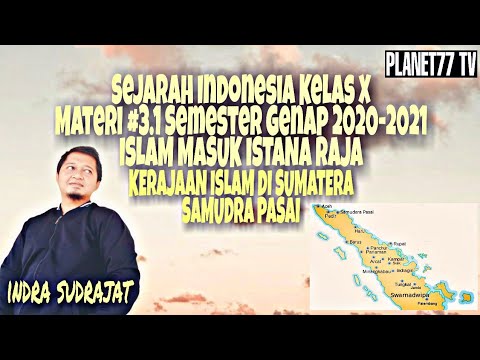
SAMUDERA PASAI || KERAJAAN ISLAM DI SUMATERA || Sejarah Indonesia Kelas X #materisejarah #planet77tv

Kesultanan Samudra Pasai | Full Version | Kesultanan Nusantara

SEJARAH MASUKNYA ISLAM & KERAJAAN ISLAM DI NUSANTARA - MATERI PAI KELAS 12
Kerajaan Samudera Pasai, Aceh, dan Demak: Perkembangan dan Penyebaran Islam di Indonesia | Part 4

Sejarah Kerajaan Samudera Pasai Lengkap: Berdiri Sampai Runtuh
SEJARAH KERAJAAN SAMUDERA PASAI @babadnusantara369
5.0 / 5 (0 votes)

