Corriente y Resistencia Eléctrica. Parte 1 | Teleclases 9° Grado
Summary
TLDRThis ninth-grade science video explores the concepts of electric circuits, focusing on voltage, current, and resistance. Using practical analogies and experiments, it explains how voltage acts as the push for electrons, current as the flow, and resistance as opposition. The lesson demonstrates Ohm's Law with calculations and real circuit setups, showing how to measure voltage in parallel and current in series. It also covers resistivity problems and highlights the importance of using resistors with LEDs to prevent damage. Through engaging demonstrations, students learn to connect theory with hands-on practice while understanding key principles of electricity and circuit behavior.
Takeaways
- 😀 Voltage is the push that makes electrons flow through a conductor, similar to pressure in a water system.
- 😀 Current is like a river that flows from a higher to a lower potential, moving from positive to negative in an electrical circuit.
- 😀 Resistance is the opposition to the flow of current, comparable to friction that slows down water flow in a garden hose.
- 😀 Ohm's Law states that voltage is directly proportional to current, with resistance as the constant of proportionality.
- 😀 A practical example: To calculate the required resistance in a circuit, divide the voltage by the current using Ohm's Law.
- 😀 When measuring voltage in a circuit, you measure across components in parallel to observe the potential difference.
- 😀 To measure current, you must place the measuring device in series with the circuit, breaking the circuit at the point of measurement.
- 😀 Continuity testing is important to ensure that cables or components are working correctly; it indicates whether current can pass through.
- 😀 In a real circuit setup, make sure all components and wires are functional before starting your experiment.
- 😀 LED lights need a resistor in series to protect them from excessive current, which can burn out the LED if not managed properly.
- 😀 In an experiment comparing two LEDs, one with a resistor and one without, the LED without resistance burns out faster due to excess current.
- 😀 Understanding the relationship between voltage, current, and resistance is crucial for setting up and troubleshooting electrical circuits.
Q & A
What is the main topic of this lesson?
-The main topic of this lesson is electric circuits, specifically focusing on electric charge in motion, which involves concepts like voltage, current, and resistance.
What analogy is used to explain the concept of current?
-Current is compared to a river that flows from a higher elevation to a lower one. Just like water flows downhill, electric current flows from a positive potential to a negative one.
How does voltage relate to the movement of electrons?
-Voltage is compared to the 'push' that is exerted on electrons to make them flow through a conductor, similar to the pressure difference that pushes water in a pipe.
What is resistance, and how does it affect current?
-Resistance is the opposition to the flow of electric current. It's compared to the friction that resists the flow of air through a balloon. The higher the resistance, the lower the current flow.
What is Ohm's Law and how is it applied in the lesson?
-Ohm's Law states that voltage (V) is directly proportional to current (I) and inversely proportional to resistance (R). The formula is V = I × R, and it's used to calculate values like resistance when other values (voltage and current) are known.
How is the resistance calculated in the given exercise?
-In the exercise, the resistance is calculated using Ohm's Law: R = V / I. Given that the voltage is 3V and the desired current is 30mA, the resistance needed is 100 ohms.
What is the difference between measuring voltage and current in a circuit?
-Voltage is measured in parallel to the component (across two points), while current is measured in series with the circuit, meaning the current flows through the ammeter.
Why is it important to test cables for continuity before building a circuit?
-Testing for continuity ensures that the cables are working properly and that there are no breaks or faults. If there is no continuity, the cable is faulty and needs to be replaced.
What is the role of a resistor in an LED circuit?
-A resistor in an LED circuit limits the amount of current flowing through the LED, preventing it from burning out by ensuring that the current does not exceed its rated value (usually 20mA).
What happens when an LED is connected without a resistor?
-If an LED is connected without a resistor, it can draw too much current, which can quickly damage the LED. In the video, the LED without a resistor gradually loses brightness due to the excess current.
Outlines

Этот раздел доступен только подписчикам платных тарифов. Пожалуйста, перейдите на платный тариф для доступа.
Перейти на платный тарифMindmap

Этот раздел доступен только подписчикам платных тарифов. Пожалуйста, перейдите на платный тариф для доступа.
Перейти на платный тарифKeywords

Этот раздел доступен только подписчикам платных тарифов. Пожалуйста, перейдите на платный тариф для доступа.
Перейти на платный тарифHighlights

Этот раздел доступен только подписчикам платных тарифов. Пожалуйста, перейдите на платный тариф для доступа.
Перейти на платный тарифTranscripts

Этот раздел доступен только подписчикам платных тарифов. Пожалуйста, перейдите на платный тариф для доступа.
Перейти на платный тарифПосмотреть больше похожих видео
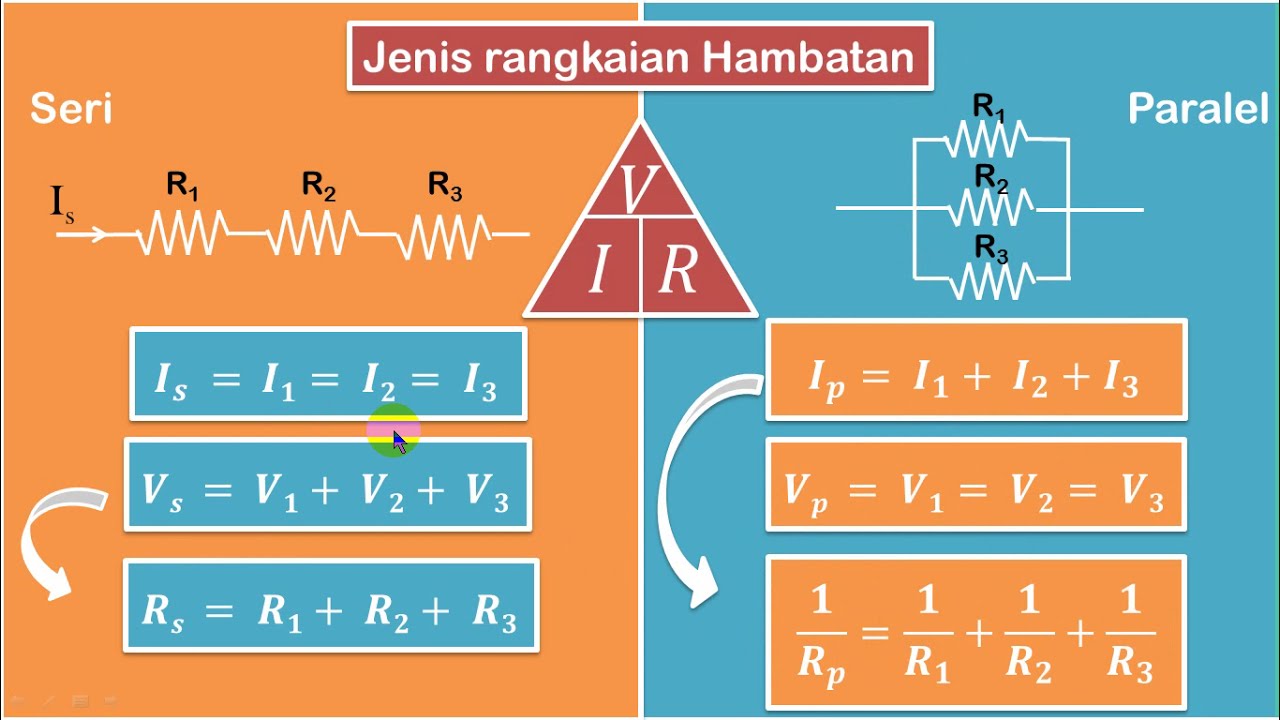
IPA Kelas 9 : Listrik Dinamis 3 (Rangkaian Hambatan Seri dan Paralel)
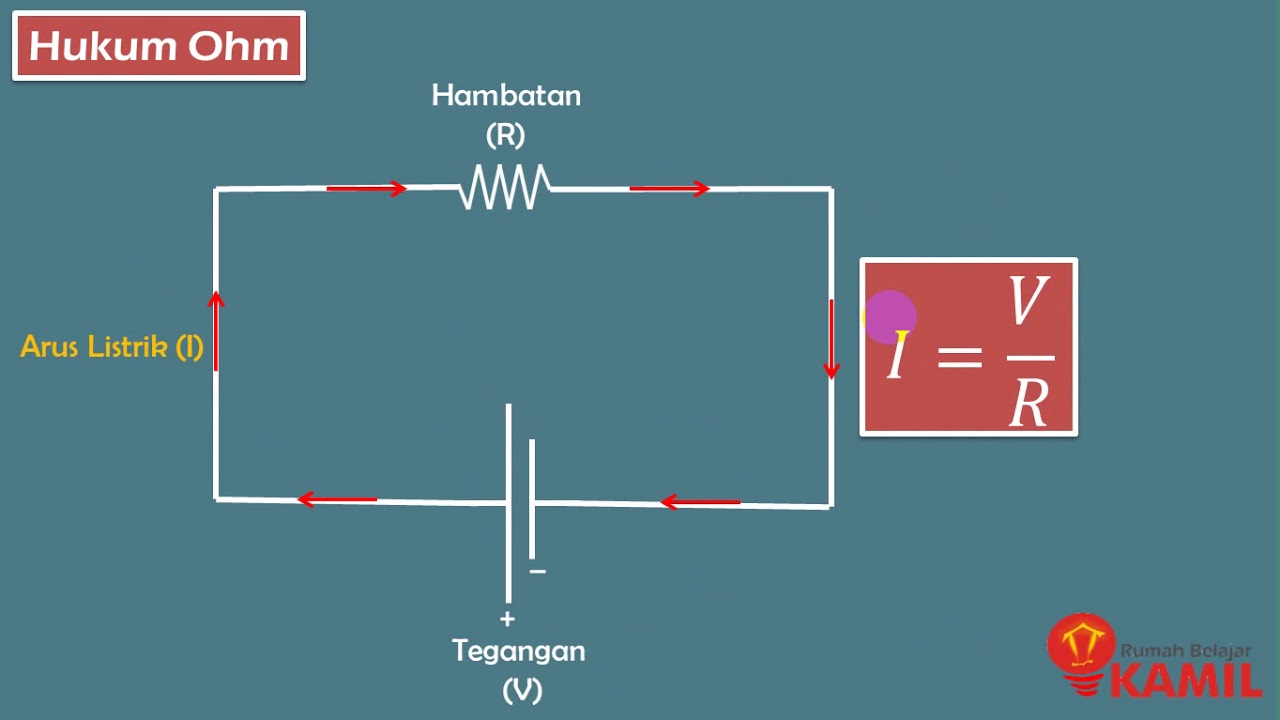
IPA Kelas 9 : Listrik Dinamis 2 (Rangkaian Listrik : Hukum Ohm dan Hukum Kirchhoff)
Listrik Dinamis-Rangkaian Listrik (Hukum Ohm) (Part 3)

ASSOCIAÇÃO DE RESISTORES: em série e em paralelo | Cortes dos Aulões do Enem | Física | Antônio
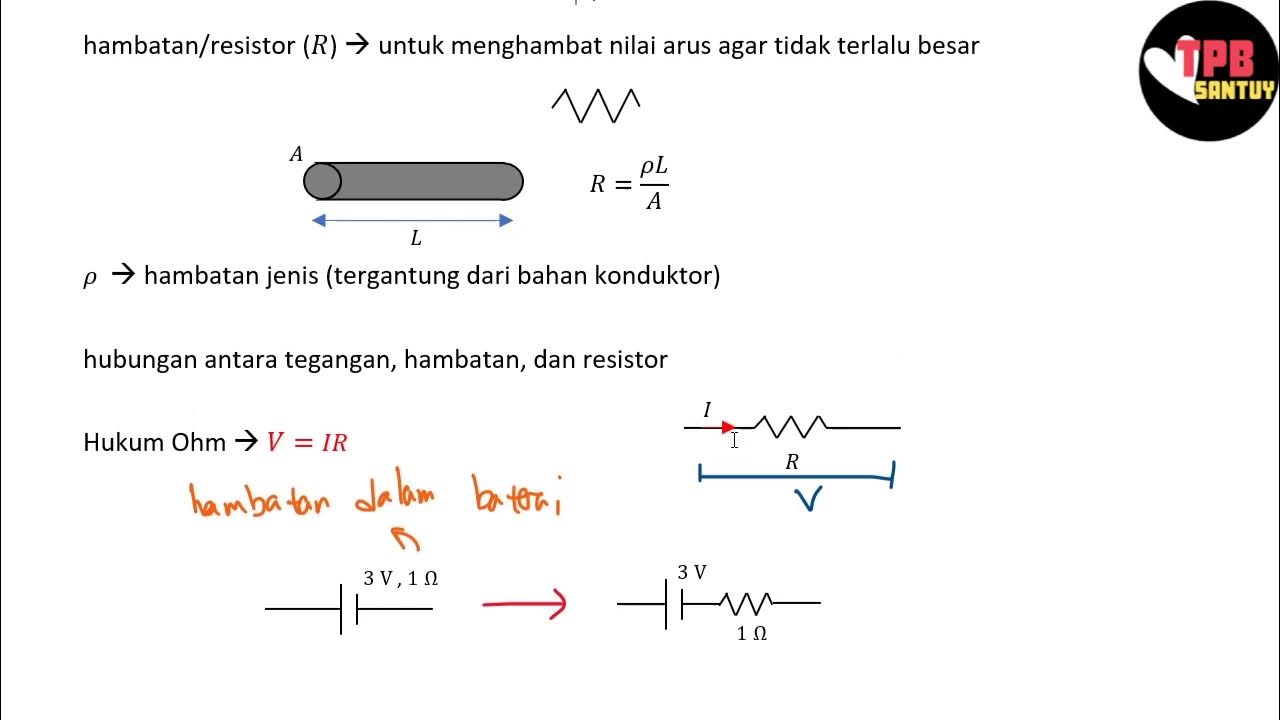
Arus, Tegangan, dan Hambatan | Rangkaian DC | Part 1 | Fisika Dasar
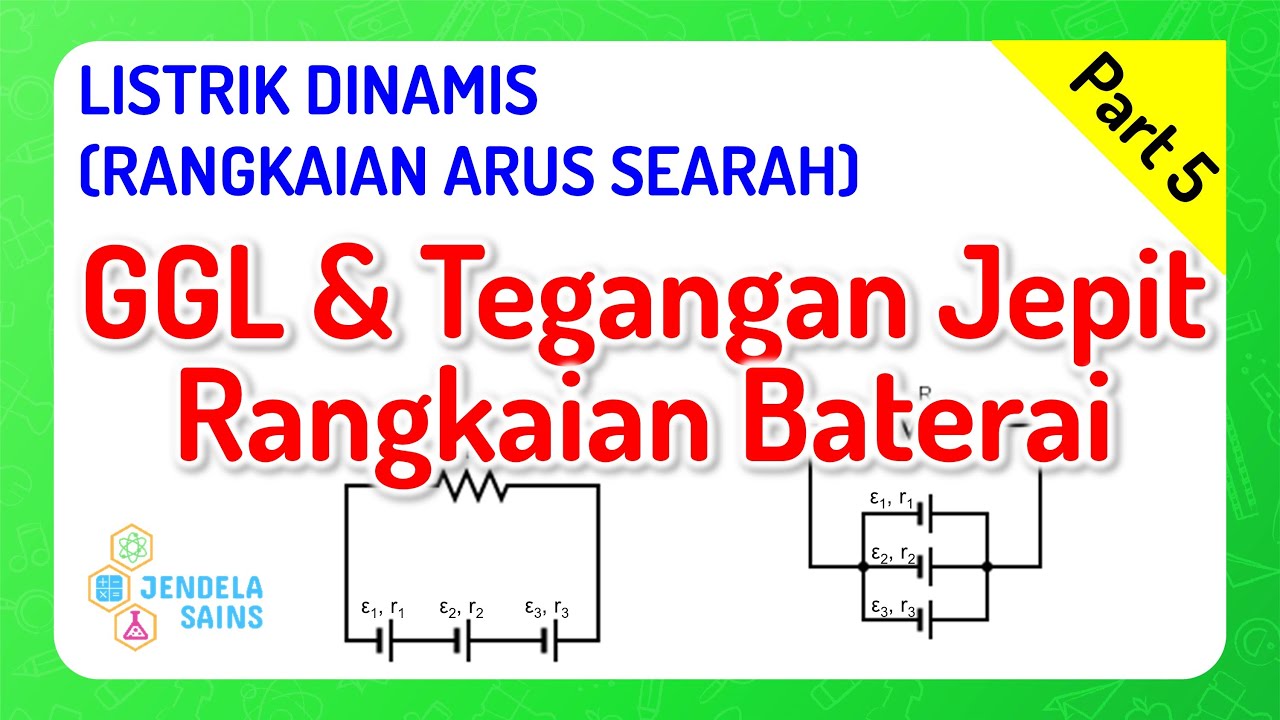
Listrik Dinamis • Part 5: Gaya Gerak Listrik, Tegangan Jepit, Rangkaian Baterai
5.0 / 5 (0 votes)

