MATERI PEMBELAJARAN HAJI & UMROH Kelas VIII
Summary
TLDRThis educational video for 8th-grade Islamic studies explains the concepts, requirements, and rituals of Hajj and Umrah. It covers the definitions, obligatory conditions, pillars, and types of Hajj, including Tamattu, Ifrad, and Qiran, as well as the differences and similarities with Umrah. The video also highlights the essential acts, recommended practices, and prohibitions during these pilgrimages, ensuring that learners understand both the spiritual and practical aspects. With clear explanations and structured guidance, students are encouraged to follow the steps correctly and perform the rituals with proper understanding, making the lesson both informative and engaging.
Takeaways
- 🕋 Hajj in Islam is a pilgrimage to Makkah that includes rites like tawaf, sai, wukuf, and other rituals performed at specific times, meant to fulfill Allah's command.
- 📜 Hajj is obligatory for every adult Muslim who is physically and financially capable, as stated in the Qur'an (Surah Al-Imran, verse 97).
- ✅ The conditions for performing Hajj include being Muslim, mature (baligh), of sound mind, free, and able (istitha'ah).
- ⏰ The validity of Hajj requires performing it within the proper time, following the correct sequence of rites, fulfilling all conditions, and performing it at designated locations.
- 📖 The main pillars (rukun) of Hajj are: ihram with intention, wukuf at Arafah, tawaf around the Ka'bah, sai between Safa and Marwah, and tahalul (cutting hair).
- ⚠️ Obligatory acts (wajib) of Hajj include ihram from miqat, staying at Muzdalifah, throwing jumrah Aqabah, staying at Mina, performing the three days of jumrah at Tasyrik, tawaf wada, and avoiding prohibited actions.
- 🔄 There are different types of tawaf: tawaf ifadah, tawaf qudum, tawaf sunah, and tawaf wada, each with specific rules and timings.
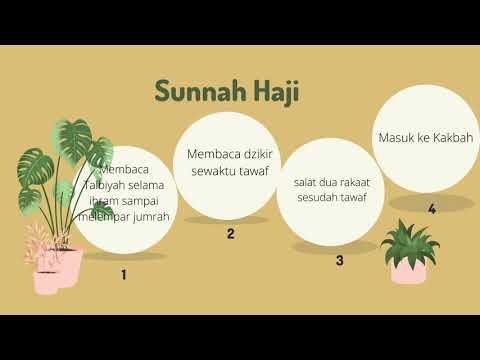
- 🙏 Sunnah practices during Hajj include performing hajj ifrad (hajj first, then umrah), reciting talbiah, making supplications, performing two rak'ah prayers after tawaf, and entering the Ka'bah.
- 🚫 Prohibitions during Hajj include men not wearing stitched clothing or covering their heads, women not covering the face and hands, and both genders avoiding perfume, hair removal, sexual relations, and hunting.
- 🔹 Types of Hajj: Hajj Tamattu (umrah first, then hajj), Hajj Ifrad (hajj only before umrah), and Hajj Qiran (hajj and umrah performed together with one intention).
- ✨ Umrah is similar to Hajj but differs mainly because it does not include wukuf at Arafah; both share similar prerequisites such as being Muslim, mature, sane, free, and capable.
Q & A
What is the literal meaning of Hajj in the Indonesian language?
-Hajj literally means 'to intend' or 'to make a deliberate visit'.
According to Islamic law, what defines Hajj?
-Hajj is the intentional visit to Makkah or the Ka'bah to perform specific acts of worship such as tawaf, sai, and wukuf during specific times, to fulfill the call of Allah.
What are the conditions that make Hajj obligatory for a person?
-Hajj is obligatory for someone who is Muslim, adult (baligh), sane, free (not a slave), and financially and physically able (istitho’ah).
What are the essential conditions that make a Hajj valid?
-A valid Hajj must be performed within the designated time, follow the correct sequence of rituals, meet the specific requirements of each ritual, and be performed in the prescribed locations.
List the main pillars (rukun) of Hajj.
-The main pillars of Hajj are: 1) Ihram with the intention of Hajj, 2) Wukuf at Arafah on the 9th of Zulhijah, 3) Tawaf around the Ka'bah, 4) Sai between Safa and Marwah, 5) Shaving or trimming hair.
What are the mandatory (wajib) acts in Hajj and their significance?
-Wajib acts are important but missing them does not invalidate Hajj. They include: Ihram from miqat, staying at Muzdalifah, throwing the jumrah Aqabah, spending nights in Mina, throwing the three jumrah during Tasyrik, performing Tawaf Wada, and avoiding prohibitions.
What are the different types of Tawaf and when are they performed?
-1) Tawaf Ifadah – part of Hajj rituals, 2) Tawaf Qudum – upon arrival in Makkah, 3) Tawaf Sunah – anytime as a recommended act, 4) Tawaf Wada – before leaving Makkah.
What are some prohibited actions during Hajj for both men and women?
-During Hajj, men and women must not: use perfume, remove body hair, cut nails before the first tahallul, engage in sexual activity, or hunt/kills animals. Additionally, men cannot wear sewn clothes or cover their heads, and women cannot cover their faces or hands.
Explain the three types of Hajj and their differences.
-1) Hajj Tamattu – perform Umrah first, then Hajj, 2) Hajj Ifrad – perform Hajj only before Umrah, 3) Hajj Qiran – perform Hajj and Umrah together with a single intention.
How does Umrah differ from Hajj?
-Umrah is a pilgrimage to Makkah similar to Hajj but does not include Wukuf at Arafah. Its rituals are fewer and can be performed at any time of the year.
What are the common conditions required for both Hajj and Umrah?
-Both require the pilgrim to be Muslim, adult, sane, free, and capable (physically and financially).
What are some recommended (sunah) practices during Hajj?
-Sunah practices include: performing Hajj Ifrad, reciting the Talbiah, making du’a after Talbiah, reciting dhikr during Tawaf, performing two rak’ah prayer after Tawaf, and entering the Ka'bah when possible.
Outlines

このセクションは有料ユーザー限定です。 アクセスするには、アップグレードをお願いします。
今すぐアップグレードMindmap

このセクションは有料ユーザー限定です。 アクセスするには、アップグレードをお願いします。
今すぐアップグレードKeywords

このセクションは有料ユーザー限定です。 アクセスするには、アップグレードをお願いします。
今すぐアップグレードHighlights

このセクションは有料ユーザー限定です。 アクセスするには、アップグレードをお願いします。
今すぐアップグレードTranscripts

このセクションは有料ユーザー限定です。 アクセスするには、アップグレードをお願いします。
今すぐアップグレード関連動画をさらに表示

TATA CARA IBADAH UMROH ( Materi Online/ Daring Fikih Kelas VIII MTs)

Fikih Kelas 8 Tentang Haji dan Umrah

(HAJI) Rangkuman Materi Fikih Kelas 8 Bab 6 Semester 2 | Ketentuan Haji dan Umroh

Intips - Mengenal Ibadah Haji Dan Umrah
MATERI PAI SMP BAB 5 HAJI DAN UMRAH

Penjelasan Lengkap Definisi Haji dan Umroh | Buya Yahya
5.0 / 5 (0 votes)

