Sejarah berdiri dan berkembangnya Bani Abbasiyah
Summary
TLDRThe video explores the history and intellectual achievements of the Abbasid Caliphate, which ruled from 750 to 1258 CE. Founded by Abu Abbas As-Saffah, the Abbasids shifted the capital to Baghdad, ushering in a golden age marked by the flourishing of science, medicine, mathematics, philosophy, and culture. Central to this intellectual growth was the House of Wisdom (Baitul Hikmah), where scholars translated and expanded knowledge from Greek, Persian, and Indian sources. Prominent figures like Al-Khwarizmi, Ibnu Sina, and Ar-Razi advanced algebra, medicine, and chemistry. The caliphate eventually declined due to Mongol invasions, internal conflict, and economic downturns, leaving a lasting legacy of learning and cultural achievement.
Takeaways
- 🕌 The Abbasid Caliphate was established in 750 CE by Abu Abbas As-Saffah, named after Abbas, the uncle of Prophet Muhammad, after overthrowing the Umayyad dynasty.
- ⚔️ The Abbasids gained support from Shi’a, Kharijites, and anti-Umayyad groups, forming a coalition that strengthened their rule.
- 📜 The Abbasid era lasted from 750 to 1258 CE, approximately 500 years, and is divided into five periods based on regional influences: Arab-Persian, Turkish, Persian 2, Seljuk-Turkish, and the independent Baghdad era.
- 🏛️ The early Abbasid period (Baghdad early) marked the Golden Age, while later periods (Persian 2 to independent Baghdad) showed decline due to internal conflicts and external attacks.
- 🏙️ Baghdad became the capital under the second caliph, Al-Mahdi (Abu Ja'far), located on the Tigris River, and was transformed into a major metropolitan center.
- 📚 The House of Wisdom (Baitul Hikmah) was established by Harun al-Rashid to become a global center for translation, research, and education, gathering knowledge from Greece, Persia, and India.
- 👨🏫 Key scholars included Al-Khwarizmi (father of algebra), Ibn Sina (Avicenna, father of modern medicine), and Al-Razi (expert in chemistry and medicine), whose works influenced Islamic and European sciences.
- 🔬 Major advancements during the Golden Age were in mathematics, astronomy, medicine, chemistry, and philosophy, establishing Baghdad as a hub of intellectual development.
- 🏛️ Abbasid contributions to architecture and culture included grand palaces, mosques, and libraries, with characteristic Islamic features like domes, minarets, arches, and geometric decorations.
- 💥 The decline of the Abbasids culminated in 1258 CE due to Mongol invasions, internal conflicts, and economic weakening, leading to the destruction of Baghdad and the House of Wisdom.
- 📖 The legacy of the Abbasids, particularly through the House of Wisdom, remains a symbol of Islamic intellectual achievement and global knowledge exchange.
Q & A
What was the Abbasid Caliphate and when was it established?
-The Abbasid Caliphate was an Islamic dynasty established in 750 CE by Abu Abbas As-Saffah after overthrowing the Umayyad Caliphate.
Why was the Abbasid dynasty called 'Abbasid'?
-The dynasty was named after Abbas bin Abdul Muttalib, the uncle of Prophet Muhammad.
What factors contributed to the rise of the Abbasid Caliphate?
-The Abbasids gained support from groups dissatisfied with Umayyad rule, including the Shia, Khawarij, and anti-Umayyad factions, which helped them form a strong political coalition.
How long did the Abbasid Caliphate rule?
-The Abbasid Caliphate ruled from 750 CE to 1258 CE, lasting for about five centuries.
Into how many historical periods was the Abbasid era divided in the lesson?
-The lesson divided the Abbasid era into five periods, including periods influenced by Arab-Persian culture, Turkish influence, Persian influence again, Seljuk Turkish rule, and the final independent period.
What were the two major summarized phases of Abbasid history?
-The Abbasid era was summarized into two phases: the early Baghdad period and golden age, and the later Baghdad period marked by decline.
Why was Baghdad important during the Abbasid golden age?
-Baghdad became the center of science, culture, trade, and learning, and was considered one of the most advanced and magnificent cities in the world.
Who were the two famous caliphs associated with the Abbasid golden age?
-Harun al-Rashid and his son Al-Ma'mun were the two caliphs most associated with the Abbasid golden age.
What was Baitul Hikmah and why was it significant?
-Baitul Hikmah, or the House of Wisdom, was a major center for translation, research, and scholarship in Baghdad where scholars translated works from Greek, Persian, and Indian sources into Arabic.
What subjects experienced major advancements during the Abbasid era?
-Major advancements occurred in mathematics, astronomy, medicine, chemistry, philosophy, architecture, and culture.
Who was Al-Khwarizmi and what was his contribution?
-Al-Khwarizmi was a Muslim scholar known as the Father of Algebra. He developed algebraic concepts and introduced algorithms through his famous mathematical works.
Why is Ibn Sina considered an important historical figure?
-Ibn Sina, also known as Avicenna, was known as the Father of Modern Medicine. His book 'The Canon of Medicine' became a key medical reference in Europe and the Islamic world for centuries.
What contributions did Ar-Razi make to science and medicine?
-Ar-Razi was a renowned physician and chemist who wrote medical encyclopedias and distinguished between smallpox and measles as separate diseases.
What were the main functions of Baitul Hikmah?
-Baitul Hikmah functioned as a translation center, a meeting place for scholars, a massive library, and a research institution for scientific development.
What architectural characteristics were associated with Abbasid Islamic architecture?
-Abbasid Islamic architecture was known for domes, tall minarets, beautiful arches, and intricate geometric ornaments.
What caused the decline of the Abbasid Caliphate?
-The decline was caused by Mongol invasions, internal conflicts, economic decline, and political fragmentation.
What happened to Baghdad and Baitul Hikmah during the Mongol invasion?
-In 1258 CE, the Mongols destroyed Baghdad and devastated Baitul Hikmah by burning books and throwing manuscripts into the river.
Why is the Abbasid era considered one of the greatest periods in Islamic civilization?
-The Abbasid era is considered a golden age because of its extraordinary achievements in science, education, medicine, philosophy, culture, and intellectual openness.
Outlines

このセクションは有料ユーザー限定です。 アクセスするには、アップグレードをお願いします。
今すぐアップグレードMindmap

このセクションは有料ユーザー限定です。 アクセスするには、アップグレードをお願いします。
今すぐアップグレードKeywords

このセクションは有料ユーザー限定です。 アクセスするには、アップグレードをお願いします。
今すぐアップグレードHighlights

このセクションは有料ユーザー限定です。 アクセスするには、アップグレードをお願いします。
今すぐアップグレードTranscripts

このセクションは有料ユーザー限定です。 アクセスするには、アップグレードをお願いします。
今すぐアップグレード関連動画をさらに表示

Materi PAI 8 : Masa Keemasan Islam Era Daulah Abbasiyah (750-1258 M) @Kur.Merdeka

Dinasti Abbasiyah membangun peradaban islam | Sejarah Islam | Bag.1
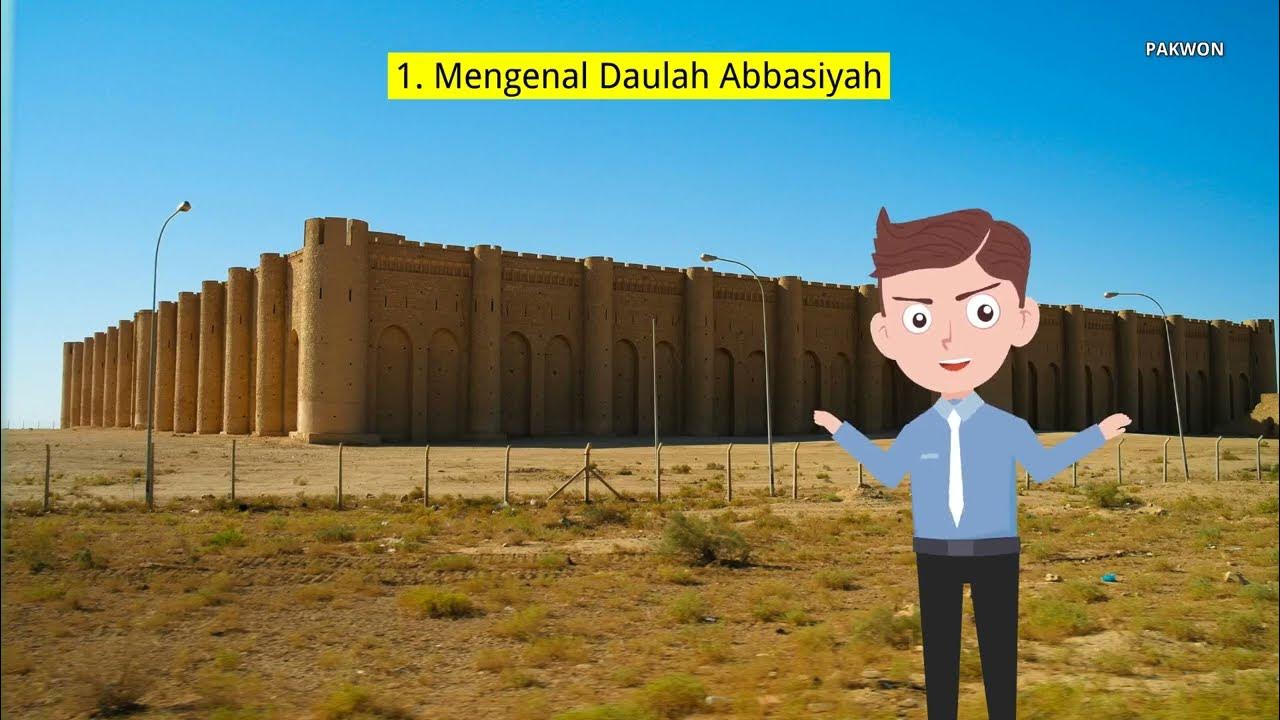
Mengenal Daulah Abbasiyah

DINASTI ABBASIYAH | sejarah berdirinya, kemajuan Islam, Baitul hikmah, Harun Rasyid

Perkembangan Peradaban Islam Pada Masa Daulah Abbasiyah

KEMAJUAN PERADABAN DAULAH ABBASIYAH -- Lengkap
5.0 / 5 (0 votes)

