LA TITOLAZIONE ACIDO - BASE
Summary
TLDRThis video lesson explains the concept and procedure of acid-base titration, a key technique used to determine the unknown concentration of a solution. It covers the roles of the analyte, titrant, and indicator, as well as the use of burettes and beakers for precise measurement. The instructor demonstrates how to perform a titration step by step, highlighting the importance of careful addition and observation of color change at the equivalence point. A practical example using oxalic acid and sodium hydroxide illustrates the calculation of molar concentration, reinforcing the theoretical principles and providing a clear, hands-on understanding of titration in chemistry.
Takeaways
- 🧪 Acid-base titration is a key analytical technique used to determine the unknown concentration of a solution by gradually adding a solution of known concentration.
- 📌 The solution being analyzed is called the analyte, while the solution with a known concentration is called the titrant.
- ⚗️ A burette is used to deliver the titrant precisely into the analyte solution during the titration process.
- 🎨 Indicators are added to the analyte to signal the endpoint of the reaction through a sudden color change.
- 📏 The volume of titrant added is measured to calculate the concentration of the analyte once the color change indicates the endpoint.
- -
- 🔢 The stoichiometric ratio between the analyte and titrant is crucial for calculating the concentration correctly, especially when the reaction involves polyprotic acids.
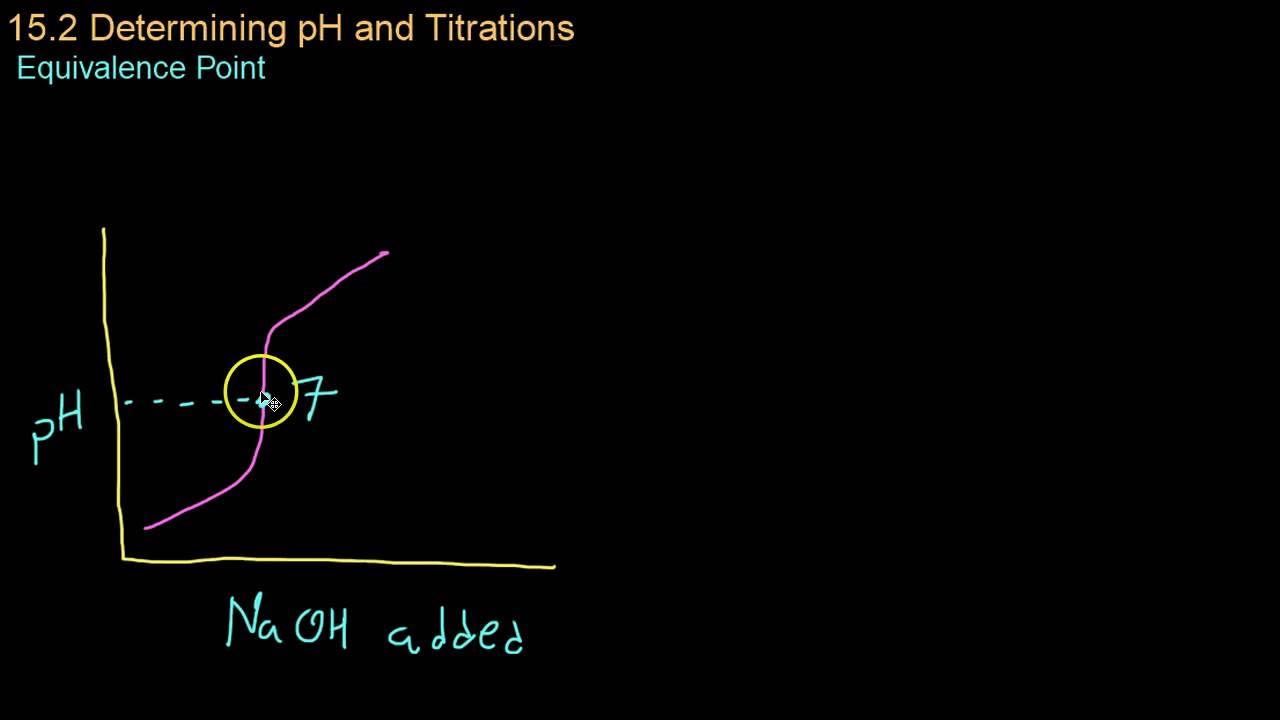
- 📊 A titration curve shows how the pH of the analyte changes as the titrant is added, with a sharp change indicating the equivalence point.
- 💧 Gentle stirring of the solution ensures complete interaction between molecules and accurate results.
- 📐 Calculations involve converting volumes to liters, determining moles of titrant, adjusting for the stoichiometric ratio, and then finding the molarity of the analyte.
- 💡 In the provided example, 30 mL of oxalic acid reacted with 45 mL of 0.2 M NaOH, leading to a calculated analyte concentration of 0.15 M.
- 📚 The video also covers broader topics of acid-base equilibria, pH measurement, and the significance of acids, bases, and neutral solutions.
Q & A
What is an acid-base titration?
-An acid-base titration is a laboratory technique used to determine the unknown concentration of a solution (analite) by gradually adding a solution of known concentration (titrant) until the reaction reaches the equivalence point.
What is the difference between an analyte and a titrant?
-The analyte is the solution whose concentration is unknown and needs to be determined, while the titrant is the solution with a known concentration that reacts with the analyte.
What role does an indicator play in titration?
-An indicator is a chemical substance that changes color at the equivalence point, signaling that the reaction between the analyte and titrant is complete.
What equipment is typically used in an acid-base titration?
-The main equipment includes a burette, which contains the titrant, a flask or beaker for the analyte, and sometimes a magnetic stirrer to mix the solution during titration.
How is the volume of titrant used in a titration measured?
-The volume of titrant is measured by noting the initial and final readings of the burette. The difference gives the total volume of titrant added to reach the equivalence point.
What is the point of equivalence in a titration?
-The point of equivalence is the moment when the amount of titrant added is chemically equivalent to the amount of analyte present, meaning the reaction is complete.
In the example with oxalic acid and NaOH, what is the stoichiometric relationship?
-Oxalic acid (H2C2O4) is a diprotic acid, so it reacts with NaOH in a 1:2 ratio: one molecule of oxalic acid reacts with two molecules of NaOH.
How do you calculate the moles of titrant used in the experiment?
-The moles of titrant are calculated by multiplying its molarity by the volume used in liters. For example, 0.2 M NaOH and 0.045 L give 0.009 moles of NaOH.
How is the concentration of the analyte determined after titration?
-The concentration of the analyte is found by calculating the moles of analyte from the stoichiometric ratio with the titrant and then dividing by the volume of the analyte solution. In the example, 0.0045 moles of H2C2O4 in 0.03 L gives 0.15 M.
Why is it important to convert milliliters to liters in titration calculations?
-Volumes must be in liters because molarity is expressed in moles per liter. Using consistent units ensures accurate calculation of moles and concentration.
What observable change indicates the end of a titration with an indicator?
-The end of the titration is indicated by a sudden change in the color of the solution, which corresponds to reaching the equivalence point.
How does the pH change during an acid-base titration?
-The pH changes gradually at first and then shows a sudden jump at the equivalence point. The magnitude of this jump depends on whether a strong or weak acid/base is used.
Outlines

このセクションは有料ユーザー限定です。 アクセスするには、アップグレードをお願いします。
今すぐアップグレードMindmap

このセクションは有料ユーザー限定です。 アクセスするには、アップグレードをお願いします。
今すぐアップグレードKeywords

このセクションは有料ユーザー限定です。 アクセスするには、アップグレードをお願いします。
今すぐアップグレードHighlights

このセクションは有料ユーザー限定です。 アクセスするには、アップグレードをお願いします。
今すぐアップグレードTranscripts

このセクションは有料ユーザー限定です。 アクセスするには、アップグレードをお願いします。
今すぐアップグレード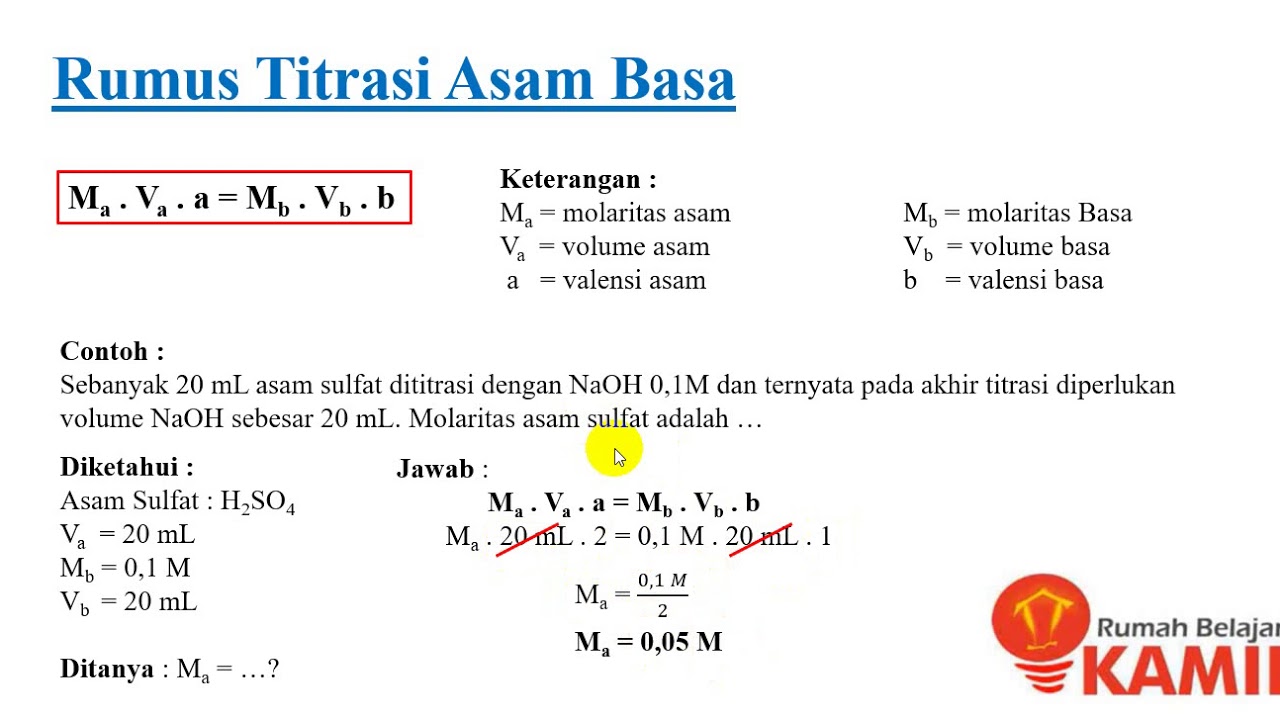




5.0 / 5 (0 votes)

