Ch 19 mod 62 Sticky notes ced 2021
Summary
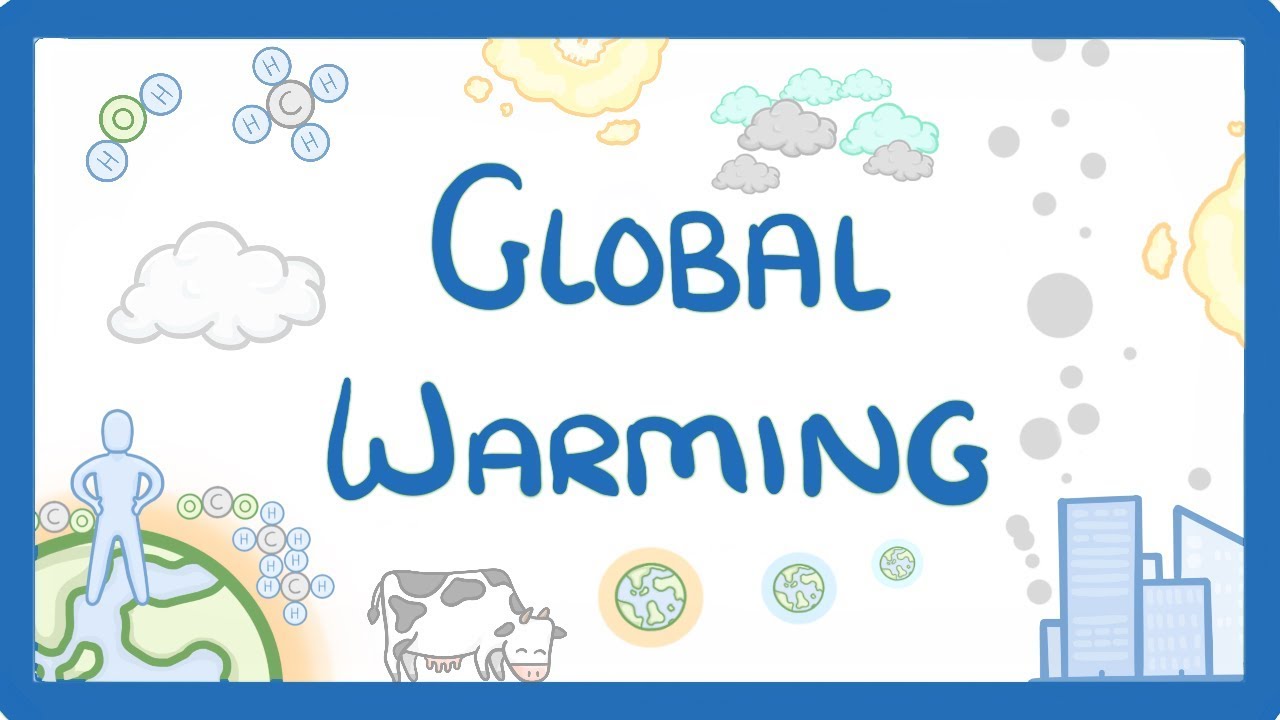
TLDRThis chapter focuses on the causes of climate change, particularly the role of greenhouse gases like CO2, methane, and water vapor in global warming. The script explains how these gases trap heat in the atmosphere and their increased concentration due to human activities like fossil fuel burning, deforestation, and agriculture. It highlights the impact on the Arctic ecosystem, such as the decline of polar bears, and explores both natural and anthropogenic sources of greenhouse gases. The chapter emphasizes the urgency of addressing these changes for a sustainable future.
Takeaways
- ❄️ Arctic ice loss is causing polar bear population declines and disrupting the northern food web.
- 🌍 Greenhouse gases are essential for life on Earth but excessive concentrations from human activity cause global warming.
- 💨 Water vapor is the most abundant greenhouse gas, but CO2 is the largest human-made contributor.
- 🔥 Other greenhouse gases include methane, nitrous oxide, CFCs, HCFCs, HFCs, and tropospheric ozone, each with varying warming potential.
- ☀️ Greenhouse gases trap outgoing infrared radiation from Earth, warming the troposphere.
- 🌋 Natural sources of greenhouse gases include volcanic eruptions, wildfires, decomposition, digestion, wetlands, and water vapor from evaporation and transpiration.
- 🏭 Human activities such as burning fossil fuels, deforestation, livestock farming, rice cultivation, and landfills significantly increase greenhouse gas concentrations.
- 🐄 Livestock, especially cattle, produce methane through digestion, and flooded rice fields contribute to methane emissions via anaerobic decomposition.
- 🌱 Deforestation not only emits CO2 but also reduces the Earth's ability to sequester carbon through trees.
- 📈 Since the Industrial Revolution, greenhouse gas levels have risen dramatically, leading to unprecedented rates of global warming.
- 💡 Global warming potential measures the ability of a gas to trap heat and its persistence in the atmosphere, with methane being 25 times more potent than CO2.
Q & A
What is the main focus of Chapter 19, Module 62?
-Chapter 19, Module 62 focuses on global change, particularly examining changes in the Arctic, the decline of polar bears, and impacts on the food web.
Why are greenhouse gases important for Earth?
-Greenhouse gases are crucial because they trap infrared radiation, making Earth's climate habitable. Without them, the planet would be too cold to sustain life.
Which greenhouse gas is the most abundant in the atmosphere?
-Water vapor is the most abundant greenhouse gas in the atmosphere.
Which greenhouse gas is primarily produced by human activities?
-Carbon dioxide (CO2) is the greatest anthropogenically produced greenhouse gas, mainly from burning fossil fuels.
How do greenhouse gases trap heat in the atmosphere?
-Short-wavelength UV radiation passes through greenhouse gases, warms the planet, and is then re-emitted as long-wavelength infrared radiation, which is absorbed and partially re-emitted back to Earth, causing warming.
What is the concept of global warming potential (GWP)?
-Global warming potential measures a greenhouse gas's ability to trap heat and its persistence in the atmosphere compared to carbon dioxide. Methane, for example, has a GWP 25 times greater than CO2.
What are some natural sources of greenhouse gases?
-Natural sources include volcanic eruptions, wildfires, decomposition, digestion, wetlands (methane), termites, denitrification in soils and water, and evaporation/transpiration of water vapor.
How do volcanic eruptions affect climate in the short term?
-Volcanic eruptions release fine particles and sulfate aerosols that can block sunlight and temporarily cool the atmosphere, as seen in the 1880s Krakatoa eruption.
What are the main anthropogenic sources of greenhouse gases?
-Main human-made sources include burning fossil fuels (CO2), livestock digestion (methane), agricultural practices like rice farming (methane and nitrous oxide), landfills (methane), and deforestation (CO2).
Why are rice fields in California significant in greenhouse gas discussions?
-Flooded rice fields in California produce methane due to anaerobic decomposition. They also serve as stopover habitats for migratory birds, showing an intersection between agriculture, greenhouse gases, and wildlife conservation.
Why is methane a concern even though it is less abundant than CO2?
-Methane has a much higher global warming potential than CO2 (25 times), so even smaller amounts can have significant warming effects. Its levels are also rising rapidly.
How does deforestation contribute to greenhouse gas emissions?
-Cutting and burning trees releases stored CO2 into the atmosphere, and removing trees reduces the planet's capacity to sequester CO2 through photosynthesis.
Outlines

このセクションは有料ユーザー限定です。 アクセスするには、アップグレードをお願いします。
今すぐアップグレードMindmap

このセクションは有料ユーザー限定です。 アクセスするには、アップグレードをお願いします。
今すぐアップグレードKeywords

このセクションは有料ユーザー限定です。 アクセスするには、アップグレードをお願いします。
今すぐアップグレードHighlights

このセクションは有料ユーザー限定です。 アクセスするには、アップグレードをお願いします。
今すぐアップグレードTranscripts

このセクションは有料ユーザー限定です。 アクセスするには、アップグレードをお願いします。
今すぐアップグレード関連動画をさらに表示




5.0 / 5 (0 votes)

