Tipos de colisões, coeficiente de restituição e conservação da quantidade de movimento
Summary
TLDRThis physics lesson explores the three types of collisions: elastic, partially elastic, and inelastic. It covers key concepts such as conservation of kinetic energy and momentum, with a focus on how these principles apply to each collision type. In elastic collisions, both energy and momentum are conserved. In partially elastic collisions, energy is lost, but momentum is still conserved. In inelastic collisions, energy is significantly dissipated. The video also introduces the coefficient of restitution, which helps identify collision types, and concludes with a practical example of an inelastic collision between two ice skaters.
Takeaways
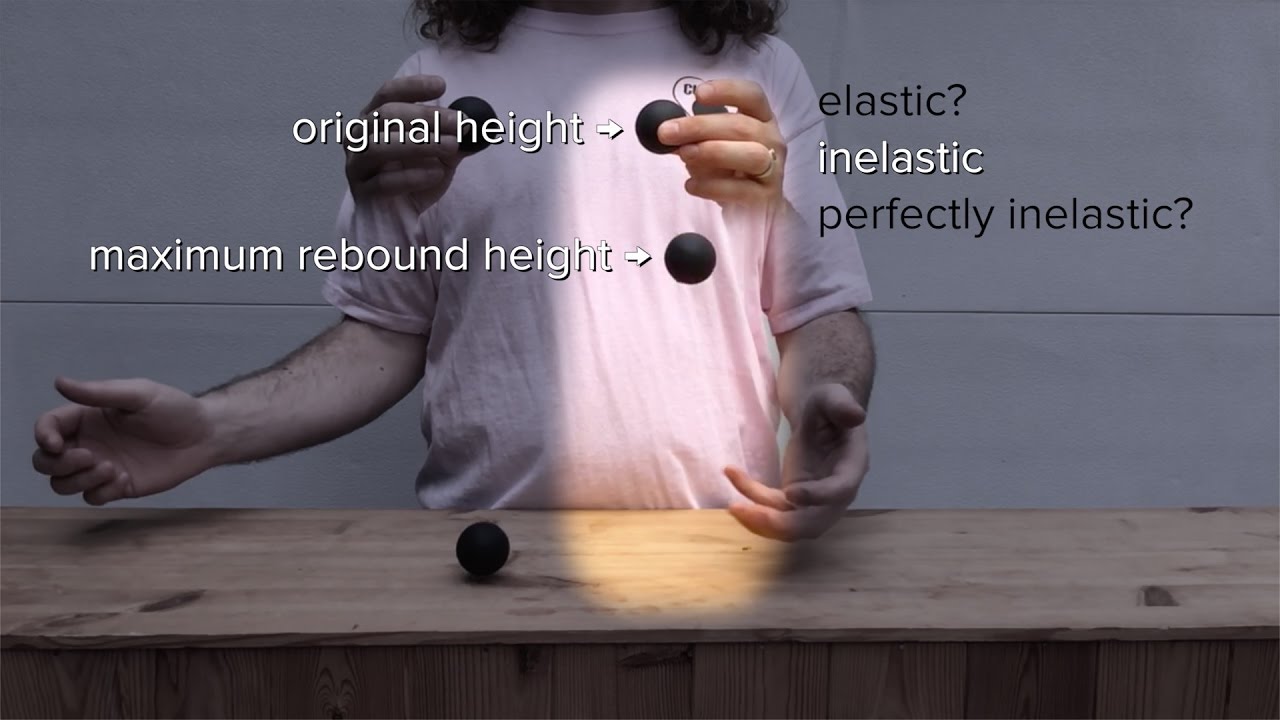
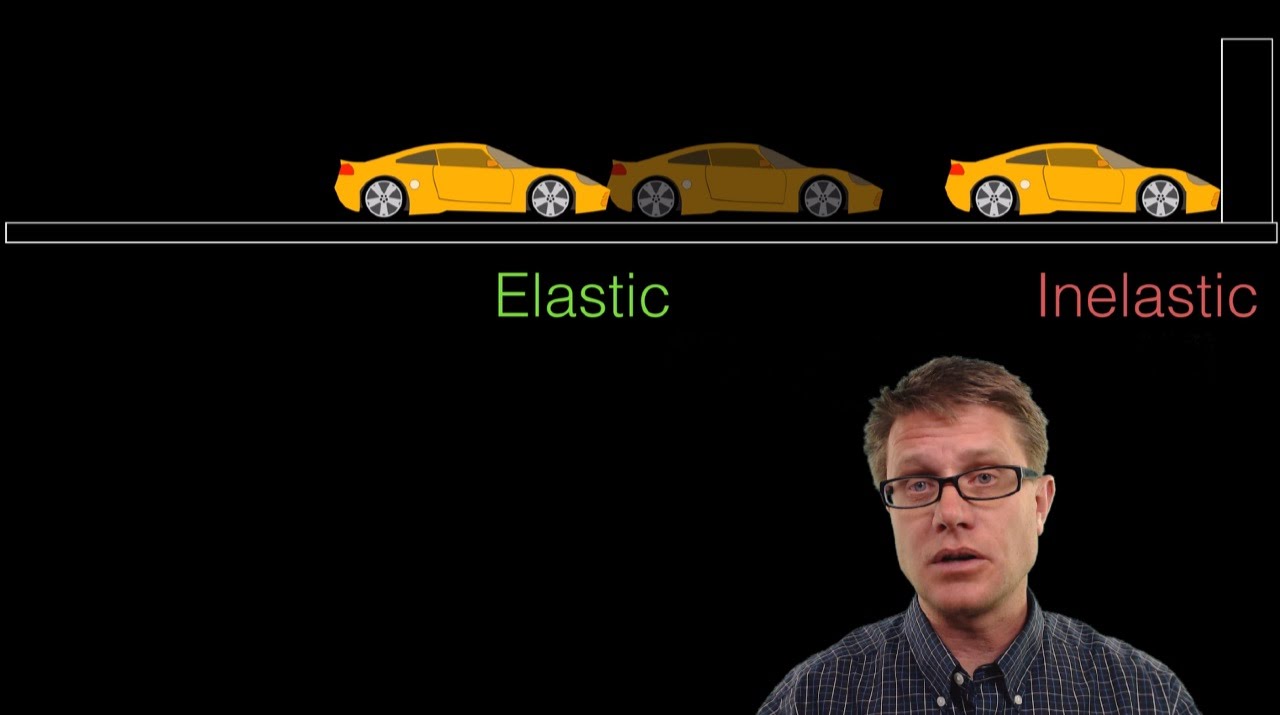
- 😀 Elastic collisions involve no loss of kinetic energy. The relative velocity before and after the collision remains the same.
- 😀 In elastic collisions, kinetic energy is conserved, but momentum is the key quantity that remains unchanged in all types of collisions.
- 😀 Partially elastic collisions lead to a loss of kinetic energy. After the collision, the relative velocity of separation is smaller than the relative velocity of approach.
- 😀 Inelastic collisions involve significant energy dissipation, often resulting in objects sticking together after the collision. The kinetic energy before the collision is much greater than after.
- 😀 The coefficient of restitution (e) is used to determine the type of collision. It's calculated as the ratio of the relative velocity after collision to the relative velocity before collision.
- 😀 In elastic collisions, the coefficient of restitution (e) equals 1.
- 😀 In inelastic collisions, the coefficient of restitution (e) equals 0, as the objects move together with no relative motion after the collision.
- 😀 Partially elastic collisions have a coefficient of restitution greater than 0 but less than 1, indicating some loss of kinetic energy but still some degree of separation after collision.
- 😀 The relative velocity of approach is calculated by adding the speeds of the objects if they are moving towards each other in opposite directions.
- 😀 The relative velocity of separation is calculated by subtracting the speeds of the objects if they move in the same direction after collision.
- 😀 A practical example of an inelastic collision involves two skaters, where after a perfectly inelastic collision, both skaters move together with a combined velocity of 7.5 m/s.
Q & A
What are the three types of collisions discussed in the lesson?
-The three types of collisions discussed are elastic collisions, partially elastic collisions, and inelastic collisions.
What is the key characteristic of an elastic collision?
-In an elastic collision, there is no loss of kinetic energy. The relative speed before and after the collision remains the same.
How is momentum conserved in elastic collisions?
-Momentum is conserved in elastic collisions. The total momentum before the collision is equal to the total momentum after the collision, which can be expressed as the sum of the masses and velocities of the objects involved.
What happens to kinetic energy in partially elastic collisions?
-In partially elastic collisions, there is a loss of kinetic energy, but momentum is still conserved. The relative speed of separation after the collision is less than the relative speed of approach.
What is a key feature of inelastic collisions?
-In inelastic collisions, there is a significant loss of kinetic energy, and the objects may stick together after the collision, moving with a common velocity.
How can you determine the type of collision using the coefficient of restitution?
-The coefficient of restitution (e) is a measure of the elasticity of a collision. For elastic collisions, e = 1. For inelastic collisions, e = 0. For partially elastic collisions, e is between 0 and 1.
What is the formula for the coefficient of restitution?
-The coefficient of restitution is given by the ratio of the relative speed after collision to the relative speed before collision. Mathematically, it is e = (v2 - v1) / (u1 - u2), where v1 and v2 are the velocities after the collision, and u1 and u2 are the velocities before the collision.
In the example problem with the skaters, how did the conservation of momentum apply?
-In the skater example, conservation of momentum was applied by equating the total momentum before and after the collision. The skater moving at 15 m/s collided with a stationary skater, and after the collision, they moved together with a common velocity.
What is the final velocity of the two skaters after the collision?
-The final velocity of the two skaters after the collision is 7.5 m/s, which is calculated using the conservation of momentum and the fact that the masses of the skaters are equal.
What happens to the energy in an inelastic collision?
-In an inelastic collision, a significant portion of the kinetic energy is transformed into other forms of energy such as heat and sound, resulting in a loss of kinetic energy.
Outlines

このセクションは有料ユーザー限定です。 アクセスするには、アップグレードをお願いします。
今すぐアップグレードMindmap

このセクションは有料ユーザー限定です。 アクセスするには、アップグレードをお願いします。
今すぐアップグレードKeywords

このセクションは有料ユーザー限定です。 アクセスするには、アップグレードをお願いします。
今すぐアップグレードHighlights

このセクションは有料ユーザー限定です。 アクセスするには、アップグレードをお願いします。
今すぐアップグレードTranscripts

このセクションは有料ユーザー限定です。 アクセスするには、アップグレードをお願いします。
今すぐアップグレード関連動画をさらに表示



5.0 / 5 (0 votes)

