Penerapan metode pembelajaran PAI; prinsip, landasan, dan karakteristik materi PAI
Summary
TLDRIn this lecture, Muhammad Nul Fadil discusses the importance of using effective teaching methods in Islamic Education (PAI). He emphasizes aligning methods with students' cognitive and emotional needs, considering factors like age, intellectual ability, and learning style, while ensuring teachers possess the necessary competence and personality. The lecture covers principles of effectiveness, motivation, individualization, and creativity, along with theological, psychological, and pedagogical foundations. It also details suitable teaching methods for different PAI subjects, including Akidah, Al-Qur’an, Hadis, Fikih, Akhlak, and SKI. Overall, the content highlights tailoring methods to student characteristics and materials to achieve meaningful and engaging learning.
Takeaways
- 😀 The use of appropriate teaching methods in PAI ensures knowledge reaches both the mind (cognitive) and heart (affective) of students.
- 😀 Teachers must consider both internal factors (student abilities, age, learning style, and teacher competence) and external factors (facilities and learning objectives) when selecting methods.
- 😀 Effective teaching methods should be efficient, targeting goals without wasting time.
- 😀 Motivating students and aligning lessons with their interests is crucial to enhance engagement and learning.
- 😀 Individuality and creativity in teaching help tailor lessons to student abilities and personality, preventing negative impacts on confidence.
- 😀 Methods in PAI should be grounded in religious teachings, referencing the Qur’an, Hadith, and Prophet’s practices like consultation, discussion, and problem-solving.
- 😀 Psychological understanding of student development and family background is essential for effective learning.
- 😀 Pedagogical principles involve providing guidance, structured stages, and cues that align with modern educational theories and Islamic values.
- 😀 Different PAI materials require different teaching methods: abstract concepts like Akidah need logical dialogues and examples, while textual or memorization-based content like Qur’an and Hadith benefit from drills and mnemonics.
- 😀 Practical subjects such as Fikih are best taught with demonstrations, simulations, and hands-on practice, while Akhlak and historical content (SKI) benefit from storytelling, role modeling, and visual materials.
- 😀 The overall principle is that methods serve the learning objectives, acting as tools to effectively convey religious knowledge and values.
Q & A
Why are methods important in teaching Islamic Religious Education (PAI)?
-Methods are essential in teaching PAI because they ensure that the material reaches students both cognitively (intellectually) and affectively (emotionally). This helps in making the learning experience comprehensive and engaging for students, impacting both their minds and hearts.
What is the role of a teacher when selecting a teaching method?
-The teacher must consider factors such as the students' age, intellectual abilities, and learning styles. It's important to choose methods that match the students' capabilities and engage them effectively in the learning process.
What internal factors should a teacher consider when choosing a teaching method?
-Teachers should assess their own competence, personality, and teaching skills. It's crucial for teachers to have the ability to explain concepts clearly and interact well with students to create an effective learning environment.
How do external factors influence the choice of teaching methods?
-External factors, such as the students' age, intellectual abilities, and learning styles, significantly influence method selection. A teacher must consider how well students can understand and engage with the material when deciding on a method.
What are the key principles to consider when applying teaching methods in PAI?
-The key principles include effectiveness (achieving the learning objectives without wasting time), motivation and interest (engaging students), individualization (adapting to each student's needs), and creativity (making learning interactive and fun). Additionally, methods should align with Islamic teachings, ensuring a balance of knowledge and character development.
What is the significance of motivation in PAI teaching?
-Motivation is critical in keeping students engaged and interested in the subject. In the context of PAI, motivating students is aligned with the Islamic teaching of providing encouragement (basyiran) while avoiding discouragement (nafiran).
How does a teacher incorporate individualization in teaching methods?
-Individualization involves recognizing each student's unique abilities, learning pace, and intellectual capacity. Teachers can tailor their methods to meet each student’s needs, ensuring that all students can engage effectively with the material.
Why is it important to align teaching methods with theological foundations in PAI?
-Aligning teaching methods with theological foundations ensures that the teachings are rooted in Islamic principles. It allows teachers to impart knowledge in a way that is consistent with religious values, such as wisdom (hikmah) and good advice (nasihat), as outlined in the Qur'an and Hadith.
What is the relationship between psychological and pedagogical foundations in teaching?
-Psychological foundations involve understanding the developmental stages and personal circumstances of students, while pedagogical foundations focus on the methodology and structure of teaching. Both are crucial for ensuring that teaching methods are suitable for the students' emotional and cognitive development.
How does the teaching method vary for different subjects in PAI?
-For subjects like Akidah (belief), abstract methods such as analogies and logical discussions are used. For Al-Qur'an and Hadith, memorization methods like drills and direct interaction (Talaqi) are applied. Fikih, being practical, benefits from demonstrations and simulations. Akhlak (morality) is taught through examples from the lives of the Prophet, while Sejarah (history) is taught using narratives and visual aids.
Outlines

このセクションは有料ユーザー限定です。 アクセスするには、アップグレードをお願いします。
今すぐアップグレードMindmap

このセクションは有料ユーザー限定です。 アクセスするには、アップグレードをお願いします。
今すぐアップグレードKeywords

このセクションは有料ユーザー限定です。 アクセスするには、アップグレードをお願いします。
今すぐアップグレードHighlights

このセクションは有料ユーザー限定です。 アクセスするには、アップグレードをお願いします。
今すぐアップグレードTranscripts

このセクションは有料ユーザー限定です。 アクセスするには、アップグレードをお願いします。
今すぐアップグレード関連動画をさらに表示
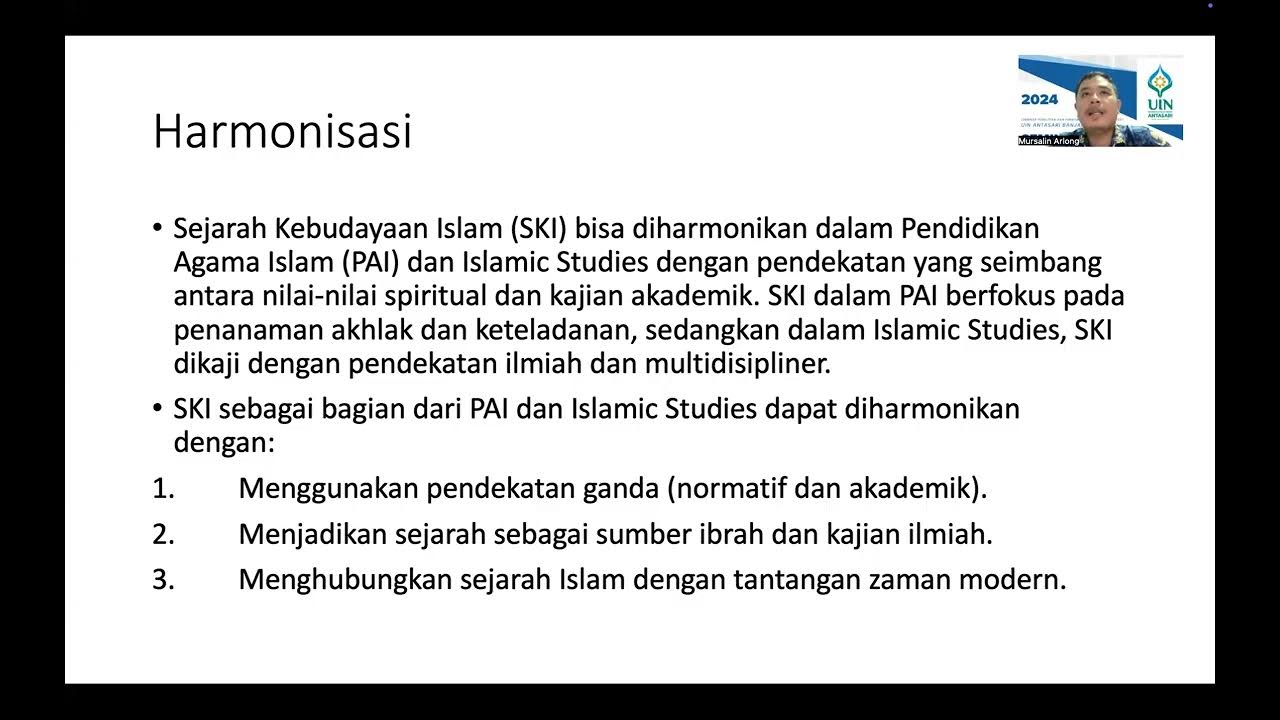
Recalling: SKI dalam paradigma PAI dan Studi Islam

P, 29 Desember 2025, Ontologi, Epistemologi, dan Aksiologi - MATERI PAI

GURU LUAR BIASA (1/3)

EPS 21 KARAKTERISTIK PENDIDIKAN AGAMA ISLAM DALAM PERSPEKTIF MANAJEMEN PEMBELAJARAN

MATERI PEMBELAJARAN AL-QUR'AN DAN HADITS

Strategi Pembelajaran Ideal dalam Pendidikan Islam | MATERI KULIAH FILSAFAT PENDIDIKAN ISLAM
5.0 / 5 (0 votes)

