Il moto circolare uniforme
Summary
TLDRThe video explains the concept of uniform circular motion, where a point moves along a circular path covering equal arcs in equal time intervals. It introduces key physical quantities: scalar speed, which remains constant; period, the time for a full rotation; and frequency, the number of rotations per second. The relationship between scalar speed, angular velocity, and radius is clarified, along with formulas for calculating each. Using a practical example with a 1-meter radius and a 6-second period, the video demonstrates how to compute the point’s speed and angular velocity, providing a clear and comprehensive understanding of uniform circular motion and its fundamental principles.
Takeaways
- 😀 Uniform circular motion (UCM) is a motion where equal arcs are covered in equal time intervals.
- 😀 In UCM, the scalar speed of the moving point remains constant throughout the motion.
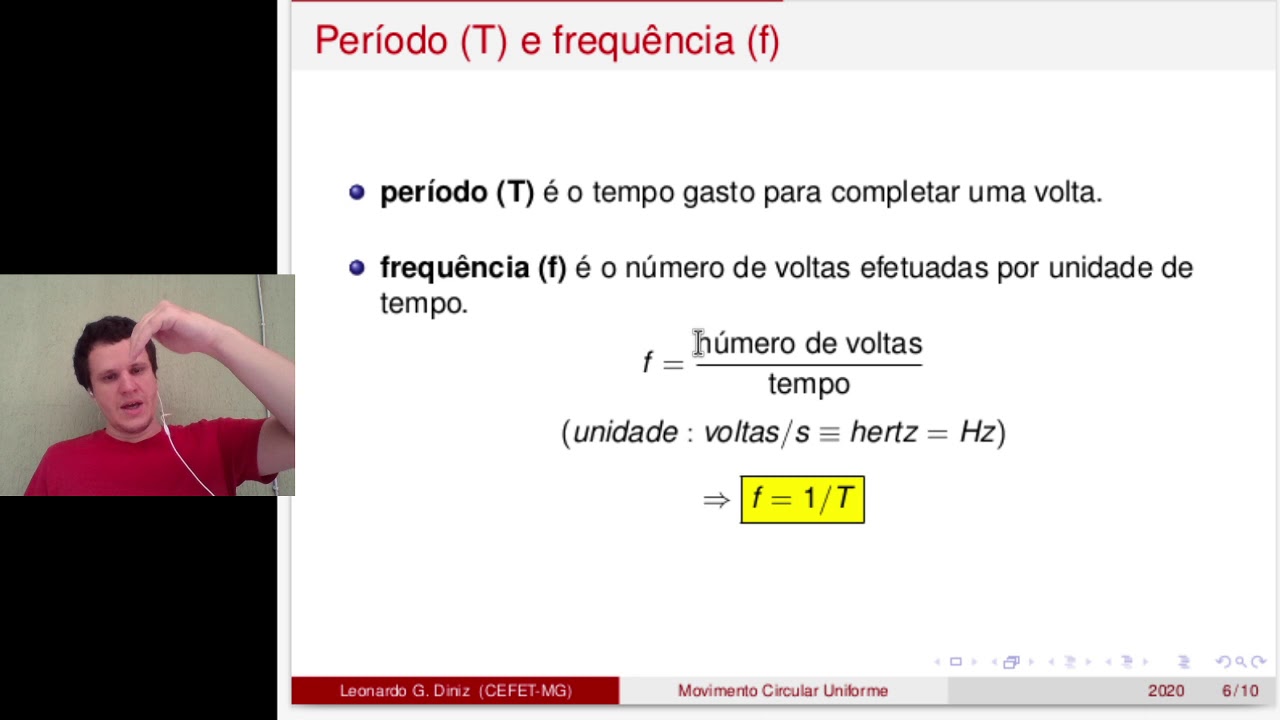
- 😀 The period (T) is the time required for a point to complete one full rotation around the circle.
- 😀 A faster rotation corresponds to a shorter period, while a slower rotation corresponds to a longer period.
- 😀 Frequency (f) is the inverse of the period and indicates the number of rotations per second, measured in Hertz (Hz).
- 😀 The scalar speed (v) can be calculated as the length of an arc divided by the time taken to traverse it.
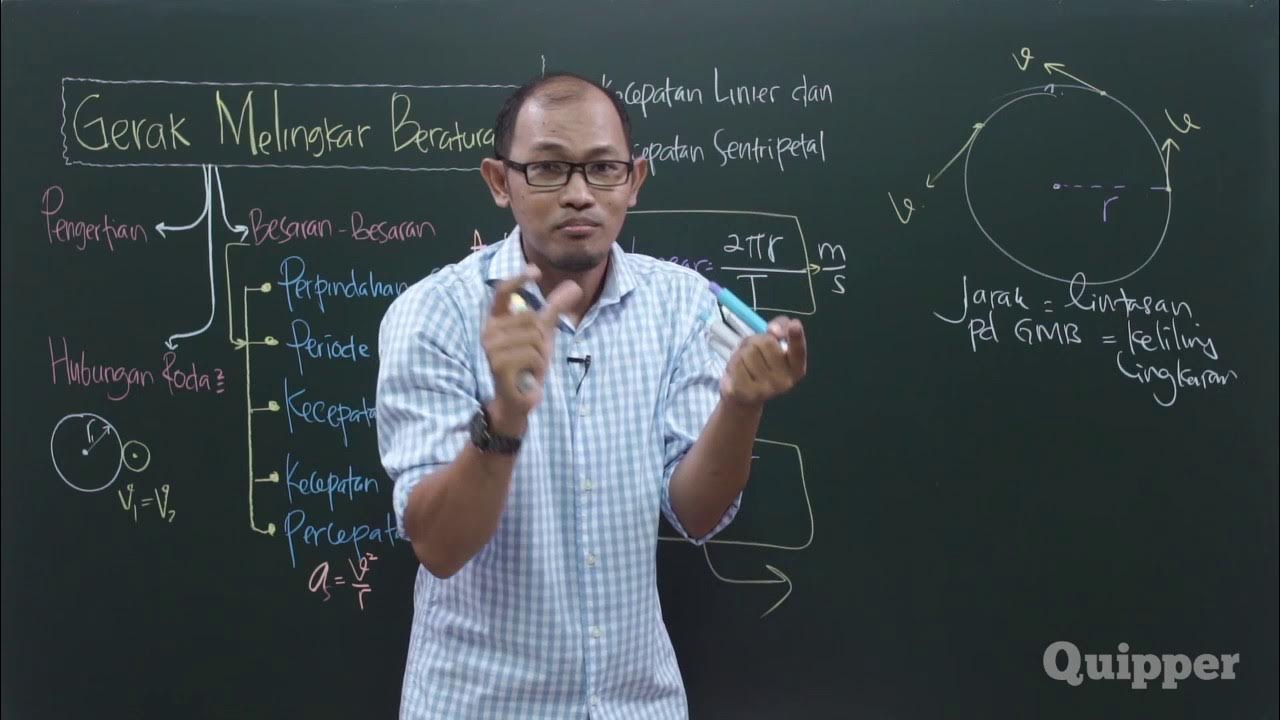
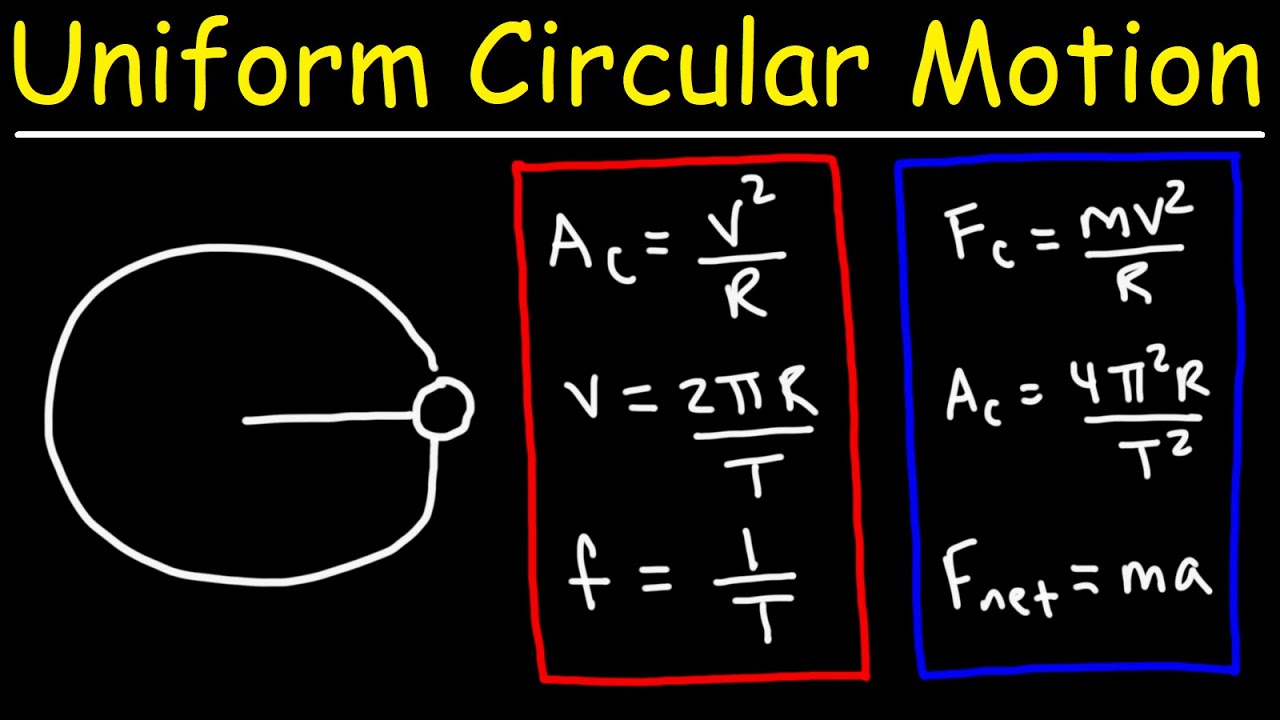
- 😀 For a full circle, scalar speed is given by v = 2πR / T, where R is the radius of the circle.
- 😀 Angular velocity (ω) is defined as the angle swept by the radius vector per unit time: ω = Δα / Δt.
- 😀 For uniform circular motion, angular velocity is constant and can be calculated as ω = 2π / T, with α in radians.
- 😀 Scalar speed and angular velocity are related by the formula v = ω × R.
- 😀 Observing how the red point moves on the circle helps visualize the regularity and proportionality of arc length to time in UCM.
Q & A
What is uniform circular motion?
-Uniform circular motion is a type of motion where an object moves along a circular path, covering equal arcs of the circumference in equal intervals of time, meaning its angular speed and velocity remain constant.
How can we define regularity in uniform circular motion?
-Regularity in uniform circular motion is defined by the fact that the object moves equal distances (arcs of the circle) in equal times, ensuring that its motion is predictable and consistent.
What is the relationship between the time intervals and the distance traveled in uniform circular motion?
-In uniform circular motion, the distance traveled by the object is directly proportional to the time taken to travel that distance. For example, in an interval of 1 second between 1 and 2 seconds, the distance covered is half of that covered between 3 and 5 seconds.
What is the period in uniform circular motion?
-The period (T) is the time it takes for the object to complete one full revolution around the circle. A faster rotation means a shorter period.
What is frequency and how is it related to the period?
-Frequency is the reciprocal of the period, indicating how many full rotations the object makes per unit of time. It is measured in cycles per second or Hertz (Hz). A faster rotation corresponds to a higher frequency.
How is the scalar speed in uniform circular motion calculated?
-The scalar speed (v) is calculated by dividing the total distance of the circular path (2πR, where R is the radius of the circle) by the time it takes to complete one revolution (the period, T).
What is the value of the scalar speed when the period is 6 seconds and the radius is 1 meter?
-When the period is 6 seconds and the radius is 1 meter, the scalar speed is approximately 1 meter per second, calculated as v = 2π * 1 / 6.
What is angular velocity in uniform circular motion?
-Angular velocity (denoted by Omega, ω) is the rate at which the object sweeps through an angle, and it is defined as the ratio of the central angle (Δα) swept by the radius vector to the time interval (Δt). In uniform circular motion, it is given by ω = 2π / T, where T is the period.
How is the relationship between angular velocity and scalar speed expressed?
-In uniform circular motion, the scalar speed (v) is equal to the angular velocity (ω) multiplied by the radius (R) of the circle: v = ω * R.
Why is the velocity constant in uniform circular motion?
-In uniform circular motion, the velocity is constant because the object moves at a constant speed along the circular path. However, the direction of the velocity changes continuously, keeping it tangential to the circle at every point.
Outlines

このセクションは有料ユーザー限定です。 アクセスするには、アップグレードをお願いします。
今すぐアップグレードMindmap

このセクションは有料ユーザー限定です。 アクセスするには、アップグレードをお願いします。
今すぐアップグレードKeywords

このセクションは有料ユーザー限定です。 アクセスするには、アップグレードをお願いします。
今すぐアップグレードHighlights

このセクションは有料ユーザー限定です。 アクセスするには、アップグレードをお願いします。
今すぐアップグレードTranscripts

このセクションは有料ユーザー限定です。 アクセスするには、アップグレードをお願いします。
今すぐアップグレード関連動画をさらに表示



5.0 / 5 (0 votes)

