Chapter 5: A Survey of Probability Concepts, Part 1
Summary
TLDRIn this chapter on probability, we explore key concepts such as probability definitions, types of probabilities (classical, empirical, and subjective), and fundamental probability rules. Topics covered include classical probability with dice and coin flips, empirical probability involving data collection, and subjective probability with real-life examples like sports predictions. We also discuss addition and multiplication rules for probabilities, such as the special rule for mutually exclusive events and the complement rule. The importance of understanding how probabilities behave in different scenarios is emphasized, preparing the reader for more complex applications of probability in statistics.
Takeaways
- 😀 Probability is a number between 0 and 1 that represents the likelihood of an event occurring, with 0 meaning impossible and 1 meaning certain.
- 😀 Experiments are processes that produce one of several possible outcomes, while outcomes are the individual results, and events are collections of one or more outcomes.
- 😀 Classical probability is used when all outcomes are equally likely and is calculated as the number of favorable outcomes divided by the total number of outcomes.
- 😀 Empirical probability is based on observed data and requires large sample sizes for accuracy, following the law of large numbers.
- 😀 Subjective probability is based on personal judgment and available information when classical or empirical methods are not feasible.
- 😀 The addition rule of probability is used for 'or' events: for mutually exclusive events, P(A or B) = P(A) + P(B), and for non-mutually exclusive events, P(A or B) = P(A) + P(B) - P(A and B).
- 😀 The complement rule allows for calculating the probability of an event not occurring: P(Not A) = 1 - P(A).
- 😀 The special multiplication rule applies to independent events: P(A and B) = P(A) × P(B), where one event does not affect the other.
- 😀 The general multiplication rule applies to dependent events: P(A and B) = P(A) × P(B|A), where the probability of the second event depends on the first.
- 😀 Independence matters: without replacement or when one event affects another, probabilities must be adjusted to account for dependency.
- 😀 Probability can be applied to everyday scenarios, including coin flips, rolling dice, survey data, sports outcomes, and real-life decisions.
Q & A
What is the definition of probability?
-Probability is a value between 0 and 1 that represents the likelihood of a particular event occurring, with 0 indicating impossibility and 1 indicating certainty.
What is the difference between an experiment, an outcome, and an event in probability?
-An experiment is a process that produces one of several possible outcomes. An outcome is a single result from that experiment. An event is a collection of one or more outcomes that we are interested in studying.
What is classical probability and when is it used?
-Classical probability is used when all outcomes of an experiment are equally likely. It is calculated as the number of favorable outcomes divided by the total number of possible outcomes, such as flipping a coin or rolling a die.
What is empirical probability and how does it differ from classical probability?
-Empirical probability is based on observed data and calculated as the frequency of an event divided by the total number of observations. Unlike classical probability, it does not assume equally likely outcomes and requires real-world data collection.
What is subjective probability and when is it applied?
-Subjective probability is based on an individual's judgment or experience rather than precise calculation. It is applied in situations where classical or empirical probabilities are difficult or impossible to determine, such as predicting sports outcomes.
What is the rule of addition for mutually exclusive events?
-For mutually exclusive events, the probability that either event occurs is the sum of their individual probabilities: P(A or B) = P(A) + P(B).
How does the general rule of addition differ from the special rule?
-The general rule of addition is used when events are not mutually exclusive and accounts for overlap: P(A or B) = P(A) + P(B) - P(A and B), to avoid double counting.
What is the complement rule in probability?
-The complement rule calculates the probability of an event not happening as 1 minus the probability of the event occurring: P(not A) = 1 - P(A).
What is the special rule of multiplication and when is it used?
-The special rule of multiplication is used for independent events and states that the probability of both events occurring is the product of their individual probabilities: P(A and B) = P(A) × P(B).
How does the general rule of multiplication account for dependent events?
-For dependent events, the probability of both occurring accounts for the conditional probability of the second event given the first: P(A and B) = P(A) × P(B|A). This is used when the occurrence of one event affects the likelihood of the other.
What is the law of large numbers and how does it relate to empirical probability?
-The law of large numbers states that as the number of trials increases, the empirical probability of an event will approach its true probability, improving the accuracy of probability estimates from observed data.
Can you give an example of when events are dependent versus independent?
-Independent events example: drawing a red bean from a bag with replacement; the first draw does not affect the second. Dependent events example: drawing a red bean without replacement; the first draw changes the probabilities for the second draw.
Outlines

このセクションは有料ユーザー限定です。 アクセスするには、アップグレードをお願いします。
今すぐアップグレードMindmap

このセクションは有料ユーザー限定です。 アクセスするには、アップグレードをお願いします。
今すぐアップグレードKeywords

このセクションは有料ユーザー限定です。 アクセスするには、アップグレードをお願いします。
今すぐアップグレードHighlights

このセクションは有料ユーザー限定です。 アクセスするには、アップグレードをお願いします。
今すぐアップグレードTranscripts

このセクションは有料ユーザー限定です。 アクセスするには、アップグレードをお願いします。
今すぐアップグレード関連動画をさらに表示

4.1 An Introduction to Probabilities
STATISTIKA | KONSEP DASAR PROBABILITAS
Probabilitas 01 Pengenalan Probabilitas Dasar | Belajar Probabilitas

TI Sesi #2 - Review teori probabilitas
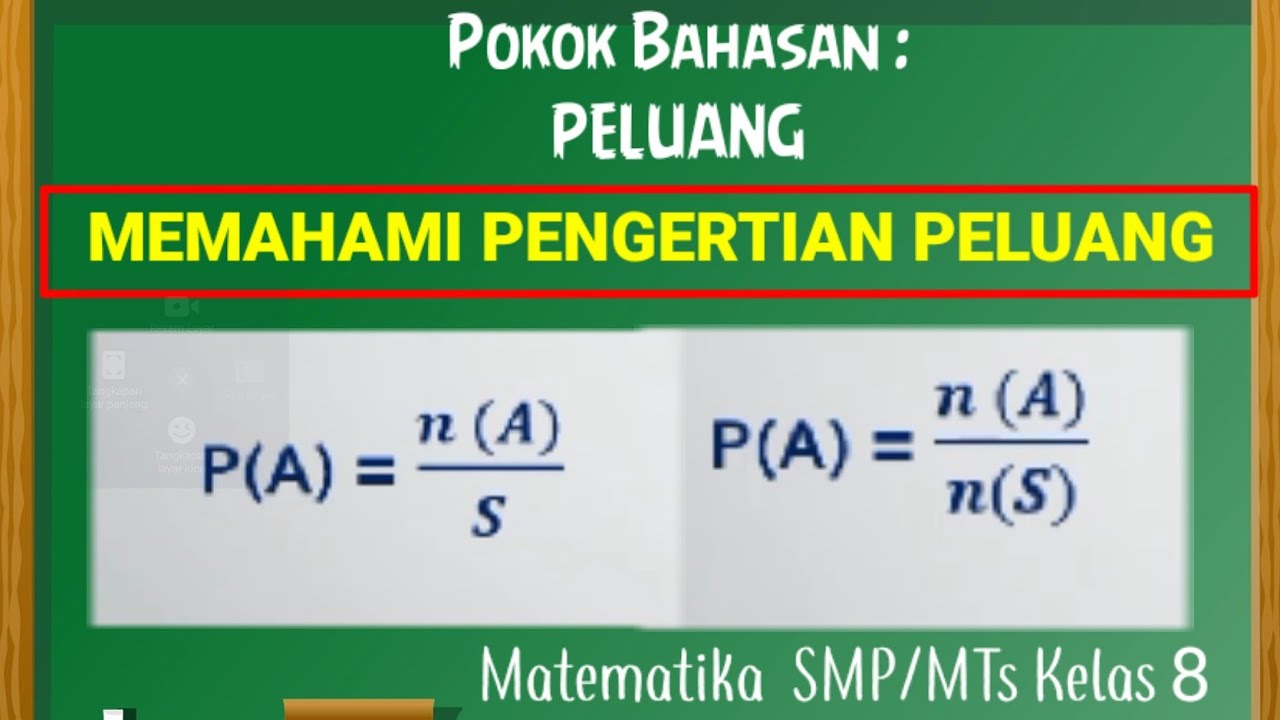
MEMAHAMI PENGERTIAN PELUANG | Matematika SMP/MTs Kelas 8
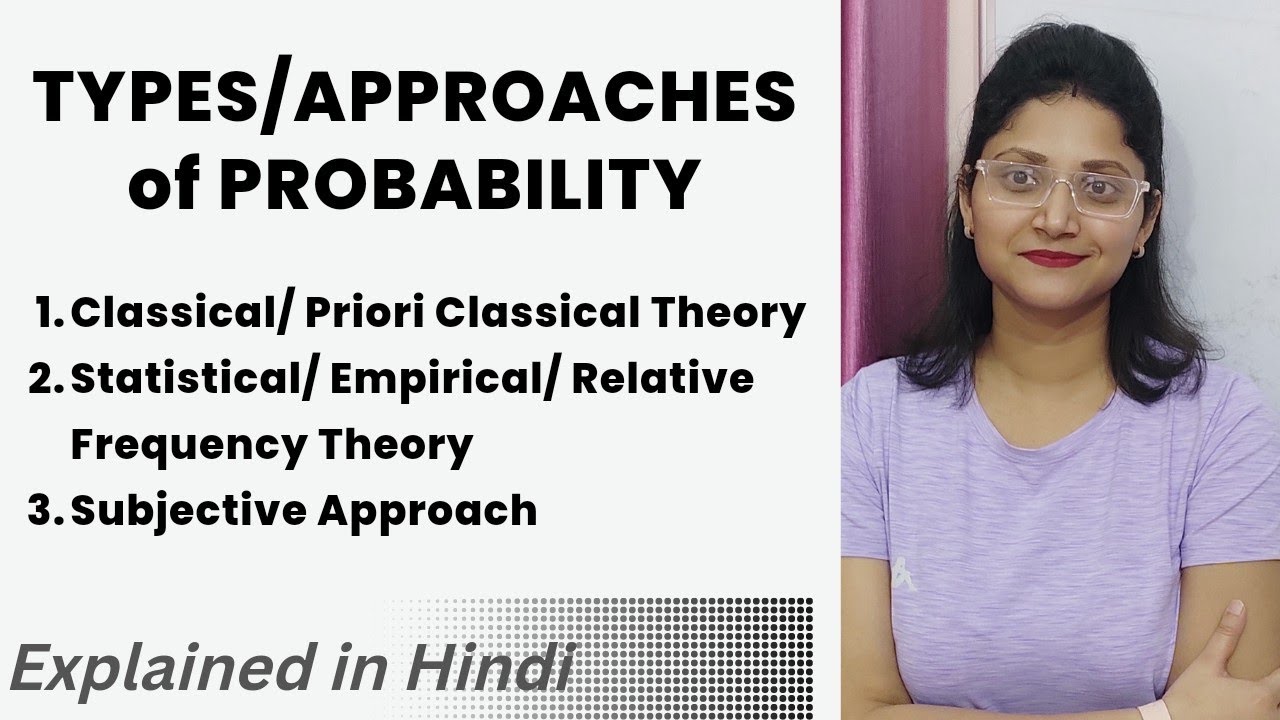
Approaches of Probability | Types of Probability | Classical | Empirical | Statistical | Subjective
5.0 / 5 (0 votes)

