Masuknya Jepang Ke Indonesia Dan Jatuhnya Hindia Belanda | Sejarah
Summary
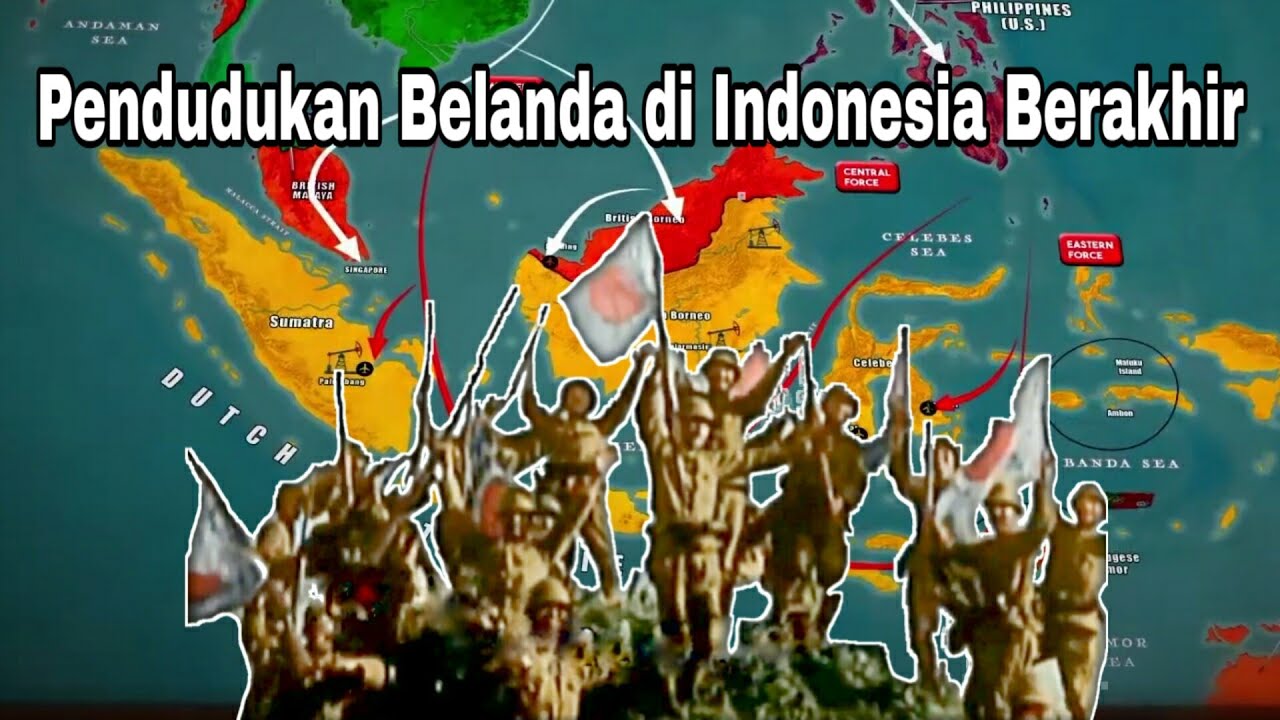
TLDRThe script details Japan's invasion of Indonesia starting on January 11, 1942, following the Meiji Restoration that transformed Japan into a military power. With the US imposing an oil embargo on Japan in 1941, Japan sought to secure vital resources in Southeast Asia. After bombing Pearl Harbor, Japan launched attacks across the Pacific, including Indonesia. Despite resistance, Japan quickly overtook key Indonesian cities, leading to the Dutch surrender on March 8, 1942, marking the end of Dutch colonial rule. Japan's occupation initially sparked hope among Indonesians, as Japan promoted propaganda suggesting it was liberating them from colonialism.
Takeaways
- 😀 Japan invaded Indonesia on January 11, 1942, landing in East Kalimantan, with the primary goal of controlling valuable resources like oil, tin, and aluminum.
- 😀 The Meiji Restoration in Japan played a pivotal role in the country's military rise, ultimately leading to Japan's expansion across Southeast Asia in the early 1940s.
- 😀 In response to Japan's growing military might, the United States imposed an embargo on Japan's oil imports, contributing to Japan's aggressive expansionist policies.
- 😀 Japan's attack on Pearl Harbor on December 8, 1941, was a significant military move against the United States, targeting its Pacific fleet and strategic interests.
- 😀 Following the Pearl Harbor attack, Japan's military also focused on the Philippines and Indonesia to secure critical resources for the ongoing Pacific War.
- 😀 Indonesia's oil reserves were crucial for Japan's war efforts, and its strategic location made it a key target for Japanese forces.
- 😀 Japan's military successfully captured several key locations in Indonesia, including Ambon, Tarakan, and Balikpapan in early 1942.
- 😀 The Dutch and Allied forces in Indonesia, including the KNIL and Australian troops, were unable to halt Japan's progress, leading to Japan's dominance over the region.
- 😀 On March 1, 1942, Japan launched an attack on Java, the political center of Dutch East Indies, leading to the fall of Batavia (now Jakarta) on March 5, 1942.
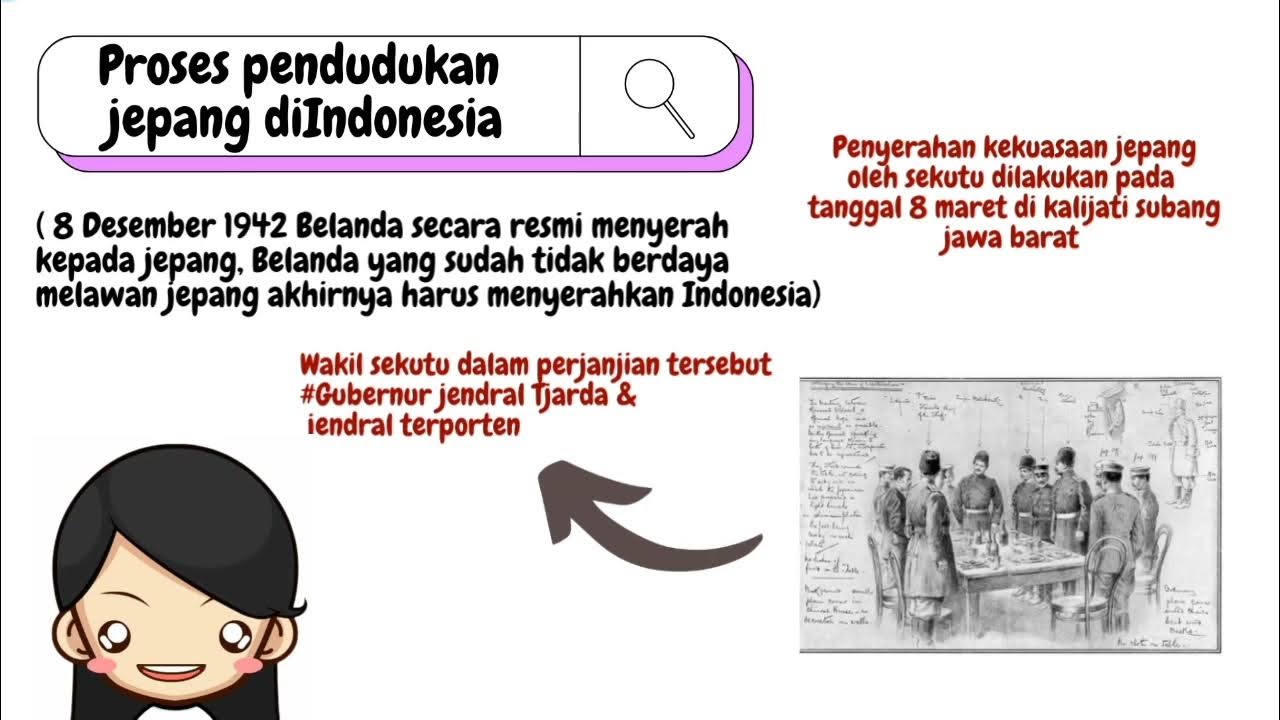
- 😀 On March 8, 1942, the Dutch forces surrendered Indonesia to Japan in an unconditional capitulation, known as the Kalijati Capitulation, marking the end of Dutch colonial rule.
- 😀 Initially, the Indonesian people welcomed Japan's arrival, seeing it as a liberation from Dutch colonialism, influenced by Japan's propaganda emphasizing Asian unity and independence.
Q & A
What was the main reason for Japan's invasion of Indonesia in 1942?
-Japan invaded Indonesia primarily to secure natural resources like oil, tin, and aluminum, which were essential for their war efforts, especially after the U.S. imposed an oil embargo on Japan in mid-1941.
What historical event led to Japan's emergence as a military power in the late 19th century?
-The Meiji Restoration, a series of events that restored imperial rule to Japan, played a major role in Japan's transformation into a military power and set the stage for its later expansion across Asia.
How did Japan justify its invasion of Indonesia to the Indonesian population?
-Japan justified its invasion by promoting propaganda that portrayed their arrival as a liberation of Indonesia from Dutch colonial rule and presented Japan as a protector and leader of Asia.
What event triggered the United States' conflict with Japan in 1941?
-The bombing of Pearl Harbor by Japan on December 8, 1941, led the United States to enter the conflict against Japan, marking the start of the Pacific War.
How did Japan's military strategy unfold in Southeast Asia after the attack on Pearl Harbor?
-Following the attack on Pearl Harbor, Japan expanded its military campaigns across Southeast Asia, including attacking the Philippines, Malaya, and Indonesia, with the goal of gaining control over vital resources for its war effort.
What was the significance of the Battle of Kalijati on March 8, 1942?
-The Battle of Kalijati on March 8, 1942, marked the formal surrender of Dutch forces in Java to Japan, ending Dutch colonial rule in Indonesia and signaling the beginning of Japanese occupation.
What was the initial reaction of the Indonesian people to the Japanese occupation?
-Initially, many Indonesians welcomed the Japanese, viewing them as liberators from Dutch colonial rule, influenced by Japan's propaganda efforts.
How did Japan use propaganda to gain support in Indonesia?
-Japan used various propaganda tactics, including broadcasting Indonesian national songs like 'Indonesia Raya,' promoting Japanese-made goods, allowing the Indonesian flag to be flown alongside the Japanese flag, and advocating for Pan-Asian unity through the '3A' movement.
What was the Pan-Asian ideology promoted by Japan during its occupation of Indonesia?
-The Pan-Asian ideology promoted by Japan aimed to unite Asian countries under Japanese leadership, with the slogan '3A': 'Jepang Cahaya Asia' (Japan, the Light of Asia), 'Jepang Pelindung Asia' (Japan, the Protector of Asia), and 'Jepang Pemimpin Asia' (Japan, the Leader of Asia).
What was the outcome of the Japanese invasion of Indonesia in terms of Dutch colonial rule?
-The Japanese invasion led to the fall of Dutch colonial rule in Indonesia. The Dutch formally surrendered on March 8, 1942, marking the end of their control over Indonesia and the beginning of Japanese occupation.
Outlines

このセクションは有料ユーザー限定です。 アクセスするには、アップグレードをお願いします。
今すぐアップグレードMindmap

このセクションは有料ユーザー限定です。 アクセスするには、アップグレードをお願いします。
今すぐアップグレードKeywords

このセクションは有料ユーザー限定です。 アクセスするには、アップグレードをお願いします。
今すぐアップグレードHighlights

このセクションは有料ユーザー限定です。 アクセスするには、アップグレードをお願いします。
今すぐアップグレードTranscripts

このセクションは有料ユーザー限定です。 アクセスするには、アップグレードをお願いします。
今すぐアップグレード関連動画をさらに表示
MATERI SEJARAH KELAS XI (KEDATANGAN JEPANG KE INDONESIA)
Tugas Pembatik LV 3; Kedatangan Bangsa Jepang ke Indonesia

SEJARAH RESTORASI MEIJI | AWAL KEBANGKITAN DAN MODERNISASI JEPANG
Mengapa Jepang Berhasil Menjadi Negara Maju? Sejarah Restorasi Meiji & Modernisasi Jepang
Materi IPS Kelas VIII - Masa Pendudukan Jepang
Tahun 1942, Belanda dan Sekutu Menyerah kepada Jepang di Hindia-Belanda (Indonesia)
5.0 / 5 (0 votes)

