Sequence and Series | CBSE Class 11th Maths | Full Chapter in 1️⃣5️⃣ Mins | Rapid Revision Series
Summary
TLDRIn this engaging session, Kuldeep Banda offers a rapid revision on Sequences and Series, focusing on key concepts like Arithmetic Progression (AP) and Geometric Progression (GP). He explains the formulas for general terms, sum of terms, and the significance of common differences and ratios. The session covers practical problem-solving techniques and provides important exam-oriented questions, including examples of AP and GP sequences, their sums, and related calculations. Kuldeep also discusses supplementary topics like Arithmetic and Geometric Means, encouraging students to practice and revise these crucial concepts for exam success.
Takeaways
- 😀 Sequences are lists of numbers in a specific order, where you can predict the next term, like 2, 4, 6, 8, 10.
- 😀 A series is the sum of all terms in a sequence. For example, adding 2 + 4 + 6 + 8 + 10 gives a series.
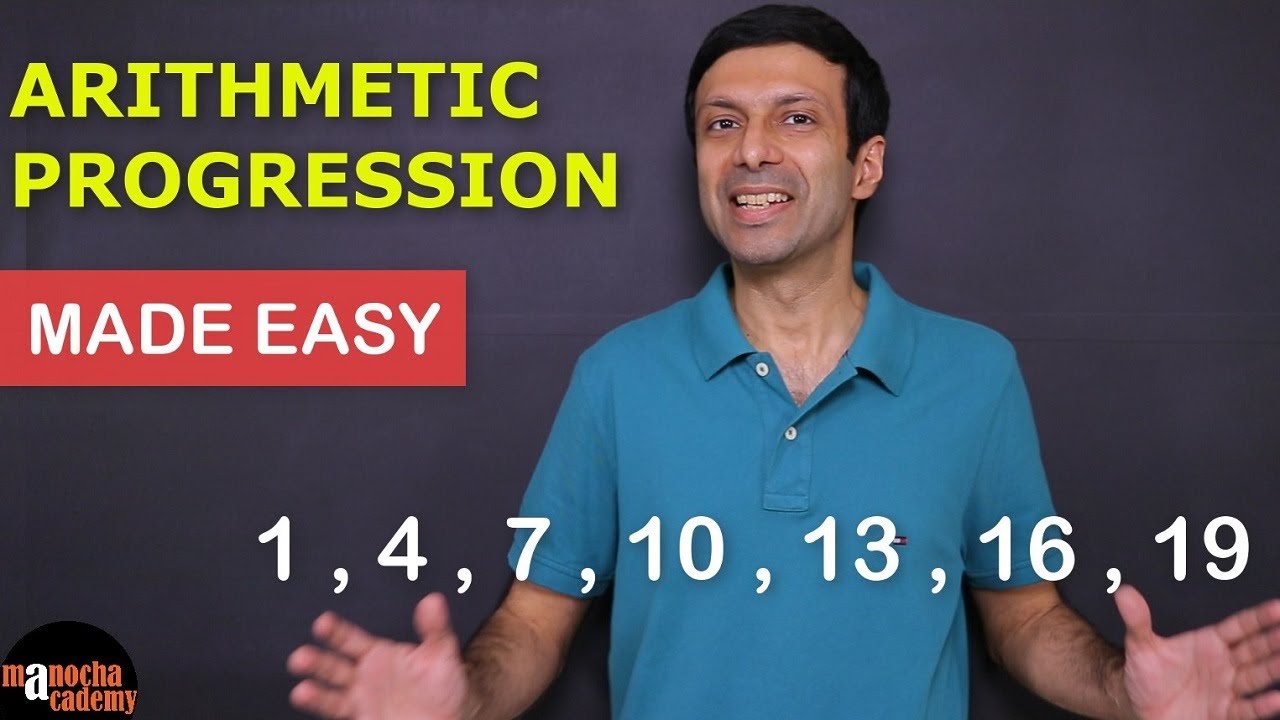
- 😀 Arithmetic Progression (AP) involves a constant difference between consecutive terms. The formula for the nth term is: an = a + (n-1) * d.
- 😀 The sum of the first n terms of an AP is: Sn = n/2 * (2a + (n-1) * d).
- 😀 Geometric Progression (GP) involves a constant ratio between consecutive terms. For example, 2, 4, 8, 16.
- 😀 The nth term of a GP is given by: an = a * r^(n-1), where 'a' is the first term and 'r' is the common ratio.
- 😀 The sum of the first n terms of a GP (where r > 1) is: Sn = a * (r^n - 1) / (r - 1).
- 😀 If the common ratio 'r' is less than 1, the sum of the first n terms of a GP is: Sn = a * (1 - r^n) / (1 - r).
- 😀 Arithmetic mean between two terms a and b is (a + b)/2, and the geometric mean is √(a * b).
- 😀 In certain problems, you may need to find missing terms in a sequence or calculate the sum of terms in a geometric series, applying the relevant formulas.
Q & A
What is the difference between a sequence and a series?
-A sequence is a list of numbers arranged in a specific order, where you can predict the next term easily. A series, on the other hand, is the sum of the terms in a sequence.
What is an Arithmetic Progression (AP) and its formula?
-An Arithmetic Progression (AP) is a sequence of numbers in which the difference between any two consecutive terms is constant. The general formula for the nth term is: an = a + (n - 1) * d, where 'a' is the first term and 'd' is the common difference.
What is a Geometric Progression (GP)?
-A Geometric Progression (GP) is a sequence of numbers where the ratio of any two consecutive terms is constant. The general formula for the nth term is: an = a * r^(n - 1), where 'a' is the first term and 'r' is the common ratio.
What is the formula for the sum of the first n terms of a GP?
-The formula for the sum of the first n terms of a Geometric Progression (GP) is: Sn = a * (r^n - 1) / (r - 1) if r > 1, and Sn = a * (1 - r^n) / (1 - r) if r < 1.
How is the Arithmetic Mean (AM) and Geometric Mean (GM) related?
-The Arithmetic Mean (AM) of two numbers a and b is (a + b) / 2, while the Geometric Mean (GM) is √(a * b). The AM is always greater than or equal to the GM.
What is the significance of common ratio 'r' in a GP?
-The common ratio 'r' is the constant ratio between any two consecutive terms in a GP. If r > 1, the terms increase exponentially; if r < 1, the terms decrease exponentially.
How do you find the sum of a sequence given its first term and common difference?
-For an arithmetic sequence, the sum of the first n terms can be found using the formula: Sn = n / 2 * (2a + (n - 1) * d), where 'a' is the first term and 'd' is the common difference.
What is a common application of a GP in real life?
-Geometric Progressions are commonly used in financial calculations, such as compound interest, where the amount grows at a constant rate over time.
What does the 'nth term' of a sequence represent?
-The nth term of a sequence represents the value of the term at the nth position in the sequence. It can be calculated using specific formulas depending on whether the sequence is arithmetic or geometric.
How do you find the common ratio in a GP if you know two terms?
-The common ratio 'r' in a GP can be found by dividing the second term by the first term: r = a2 / a1. This ratio remains constant between consecutive terms.
Outlines

このセクションは有料ユーザー限定です。 アクセスするには、アップグレードをお願いします。
今すぐアップグレードMindmap

このセクションは有料ユーザー限定です。 アクセスするには、アップグレードをお願いします。
今すぐアップグレードKeywords

このセクションは有料ユーザー限定です。 アクセスするには、アップグレードをお願いします。
今すぐアップグレードHighlights

このセクションは有料ユーザー限定です。 アクセスするには、アップグレードをお願いします。
今すぐアップグレードTranscripts

このセクションは有料ユーザー限定です。 アクセスするには、アップグレードをお願いします。
今すぐアップグレード




5.0 / 5 (0 votes)

