PRAKTIKUM KIMIA | PERCOBAAN INDIKATOR ALAMI ASAM DAN BASA (KUNYIT, BUAH NAGA, BUNGA TELANG)
Summary
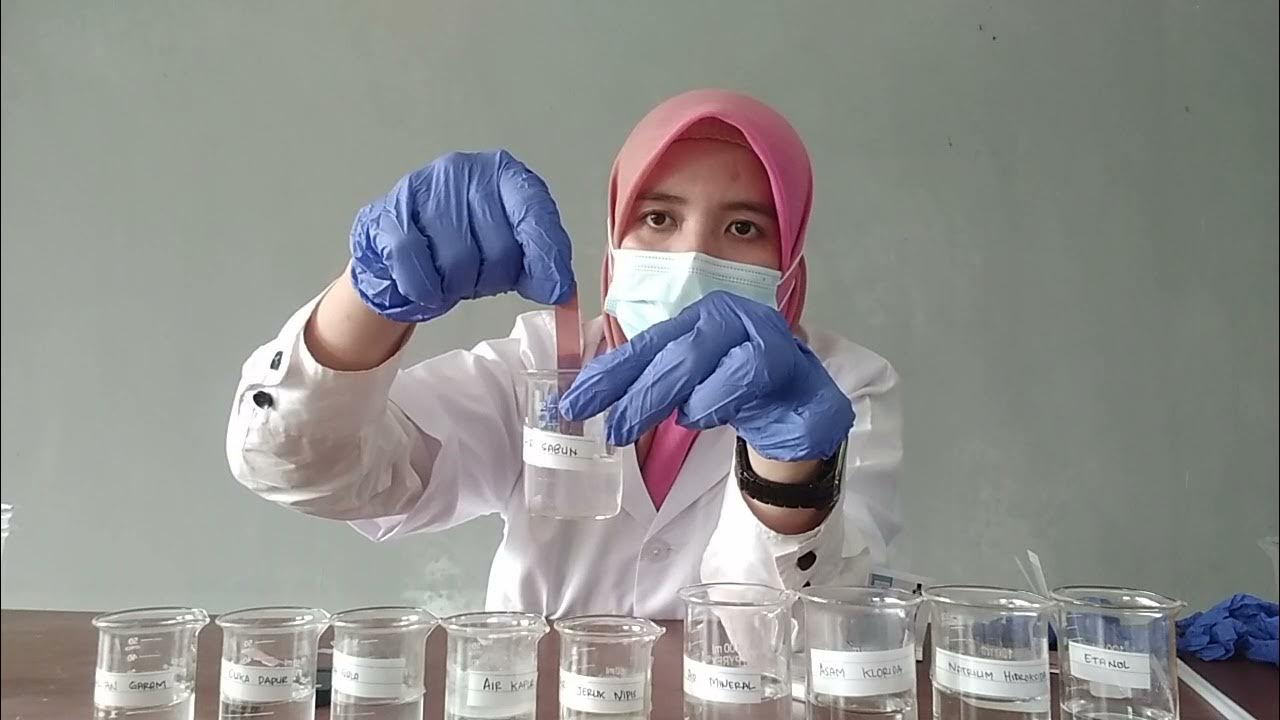
TLDRThis video presents a high school chemistry practicum demonstrating natural acid–base indicators conducted by a Grade 11 student from SMA Negeri Plus Provinsi Riau. The experiment aims to identify natural materials that can act as indicators, observe color changes in acidic, basic, and neutral solutions, and compare these changes. Three natural indicators are tested: turmeric, dragon fruit, and butterfly pea flower. Turmeric turns brick red in bases and yellow in acids and salt solutions. Dragon fruit changes to yellow in bases, while acids and salts show subtle purple to magenta differences. Butterfly pea flower turns purple in acids, green in bases, and remains bluish-purple in neutral solutions. The experiment concludes that all three materials are effective natural acid–base indicators.
Takeaways
- 😀 The video introduces a science experiment on natural acid-base indicators using everyday natural materials.
- 😀 The goal of the experiment is to identify which natural materials can act as acid-base indicators.
- 😀 The experiment also aims to observe and document the color changes in acids and bases when natural indicators are added.
- 😀 The third objective is to distinguish the differences in color changes between acids and bases after adding natural indicators.
- 😀 The first indicator used in the experiment is turmeric, which turns red when added to a base and yellow when added to an acid or salt.
- 😀 The second indicator is dragon fruit juice, which is purple in color. It turns yellow in a base and slightly purple in an acid solution, with salt showing a faded pink.
- 😀 The third indicator is butterfly pea flower extract, which turns purple in an acid, green in a base, and stays blue in a salt solution.
- 😀 These three substances (turmeric, dragon fruit, and butterfly pea) are confirmed to be effective natural indicators for acids and bases.
- 😀 The natural indicators are extracted from the plants, and these extracts are used in the experiments to test their color-changing properties.
- 😀 The video concludes with a thank you to viewers and a brief farewell message in Bahasa Indonesia.
Q & A
What is the main objective of the experiment described in the video?
-The main objective of the experiment is to identify natural substances that can be used as acid-base indicators, observe the color changes in acids and bases, and distinguish the differences in these changes.
Which natural materials were tested as acid-base indicators in the experiment?
-The natural materials tested were turmeric, dragon fruit, and butterfly pea flower.
What is the color change of turmeric when used as an indicator in an acid or base?
-When turmeric is used as an indicator, it changes from orange to red-brown when added to a base, and it remains yellow when added to either an acid or salt solution.
How does dragon fruit react as an acid-base indicator?
-Dragon fruit, which is purple in color, changes to yellow when added to a base. There is a slight difference between the reactions of an acid and a salt solution, with the acid turning the color a bit lighter toward purple, while the salt solution becomes more pale and magenta.
What happens when butterfly pea flower is used as an acid-base indicator?
-Butterfly pea flower, which is blue-purple, turns purple when added to an acid, green when added to a base, and remains blue-purple in a salt solution.
What are the key takeaways from the experiment with turmeric, dragon fruit, and butterfly pea flower?
-The key takeaways are that all three materials can act as natural acid-base indicators. Their color changes can be used to determine the pH of a solution, and each of them reacts differently to acids, bases, and salts.
How do you prepare the natural indicators used in the experiment?
-To use these natural materials as indicators, you need to extract the juice or essence from the fruits or flowers and then test them in different acid, base, or salt solutions.
Why is it important to identify the color change in acids and bases?
-Identifying the color change is crucial because it helps determine whether a solution is acidic or basic, providing valuable information about the chemical properties of the substance being tested.
How does the reaction of an acid differ from that of a salt in the experiment?
-In the experiment, the acid generally produces a more distinct color change compared to the salt. For example, dragon fruit turns lighter purple in an acid and becomes more magenta in a salt solution.
What are the practical applications of using natural indicators like turmeric, dragon fruit, and butterfly pea flower?
-These natural indicators can be used in educational settings to teach students about pH and chemical reactions in a simple and environmentally friendly way, as well as in experiments where synthetic indicators might not be available.
Outlines

このセクションは有料ユーザー限定です。 アクセスするには、アップグレードをお願いします。
今すぐアップグレードMindmap

このセクションは有料ユーザー限定です。 アクセスするには、アップグレードをお願いします。
今すぐアップグレードKeywords

このセクションは有料ユーザー限定です。 アクセスするには、アップグレードをお願いします。
今すぐアップグレードHighlights

このセクションは有料ユーザー限定です。 アクセスするには、アップグレードをお願いします。
今すぐアップグレードTranscripts

このセクションは有料ユーザー限定です。 アクセスするには、アップグレードをお願いします。
今すぐアップグレード




5.0 / 5 (0 votes)

