Learn to Speak Like a Brit 🇬🇧 | Watch British TV With Me + Shadow!
Summary
TLDRThis video offers a practical language-learning exercise by using British TV shows for shadowing practice. It highlights how to mimic accents, intonation, speed, rhythm, and flow by analyzing clips from shows like *Fleabag*, *The Great British Bake Off*, and *The Traitors*. The host explains how to observe not just words but subtle changes in pronunciation and everyday slang, such as informal phrases and contractions, helping learners understand natural British speech. The video emphasizes the value of using unscripted reality shows to hear diverse English expressions and improve fluency.
Takeaways
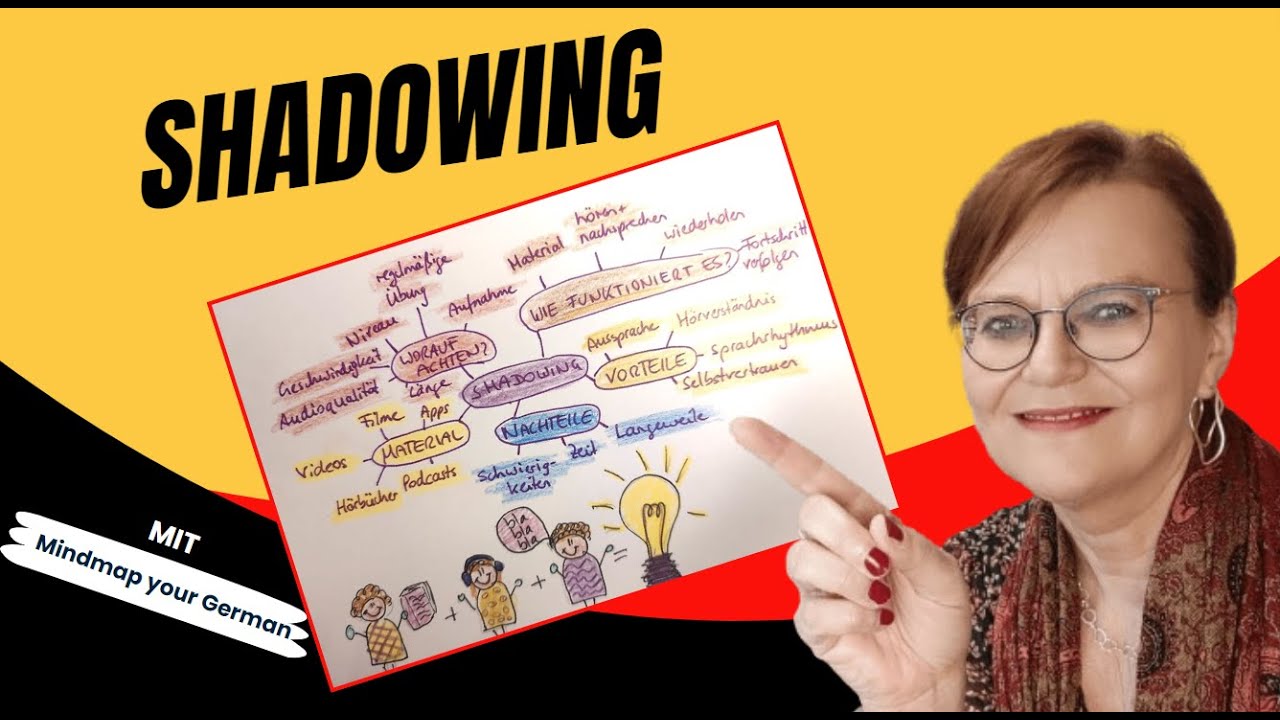
- 😀 Shadowing is a technique where learners repeat exactly what native speakers say, focusing on intonation, speed, rhythm, and flow rather than just individual words.
- 😀 Fleabag is a good resource for practicing modern RP accent, but shadowing also emphasizes natural speech patterns, not just pronunciation.
- 😀 Reality shows like The Great British Bake Off provide unscripted dialogue, helping learners understand natural, informal English, slang, and mistakes.
- 😀 Vocabulary learned from these shows includes words like horrendous, edgy, unsalvageable, which are useful in everyday contexts.
- 😀 Casual English often drops pronouns or auxiliary verbs, as seen in phrases like 'not having that' instead of 'I am not having that.'
- 😀 Present perfect tense can be learned naturally through conversation examples, such as 'Have you improved since that time?'
- 😀 Reduced and connected speech is common, for example 'could you' sounding like 'could you?' and 'to' becoming almost a 'J' sound.
- 😀 Informal expressions and exclamations, like 'Oh, bums,' 'smacks of,' and 'in fairness,' show how native speakers convey emotion and opinion.
- 😀 Learners can creatively use 'like' as an adjective to describe nouns in English, e.g., 'a bit cookie-like.'
- 😀 Watching a variety of British TV shows exposes learners to different accents, speech styles, and cultural expressions, improving comprehension and fluency.
Q & A
What is the main purpose of the exercise described in the video?
-The main purpose is to improve fluency in English by shadowing real speech from British TV shows, focusing on intonation, rhythm, speed, and natural pronunciation.
What is 'shadowing' and why is it useful for language learners?
-Shadowing is the practice of listening to spoken language and repeating it as closely as possible. It helps learners improve pronunciation, fluency, and natural speech patterns.
Why is Phoebe Waller-Bridge from 'Fleabag' a good model for learners?
-She speaks with a modern Received Pronunciation (RP) accent, making her a useful example for learners who want to develop a clear and standard British accent.
What important pronunciation feature is highlighted with the phrase 'going to'?
-In natural speech, 'going to' is often reduced to 'gonna,' demonstrating how native speakers simplify and connect words in fast speech.
How does the phrase 'Do you need me to come?' change in natural speech?
-It becomes more fluid and sounds like 'd'you need me to come,' where 'do you' blends together and sounds like a 'j' or soft 'd' sound.
What does the word 'horrendous' mean?
-It means extremely bad or terrible.
What does the word 'edgy' mean in the context of the video?
-It refers to something new, cool, or different in an interesting or unconventional way.
What is the meaning of 'unsalvageable'?
-It means something cannot be saved or fixed.
Why are reality TV shows recommended for learning English?
-Because they feature unscripted, natural conversations where people speak casually, make mistakes, and use real-life slang and expressions.
What does the phrase 'Your time is up' mean?
-It means that no more time is available and the activity must stop.
What does the expression 'Oh, bums' convey?
-It expresses mild frustration or disappointment, similar to saying 'Oh no.'
How is the suffix '-like' used to form adjectives?
-It is added to nouns to describe something resembling that noun, such as 'cookie-like' meaning similar to a cookie.
What does the phrase 'smacks of' mean based on context?
-It means 'seems like' or 'gives the impression of,' even if the speaker has not heard the phrase before.
What does it mean if someone is 'out for themselves'?
-It means they are selfish and only concerned with their own interests.
What does the phrase 'not having that' imply?
-It means the speaker refuses to accept or agree with something.
Why is the word 'do' used in the sentence 'I do find you to be very defensive'?
-The word 'do' is used for emphasis, to strongly express the speaker’s opinion.
Outlines

Cette section est réservée aux utilisateurs payants. Améliorez votre compte pour accéder à cette section.
Améliorer maintenantMindmap

Cette section est réservée aux utilisateurs payants. Améliorez votre compte pour accéder à cette section.
Améliorer maintenantKeywords

Cette section est réservée aux utilisateurs payants. Améliorez votre compte pour accéder à cette section.
Améliorer maintenantHighlights

Cette section est réservée aux utilisateurs payants. Améliorez votre compte pour accéder à cette section.
Améliorer maintenantTranscripts

Cette section est réservée aux utilisateurs payants. Améliorez votre compte pour accéder à cette section.
Améliorer maintenantVoir Plus de Vidéos Connexes

8 ways to improve English listening skills and understand native speakers

How I Would Learn Italian if I Could Start Over
Shadowing - Die ideale Technik zum Sprachenlernen (ab Niveau B1/B2)

How I Learned English with Movies and TV-Shows

Herhangi bir dil nasıl öğrenilir?(öğrenemezseniz yüzüme tükürün)

NEW | English Podcast For Learning English | Learn English With Netflix Free
5.0 / 5 (0 votes)

