Is the AI Doom Fever Breaking? (It’s About Time!)
Summary
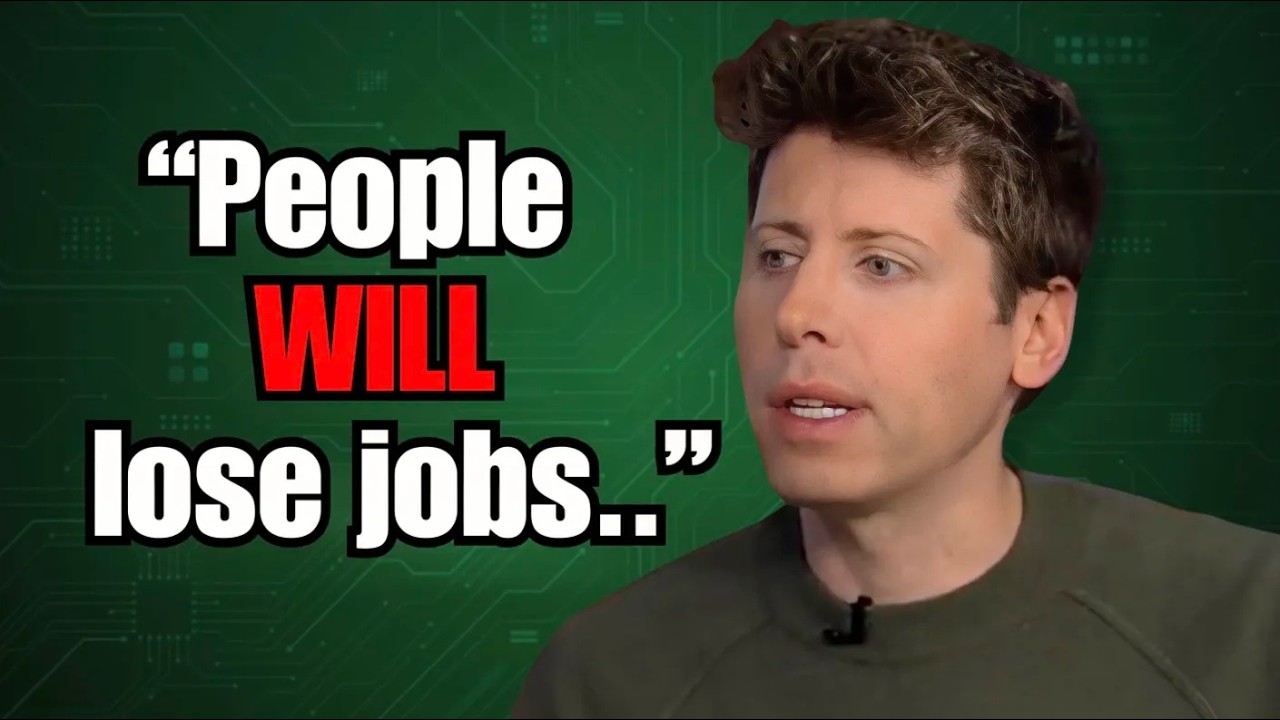
TLDRThis video explores the dramatic rhetoric of AI CEOs, who have alarmed the public by predicting massive job losses and societal upheaval due to AI. It highlights a recent shift, with leaders like Sam Altman and Jensen Huang emphasizing AI as a tool to augment humans rather than replace them. The discussion delves into why these CEOs initially embraced apocalyptic messaging, tracing it to their roots in West Coast rationalist and existential risk communities, where obsession with superintelligent AI offered meaning and excitement. The video concludes that cultural background, public pressure, and IPO preparations are driving a moderation in AI rhetoric, fostering more responsible and credible communication.
Takeaways
- 🤖 Many AI CEOs, including those from Microsoft, OpenAI, and Anthropic, initially used highly alarming rhetoric about AI's potential to replace jobs and disrupt society.
- 📉 Statements claiming AI could automate nearly all knowledge work created public fear and were unusual compared to other industries.
- 📰 Recent messaging shows a shift, with leaders like Sam Altman and Nvidia CEO Jensen Huang emphasizing AI as a tool to augment humans rather than replace them.
- 💼 This shift may be influenced by IPO preparations, which introduce interaction with more cautious investors and require responsible public communication.
- 📊 Growing public skepticism and surveys showing Americans are concerned about AI’s negative impacts also pressure CEOs to moderate their messaging.
- ✍️ Journalists are increasingly questioning exaggerated claims, reducing the influence of apocalyptic rhetoric in the media.
- 🧠 Many AI leaders emerged from West Coast rationalist and existential risk (x-risk) communities, which normalize analyzing rare but catastrophic risks.
- ⚠️ In these subcultures, discussing AI in dramatic, fear-inducing terms was a socially reinforced norm, seen as a rational assessment of potential existential threats.
- -
- 🌟 The excitement and sense of purpose from being 'right about the risk' post-ChatGPT amplified the dramatic messaging, giving meaning and identity to AI leaders within this community.
- -
- 🏙️ The dramatic rhetoric was culturally specific to Silicon Valley, often confusing or frightening outsiders who are not immersed in rationalist/x-risk norms.
- -
- 🔄 As AI companies scale, they encounter broader audiences and financial markets, necessitating a more tempered, realistic communication style.
- -
- 💡 Overall, the evolution from fear-based to more measured messaging reflects a combination of cultural background, market pressures, and societal feedback.
Q & A
Why did AI CEOs like Mustafa Sulleman and Sam Altman initially use alarming rhetoric about AI?
-They came from cultural backgrounds in rationalist and X-risk communities that emphasized existential threats and extreme rationality. They were influenced by the idea that rare but catastrophic events, like superintelligent AI, must be taken seriously, and this often led them to speak in apocalyptic terms without realizing it was terrifying to outsiders.
What is meant by 'job doomerism' in the context of AI?
-'Job doomerism' refers to the belief or rhetoric that AI will imminently replace large portions of human jobs, particularly entry-level white-collar work, leading to widespread unemployment. CEOs like Dario Amade and Sam Altman previously suggested this outcome as a likely scenario.
How has the rhetoric of AI CEOs changed in recent weeks?
-Recently, CEOs like Sam Altman and Jensen Huang have moderated their messaging, emphasizing that AI is meant to augment humans rather than replace them, and that fears of mass job loss are likely exaggerated. This represents a shift from apocalyptic warnings to more balanced perspectives.
What factors contributed to the shift in AI CEOs’ messaging?
-Three main factors influenced this shift: 1) Preparation for IPOs requiring more conventional and cautious messaging, 2) Public opinion turning negative as surveys showed most people believed AI could cause harm, and 3) Increased skepticism from journalists challenging exaggerated claims.
What role did the rationalist and X-risk communities play in shaping AI CEO culture?
-These communities emphasized hyper-rational thinking, expected value calculations, and attention to existential risks. Many AI leaders, including those at OpenAI and Anthropic, came from these circles and adopted their apocalyptic framing of AI risks, viewing themselves as potential heroes addressing catastrophic threats.
Why did ChatGPT and similar AI advancements intensify apocalyptic thinking among X-risk enthusiasts?
-Large language models like ChatGPT demonstrated rapid AI progress in a visible, anthropomorphizable way, making it seem that existential AI risks were becoming real. This created excitement and fear in X-risk adherents, who felt validated in their long-standing warnings and envisioned themselves as pivotal figures in preventing potential disasters.
How did the public and media respond to the alarmist statements from AI CEOs?
-Public opinion surveys indicated growing skepticism and concern about AI’s impact, and journalists increasingly questioned exaggerated claims about job loss and societal collapse. This external scrutiny pressured CEOs to moderate their messaging.
Why is the IPO process significant in moderating AI CEO rhetoric?
-Preparing for an IPO exposes AI companies to investors and regulators who expect responsible, realistic communication. Alarmist or apocalyptic statements could damage investor confidence, so CEOs had to adopt more balanced messaging to appeal to broader financial stakeholders.
What is the metaphorical meaning behind 'Matrix trench coat' in the transcript?
-It represents how some AI leaders, influenced by X-risk culture, imagined themselves as heroic figures (like Neo in The Matrix) fighting against existential AI threats. It illustrates the intoxicating fantasy of being the ones who could save humanity from AI-induced catastrophe.
How did companies like Anthropic originate from the culture of X-risk and rationalism?
-Anthropic was formed by former OpenAI employees who felt OpenAI was insufficiently focused on AI existential risk. These companies emerged from a culture obsessed with long-term AI safety and rationalist thought experiments, which shaped both their missions and early public rhetoric.
What does the transcript suggest about the balance between fear and realism in AI communication?
-It suggests that extreme fear can alienate the public and investors, while measured, realistic communication encourages trust and engagement. The recent moderation of AI CEOs’ messaging reflects a move toward balancing awareness of AI risks with practical, reassuring messaging.
What can we learn about the influence of cultural context on technology leadership from this transcript?
-The transcript highlights that leaders’ backgrounds and social circles can shape how they interpret and communicate technological risks. Cultural norms from Silicon Valley rationalist and X-risk communities initially drove alarmist AI messaging, showing that culture can deeply influence both vision and public discourse in tech.
Outlines

Esta sección está disponible solo para usuarios con suscripción. Por favor, mejora tu plan para acceder a esta parte.
Mejorar ahoraMindmap

Esta sección está disponible solo para usuarios con suscripción. Por favor, mejora tu plan para acceder a esta parte.
Mejorar ahoraKeywords

Esta sección está disponible solo para usuarios con suscripción. Por favor, mejora tu plan para acceder a esta parte.
Mejorar ahoraHighlights

Esta sección está disponible solo para usuarios con suscripción. Por favor, mejora tu plan para acceder a esta parte.
Mejorar ahoraTranscripts

Esta sección está disponible solo para usuarios con suscripción. Por favor, mejora tu plan para acceder a esta parte.
Mejorar ahoraVer Más Videos Relacionados




5.0 / 5 (0 votes)

