LO klasa 1- Cesarstwo bizantyjskie. Powstanie Nika czy Nike?
Summary
TLDRThe video explores the Byzantine Empire, tracing its origins in 395 AD when the Roman Empire split, with Constantinople as the 'New Rome.' The focus is on Emperor Justinian I (527–565), highlighting his military campaigns, legal reforms with the Corpus Juris Civilis, and monumental construction of Hagia Sophia. The influence of Empress Theodora, the Nika revolt, and the empire’s administration, combining Roman dominion with Hellenistic traditions, are discussed. Cultural achievements like mosaics, frescoes, and the preservation of ancient knowledge, as well as innovations like Greek fire, are emphasized. The narrative concludes with Byzantium’s decline and fall in 1453 to the Ottoman Turks, setting the stage for the 'Third Rome.'
Takeaways
- 😀 The Byzantine Empire began in 395 AD when Emperor Theodosius I divided the Roman Empire into the Western and Eastern parts, with the Eastern part becoming the Byzantine Empire.
- 😀 Constantinople, the capital of the Byzantine Empire, was considered the 'New Rome,' designed to imitate much of the old Roman Empire's structure and traditions.
- 😀 Emperor Justinian I, who reigned from 527 to 565, is one of the most important figures in Byzantine history. His reign was marked by significant military conquests, legal reforms, and architectural achievements.
- 😀 Justinian’s military campaigns briefly regained territories like North Africa, Southern Spain, and Italy, but they were short-lived due to invasions by Arabs and other groups after his death.
- 😀 One of Justinian's most lasting legacies is the 'Corpus Juris Civilis' (Code of Justinian), a comprehensive legal code that formed the foundation for future legal systems in Europe.
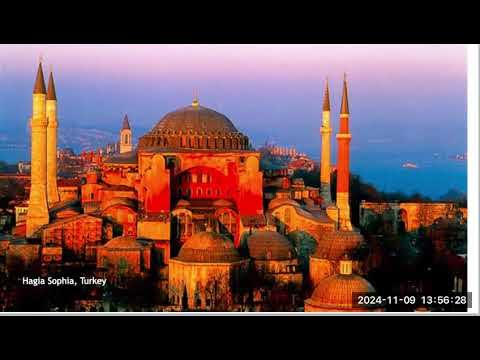
- 😀 The Hagia Sophia, constructed during Justinian’s reign, became the largest Christian church in the world and served as a symbol of Byzantine grandeur.
- 😀 Empress Theodora, Justinian's wife, played a crucial role in his reign, notably during the Nika riots of 532, where her decisive leadership helped save the Byzantine Empire from rebellion.
- 😀 The Nika riots, sparked by tensions during chariot races, led to widespread protests, but Theodora’s intervention resulted in the defeat of the rebels, saving Justinian's rule.
- 😀 The Byzantine Empire practiced 'Caesaropapism,' where the emperor had supreme authority over both the state and the church, making him the ultimate religious and political figure.
- 😀 The Byzantine Empire, although smaller than the Roman Empire, maintained a highly centralized and structured system, with an emphasis on unity through shared language, laws, and culture. This culture included iconic art, mosaics, and a deep respect for ancient knowledge, which was preserved and later shared with the West.
Q & A
When did the Byzantine Empire begin, according to the script?
-According to the script, the Byzantine Empire began in 395 CE, when Theodosius the Great divided the Roman Empire into the Western and Eastern parts.
Why was Constantinople called the 'New Rome'?
-Constantinople was called the 'New Rome' because it became the capital of the Eastern Roman Empire and consciously copied many political, cultural, and symbolic elements of ancient Rome.
How did the Byzantine rulers view themselves after the fall of the Western Roman Empire?
-The Byzantine rulers considered themselves the successors of the entire Roman Empire. However, the script stresses that their real power in the West was limited and often more symbolic than practical.
Why is Emperor Justinian presented as the most important Byzantine ruler in the lesson?
-Justinian is presented as the most important ruler because he achieved major military conquests, reformed and codified law, and sponsored the construction of Hagia Sophia, one of the greatest monuments of Christian architecture.
What territories did Justinian conquer?
-According to the script, Justinian controlled North Africa, southern Spain, and Italy. However, these conquests were not permanent because many of those lands were later lost in wars and invasions.
What was the Corpus Juris Civilis, and why was it important?
-The Corpus Juris Civilis, or Justinian's Code, was a comprehensive organization of Roman law, Greek legal traditions, and customary laws. It became one of Justinian's greatest achievements and influenced later legal systems for centuries.
What was Hagia Sophia, and why was it so significant?
-Hagia Sophia was the great church built on Justinian's initiative and dedicated to Divine Wisdom. It was the largest Christian church of its time, served as the site of imperial coronations, and later inspired both Orthodox and Catholic church architecture.
Who was Theodora, and why was she important?
-Theodora was Justinian's wife and one of the most influential women in Byzantine history. The script emphasizes that she came from a very humble background, yet became Justinian's key political partner and played a decisive role during the Nika Revolt.
What was the Nika Revolt?
-The Nika Revolt was a major uprising in Constantinople in 532 CE. It began in the setting of chariot racing factions on the Hippodrome and turned into a serious rebellion, which was violently suppressed, saving Justinian's rule.
What does the term 'caesaropapism' mean in the context of Byzantium?
-Caesaropapism refers to the system in which the emperor exercised authority not only over the state but also over the Church. In the Byzantine model described in the script, the emperor was seen as God's representative on earth and had strong influence over religious matters.
How was the Byzantine emperor portrayed in terms of power and status?
-The emperor was portrayed as an almost sacred ruler with unlimited power. He was treated with elaborate ceremony, viewed as God's representative, and surrounded by symbols of majesty such as golden robes and a diadem.
What does the term 'porphyrogenitus' refer to?
-It refers to a legitimate imperial heir born in a special purple chamber made of porphyry. Such a child was considered a direct and especially prestigious successor to the throne.
How does the script connect Byzantium to early feudal-like relations?
-The script explains that instead of always paying soldiers in money, the emperor increasingly granted them land along with the labor of people living on it. In return, the soldiers owed military service, which resembled early feudal relationships.
What was one of Byzantium's greatest cultural achievements according to the script?
-One of Byzantium's greatest cultural achievements was preserving the works of ancient scholars, philosophers, poets, and thinkers. The Byzantines collected, copied, and sometimes translated these texts, helping them survive through the Middle Ages.
What were some main features of Byzantine culture mentioned in the script?
-The script highlights universalism, strong imperial control, multilingual and multicultural diversity, legal organization, and a culture deeply shaped by Christianity, monumental architecture, and artistic traditions such as icons, mosaics, and frescoes.
What was the Basilica Cistern, and why was it important?
-The Basilica Cistern was the largest underground freshwater reservoir in Constantinople. It stored water for use during emergencies, especially sieges, when aqueducts could be cut off.
What role did the Hippodrome play in Byzantine life?
-The Hippodrome was the center of chariot races and mass public gatherings. It was not only a sporting venue but also a politically significant place where public unrest, such as the Nika Revolt, could erupt.
What were icons, and why were they important in Byzantine culture?
-Icons were sacred images, often painted on wood, showing holy figures or scenes from their lives. They became one of the most characteristic elements of Orthodox and Eastern Christian religious culture.
What was iconoclasm?
-Iconoclasm was the movement against the veneration of images. In Byzantium, it aimed to prohibit the worship or use of religious images, and the script notes that this struggle lasted from the 8th century into the first half of the 9th century.
What are mosaics and frescoes in Byzantine art?
-Mosaics were large images made from thousands of colored pieces of glass or stone, while frescoes were paintings created on wet plaster with special pigments. Both were important artistic forms in Byzantine religious and imperial decoration.
What was Greek fire, and why was it famous?
-Greek fire was a secret incendiary substance used by the Byzantines, especially in naval warfare. It was famous because its composition was kept as a state secret, and betraying that secret could be punished by death.
When did the Byzantine Empire fall, according to the script?
-The Byzantine Empire fell in 1453, when Constantinople was conquered by the Ottoman Turks.
What happened to Hagia Sophia after the fall of Constantinople?
-After the Ottoman conquest in 1453, Hagia Sophia was converted from a Christian church into a mosque.
Why is the Byzantine Empire important in medieval history?
-The Byzantine Empire is important because it preserved Roman political traditions, safeguarded ancient knowledge, shaped Orthodox Christianity, influenced law and art, and acted as a bridge between the ancient and medieval worlds.
Outlines

Esta sección está disponible solo para usuarios con suscripción. Por favor, mejora tu plan para acceder a esta parte.
Mejorar ahoraMindmap

Esta sección está disponible solo para usuarios con suscripción. Por favor, mejora tu plan para acceder a esta parte.
Mejorar ahoraKeywords

Esta sección está disponible solo para usuarios con suscripción. Por favor, mejora tu plan para acceder a esta parte.
Mejorar ahoraHighlights

Esta sección está disponible solo para usuarios con suscripción. Por favor, mejora tu plan para acceder a esta parte.
Mejorar ahoraTranscripts

Esta sección está disponible solo para usuarios con suscripción. Por favor, mejora tu plan para acceder a esta parte.
Mejorar ahoraVer Más Videos Relacionados
¿Cómo cayó el Imperio Romano? - DOCUMENTAL
Comparing Roman and Byzantine Empires | AP US History | Khan Academy

Conheça o Império Bizantino | Resumo
BYZ V2024

Ten Minute History - The Fall of Rome (Short Documentary)

O Império Bizantino: Os Herdeiros de Roma - Grandes Civilizações da História - Foca na História
5.0 / 5 (0 votes)

