Bentuk Umum Persamaan Lingkaran - Matematika SMA Kelas XI Kurikulum Merdeka
Summary
TLDRIn this educational video, the presenter discusses the general equation of a circle in mathematics, specifically for grade 11 students. The video explains how to derive the general equation of a circle from the center coordinates (a, b) and the radius, showcasing the method to convert a specific circle equation into the general form. It also includes step-by-step instructions for calculating the center and radius from a given general equation. The presenter provides an example, walks through the formulas, and demonstrates how to prove the derived equations, helping students understand the concept with clarity.
Takeaways
- 😀 The general equation of a circle is in the form: x² + y² + Ax + By + C = 0.
- 😀 The video explains how to derive the standard equation of a circle from its center and radius.
- 😀 The center of a circle in the general form can be found using the formula: (-A/2, -B/2).
- 😀 The radius of a circle in the general form is calculated using: √((A/2)² + (B/2)² - C).
- 😀 The video provides an example using the equation x² + y² + 6x - 4y - 3 = 0 to find the center and radius.
- 😀 The center of the circle in the example is calculated as (-3, 2).
- 😀 The radius of the circle in the example is determined to be 4.
- 😀 The process involves identifying the values of A, B, and C from the given equation before calculating the center and radius.
- 😀 The formula for the center involves dividing the coefficients of x and y by -2, with a negative sign for both.
- 😀 The formula for the radius combines the squared values of the divided coefficients of x and y, along with the constant C.
- 😀 At the end of the video, students are encouraged to practice with a similar equation to solidify their understanding of the concepts.
Q & A
What is the general form of the equation of a circle?
-The general form of the equation of a circle is x² + y² + Ax + By + C = 0, where A, B, and C are constants derived from the circle's center and radius.
How is the equation of a circle centered at (a, b) derived?
-The equation of a circle with center (a, b) and radius r is derived using the formula (x - a)² + (y - b)² = r², and when expanded, it results in the general form x² + y² + Ax + By + C = 0.
How do you find the center of a circle from its general equation?
-The center of a circle from the general equation x² + y² + Ax + By + C = 0 can be found using the formula: center = (-A/2, -B/2), where A and B are the coefficients of x and y, respectively.
What is the formula for finding the radius of a circle from the general equation?
-The radius of the circle can be found using the formula: radius = √((-A/2)² + (-B/2)² - C), where A, B, and C are the coefficients from the general equation.
Given the general equation x² + y² + 6x - 4y - 3 = 0, what is the center of the circle?
-The center of the circle is (-3, 2). This is calculated by taking -6/2 for the x-coordinate and -(-4)/2 for the y-coordinate.
How do you calculate the radius for the equation x² + y² + 6x - 4y - 3 = 0?
-The radius is calculated using the formula √((-6/2)² + (-(-4)/2)² - (-3)). After substituting the values, the radius is 4.
Why is the negative sign in the formula for the center important?
-The negative sign is essential because it ensures the correct positioning of the center based on the original terms of the equation. The formula for the center is always -A/2 and -B/2.
What is the role of the constant 'C' in the general equation of a circle?
-The constant 'C' in the general equation affects the calculation of the radius. It is subtracted after squaring the x and y coordinates of the center, helping to find the true radius.
How do you derive the standard form of the equation from the general form?
-To derive the standard form (x - a)² + (y - b)² = r² from the general form, you need to complete the square for both the x and y terms, which will give you the center (a, b) and the radius r.
Can you explain how the equation x² + y² + 6x - 4y - 3 = 0 proves the formula for the center and radius?
-Yes, by substituting the coefficients A = 6, B = -4, and C = -3 into the formulas for the center (-A/2, -B/2) and radius √((-A/2)² + (-B/2)² - C), we get the center (-3, 2) and radius 4. This confirms the formulas for both center and radius are correct.
Outlines

Esta sección está disponible solo para usuarios con suscripción. Por favor, mejora tu plan para acceder a esta parte.
Mejorar ahoraMindmap

Esta sección está disponible solo para usuarios con suscripción. Por favor, mejora tu plan para acceder a esta parte.
Mejorar ahoraKeywords

Esta sección está disponible solo para usuarios con suscripción. Por favor, mejora tu plan para acceder a esta parte.
Mejorar ahoraHighlights

Esta sección está disponible solo para usuarios con suscripción. Por favor, mejora tu plan para acceder a esta parte.
Mejorar ahoraTranscripts

Esta sección está disponible solo para usuarios con suscripción. Por favor, mejora tu plan para acceder a esta parte.
Mejorar ahoraVer Más Videos Relacionados
Review on Circles
HUBUNGAN ANTARA SUDUT PUSAT DAN SUDUT KELILING LINGKARAN ~ Materi Matematika Kelas 8 Semester 2
Grade 11 | Operations on Functions | General Mathematics
Persamaan Lingkaran : Konsep Dasar Persamaan Lingkaran Matematika Peminatan Kelas 11
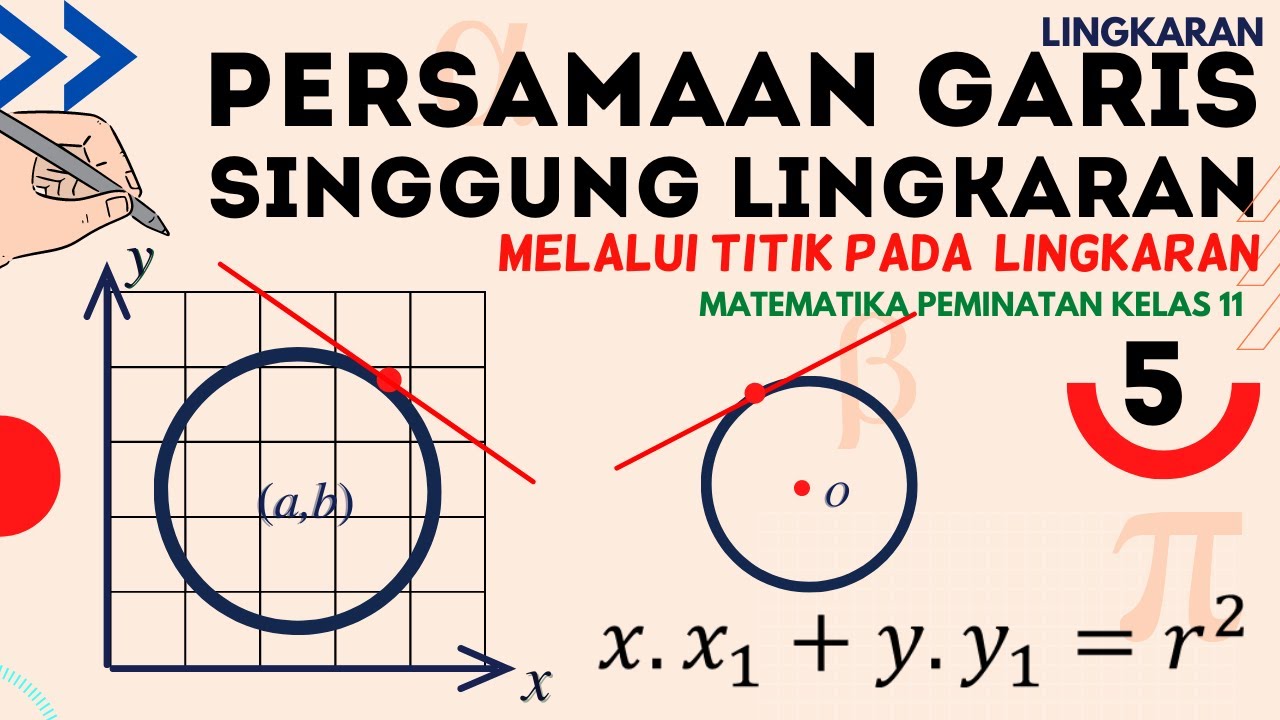
Persamaan Garis Singgung Lingkaran Yang Melalui Titik Pada Lingkaran : Matematika Peminatan Kelas 11
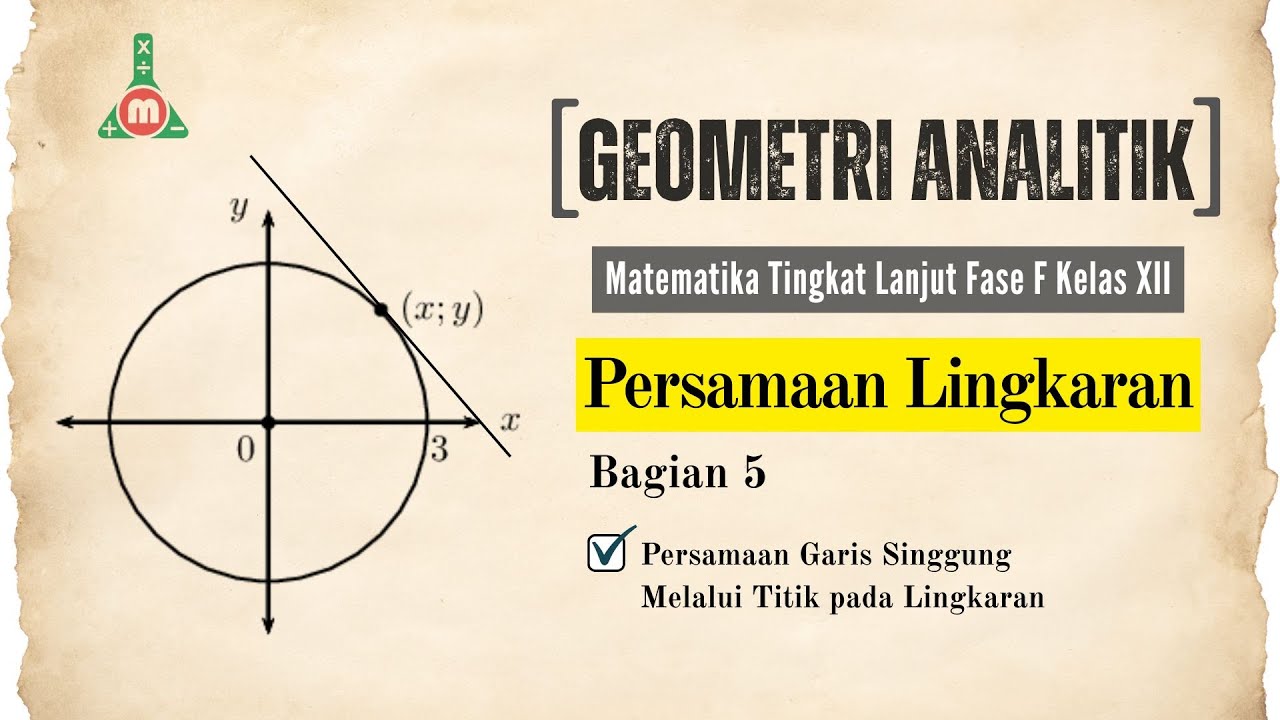
Lingkaran Bagian 5 - Persamaan Garis Singgung Melalui Titik Pada Lingkaran
5.0 / 5 (0 votes)

