Video Pembelajaran | Kurikulum Nasional | SEJARAH KELAS XI | Di Bawah Tirani Jepang
Summary
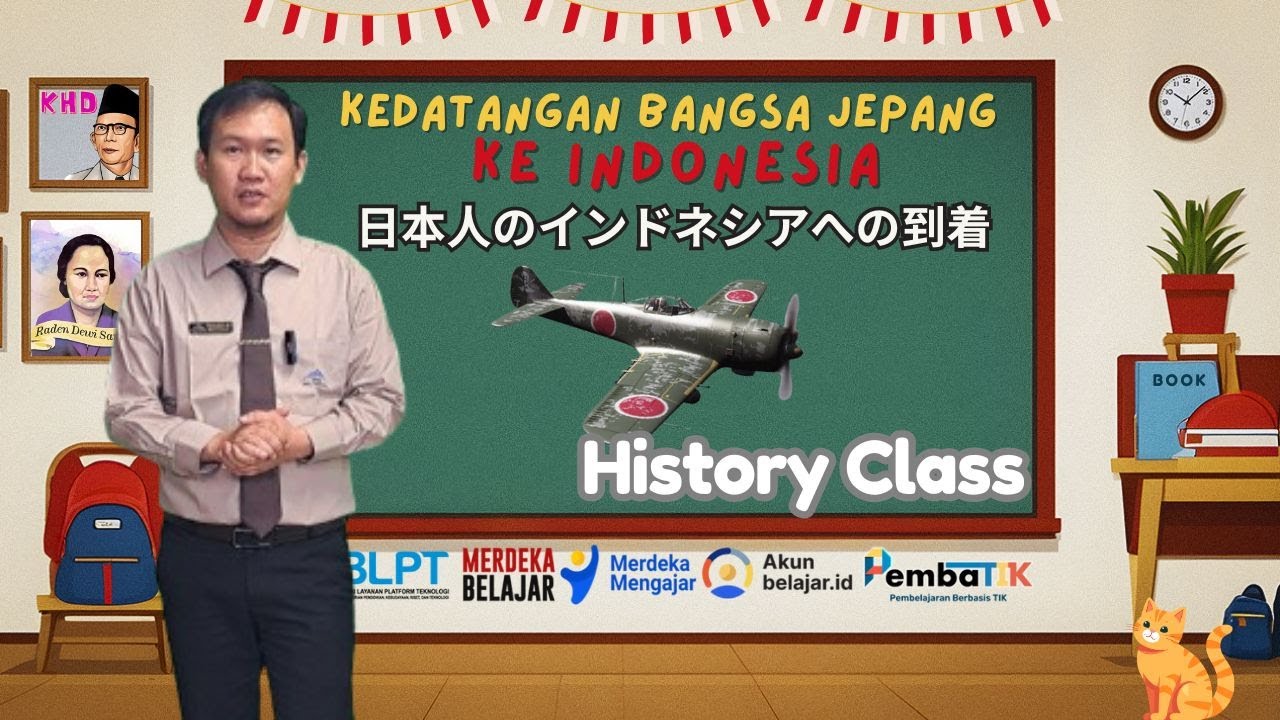
TLDRThis educational video introduces the historical context of Japan's occupation in Indonesia during World War II. It covers key events such as Japan's entry into Indonesia, the implementation of military governance, and propaganda efforts aimed at influencing the local population. The video also explores the lasting impacts of Japanese occupation on Indonesian society, including the creation of local governance systems like Rukun Tetangga (RT) and the role of Japanese cultural influence. Finally, it encourages learners to reflect on how these historical lessons can be applied to modern life.
Takeaways
- 😀 The curriculum being discussed is designed to encourage active, creative, independent, and equal learning.
- 😀 The importance of gratitude to God for health and faith before starting any lesson is emphasized.
- 😀 The lesson focuses on the Japanese occupation of Indonesia, particularly the period during World War II (1942-1945).
- 😀 The concept of RT (Rukun Tetangga) in Indonesia has roots in the Japanese occupation through the 'tonarigumi' system, which was used to monitor and control the population.
- 😀 The Japanese entered Indonesia in 1942 as part of their efforts to expand during WWII, driven by the need for resources and to secure strategic territory.
- 😀 Japan's need for oil was a major factor that led them to invade Southeast Asia, particularly after the U.S. imposed an embargo on oil exports to Japan in 1941.
- 😀 The Japanese invasion started with the attack on Pearl Harbor in December 1941 and quickly spread to the Philippines, then Indonesia.
- 😀 Japan used propaganda to gain support for their occupation, promising independence, highlighting military victories, and promoting cultural exchange.
- 😀 Japan's military occupation of Indonesia led to a division of the country into military zones, each controlled by the Japanese army, with specific leaders overseeing different regions.
- 😀 The Japanese altered Indonesia's national symbols and forced the population to celebrate Japanese national holidays, such as 'Tenchosetsu', which commemorated the Emperor's birthday.
- 😀 The lesson ends by encouraging students to reflect on the values learned from this period of history and apply those lessons in their daily lives, both now and in the future.
Q & A
What was the role of the 'tonarigumi' system introduced by Japan in Indonesia?
-The 'tonarigumi' system, introduced during the Japanese occupation, was designed to facilitate the monitoring and control of the local population. It was similar to the 'RT' (Rukun Tetangga) system, which is still in use today in many parts of Indonesia.
What factors led to Japan's decision to invade Indonesia in 1942?
-Japan's decision to invade Indonesia was influenced by the need to secure natural resources, particularly oil, tin, and aluminum, which were crucial for Japan’s war efforts. Additionally, the embargo imposed by the United States on Japan in 1941 and the desire for dominance in Southeast Asia played a key role.
How did Japan justify its invasion of Indonesia to the local population?
-Japan justified its invasion by promising independence to Indonesia after defeating the Dutch, and by portraying the Dutch as cruel colonizers. They also promoted the idea of Japanese leadership as part of a greater Asian community, using propaganda to rally support.
What were the main propaganda tactics used by Japan during its occupation of Indonesia?
-The main propaganda tactics included promises of independence for Indonesia, highlighting Japan’s success in defeating Western powers, presenting Japanese leaders as heroes, promoting anti-Dutch sentiments, and promoting Japanese culture to influence local identities.
What was the significance of the Meiji Restoration in Japan's history?
-The Meiji Restoration, which began in 1868, marked a pivotal moment in Japan’s history. It ended the feudal Tokugawa shogunate and started the process of modernization, transforming Japan into an industrialized and militarized nation capable of expanding its influence in Asia.
What impact did the United States' oil embargo on Japan have on the course of World War II?
-The United States' oil embargo on Japan in 1941 was a major factor leading to Japan’s decision to expand its empire. Japan needed access to natural resources, and this led to the attack on Pearl Harbor and subsequent invasions of Southeast Asia, including Indonesia.
How did Japan initially enter Indonesia in 1942?
-Japan initially entered Indonesia in January 1942 by landing in Ambon, after defeating the Dutch and Australian forces in the region. From there, they continued their invasion, eventually occupying much of the archipelago.
What was the structure of the military administration set up by Japan in Indonesia?
-Japan divided Indonesia into three military zones: Sumatra, Java and Madura, and Kalimantan/Sulawesi/Maluku. Each zone was governed by military leaders who controlled local populations and enforced Japanese policies.
What were the cultural impacts of Japanese rule on Indonesia?
-Japan promoted its language, culture, and festivals during its occupation, aiming to change the cultural identity of Indonesia. This included teaching Japanese language and values, as well as imposing Japanese customs on the local population.
How did Japan's propaganda influence Indonesian society during the occupation?
-Japan's propaganda influenced Indonesian society by portraying Japan as a liberator from Dutch colonial rule, and promoting the idea that Indonesia should support Japan’s military efforts. This helped Japan gain some local support, although many Indonesians remained skeptical.
Outlines

Esta sección está disponible solo para usuarios con suscripción. Por favor, mejora tu plan para acceder a esta parte.
Mejorar ahoraMindmap

Esta sección está disponible solo para usuarios con suscripción. Por favor, mejora tu plan para acceder a esta parte.
Mejorar ahoraKeywords

Esta sección está disponible solo para usuarios con suscripción. Por favor, mejora tu plan para acceder a esta parte.
Mejorar ahoraHighlights

Esta sección está disponible solo para usuarios con suscripción. Por favor, mejora tu plan para acceder a esta parte.
Mejorar ahoraTranscripts

Esta sección está disponible solo para usuarios con suscripción. Por favor, mejora tu plan para acceder a esta parte.
Mejorar ahoraVer Más Videos Relacionados
MASA PENDUDUKAN JEPANG DI INDONESIA - SEJARAH - MATERI UTBK SBMPTN DAN SIMAK UI - Part.1
Masa Pendudukan Jepang di Indonesia || Sejarah Indonesia Kelas 11 SMA

Sejarah Latar Belakang Pembentukan PETA dan Tujuannya
LATAR BELAKANG DAN TUJUAN PENDUDUKAN JEPANG DI INDONESIA
Pendudukan Jepang di Indonesia (WKS07)
Tugas Pembatik LV 3; Kedatangan Bangsa Jepang ke Indonesia
5.0 / 5 (0 votes)

