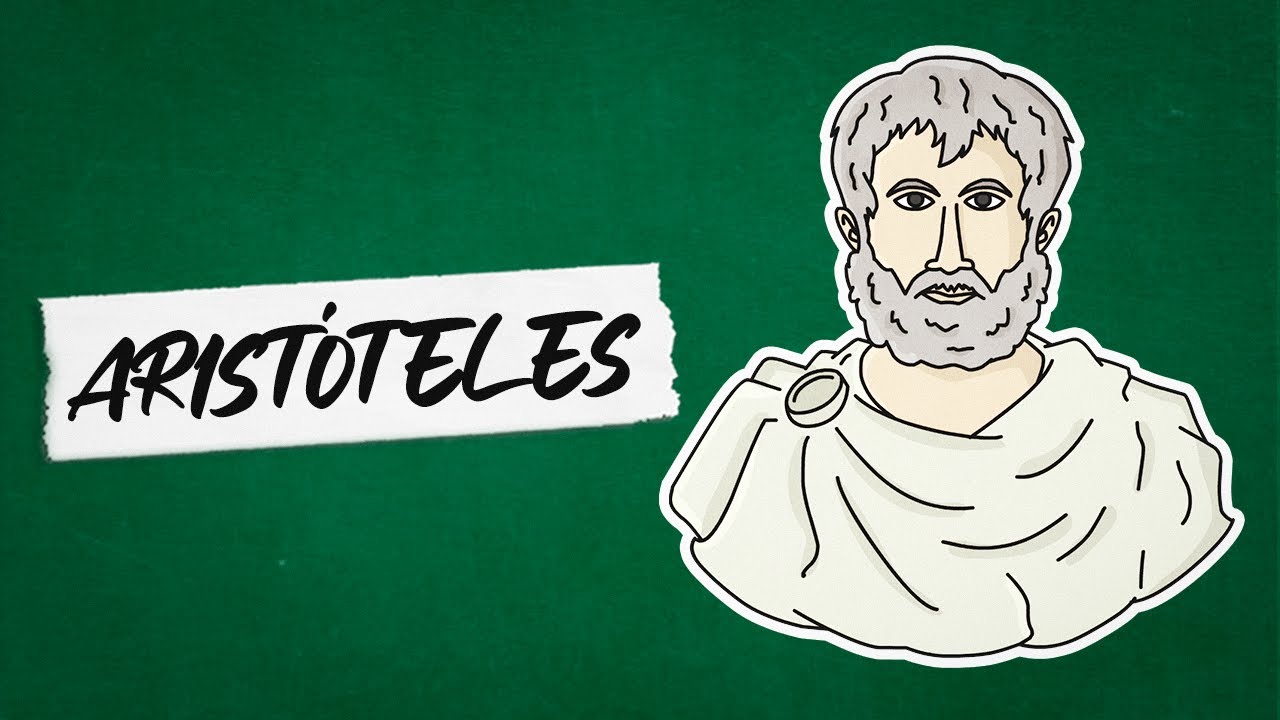
O que é Substância em Aristóteles? | Filosofia Descomplicada
Summary
TLDRIn this video, Professor Luiz Cláudio explores Aristotle's philosophy on substance, essence, and accidents. He explains how everything that exists is unique, contrasting Aristotle's view with Plato's idea of mere copies of forms. Using practical examples like bananas, cars, and humans, he illustrates how essential characteristics define an object's or being's identity, while accidental traits can change without altering its core. For instance, a car's chassis is essential, while its tires or paint are accidental. Similarly, a human's DNA or rational soul represents its essence, while physical traits are accidental. The video simplifies complex philosophical concepts in an accessible, relatable way.
Takeaways
- 😀 Aristotle distinguishes between substance and form, emphasizing that each thing has its own unique existence.
- 😀 Unlike Plato, who sees sensible things as copies, Aristotle argues that everything we perceive is original.
- 😀 Even objects that appear similar, like bananas in a bunch, are unique due to their individual forms.
- 😀 Aristotle introduces the concepts of essence and accident to explain how we recognize and categorize things.
- 😀 Essence refers to the fundamental characteristics of something that define its identity and cannot be removed.
- 😀 Accidents are the changeable properties of things that do not alter their essential nature.
- 😀 In the example of a car, the chassis or monobloc represents the essence, while tires, engine, and other parts are accidents.
- 😀 When a car is beyond repair, it is because its essential structure (chassis) is destroyed, not because incidental parts are damaged.
- 😀 For humans, essential characteristics are tied to our DNA or rational soul, while attributes like skin color, hair, and even some organs are accidental.
- 😀 Understanding essence and accident helps us group objects correctly while respecting their individuality.
- 😀 Aristotle's philosophy provides a framework for identifying what makes each thing fundamentally what it is.
Q & A
What is the main philosophical topic discussed in the video?
-The video discusses Aristotle's concept of substance, distinguishing between essence and accident in objects and living beings.
How does Aristotle's view of sensible things differ from Plato's?
-Unlike Plato, who believes that sensible things are mere copies of ideal forms, Aristotle argues that sensible things are original and unique.
What example does the video use to explain the uniqueness of substances?
-The video uses bananas as an example, explaining that while individual bananas may look similar, each one is unique in subtle ways like color and size.
How does Aristotle explain our ability to categorize objects like bananas and apples?
-Aristotle uses the concepts of essence and accident to explain categorization. Essence defines the core characteristics, while accidents are changeable traits that do not affect the object's identity.
What is meant by 'essence' according to Aristotle?
-Essence is the fundamental characteristic of a thing without which it would cease to be what it is. It defines the core identity of the object or being.
What are 'accidents' in Aristotle's philosophy?
-Accidents are traits or features that can change without altering the essential identity of a thing. They are non-essential and can vary by chance.
Using the car example, what part represents the essence and what represents accidents?
-The car's chassis or monobloc represents its essence, as it is fundamental to the car's structure. Elements like the engine, wheels, or tires are accidents because they can be replaced or changed without destroying the car's identity.
How does the video illustrate the concept of essence in humans?
-It explains that essential traits in humans are those that make us fundamentally human, such as a rational soul or DNA, whereas features like skin color, eye color, and organs are accidents because they can change or be replaced without altering our core identity.
Why are the concepts of essence and accident important for understanding objects and living beings?
-They allow us to recognize what defines an entity's identity and what characteristics are changeable, helping us categorize and understand the world accurately.
How can accidents vary without affecting the essence of a thing?
-Accidents can change in appearance, number, or condition without altering the essential nature of a thing. For example, a banana can be larger or smaller, ripe or unripe, but it remains a banana.
What analogy does the video use to explain total loss versus repair in cars?
-A car is considered a total loss if its chassis is destroyed because that affects the essence of the car, while broken tires or a damaged engine can be repaired since these are accidents and do not change the car's core identity.
Outlines

Dieser Bereich ist nur für Premium-Benutzer verfügbar. Bitte führen Sie ein Upgrade durch, um auf diesen Abschnitt zuzugreifen.
Upgrade durchführenMindmap

Dieser Bereich ist nur für Premium-Benutzer verfügbar. Bitte führen Sie ein Upgrade durch, um auf diesen Abschnitt zuzugreifen.
Upgrade durchführenKeywords

Dieser Bereich ist nur für Premium-Benutzer verfügbar. Bitte führen Sie ein Upgrade durch, um auf diesen Abschnitt zuzugreifen.
Upgrade durchführenHighlights

Dieser Bereich ist nur für Premium-Benutzer verfügbar. Bitte führen Sie ein Upgrade durch, um auf diesen Abschnitt zuzugreifen.
Upgrade durchführenTranscripts

Dieser Bereich ist nur für Premium-Benutzer verfügbar. Bitte führen Sie ein Upgrade durch, um auf diesen Abschnitt zuzugreifen.
Upgrade durchführenWeitere ähnliche Videos ansehen




5.0 / 5 (0 votes)

