Seluruh Jenis Manusia Dalam Sejarah Dijelaskan Dalam 9 Menit !
Summary
TLDRThis video takes viewers on an engaging journey through human evolution, from the earliest hominins to modern Homo sapiens. It highlights key species like Sahelanthropus, Ardipithecus, Australopithecus (including Lucy), Homo habilis, Homo erectus, Neanderthals, and others, detailing their physical traits, brain sizes, behaviors, and evolutionary significance. The script emphasizes milestones such as bipedalism, tool use, control of fire, social behaviors, and cultural developments. It also explores lesser-known species like Homo naledi, Homo floresiensis, and Homo luzonensis, illustrating the complexity and diversity of human ancestry. The content is presented in a lively, easy-to-understand style to make learning about evolution both fun and informative.
Takeaways
- 🧬 The script explains the evolutionary timeline of humans, starting from early hominins around 7 million years ago to modern Homo sapiens.
- 🦴 Sahelanthropus tchadensis is presented as one of the earliest known human ancestors, showing early signs of upright walking despite having a small brain.
- 🚶 Orrorin tugenensis provides early evidence that bipedal walking developed long before large human brains evolved.
- 🌳 Ardipithecus kadabba and Ardipithecus ramidus represent transitional species that combined tree-climbing abilities with early upright walking.
- 🔗 Australopithecus anamensis acted as an important evolutionary bridge between earlier ape-like ancestors and more human-like australopithecines.
- 👣 Australopithecus afarensis, including the famous fossil Lucy, walked fully upright and is considered a major milestone in human evolution.
- 🧠 Australopithecus africanus showed increased brain size and more human-like facial features, suggesting a transition toward the Homo genus.
- 🛠️ Homo habilis was one of the first true humans to create and use simple stone tools, marking the beginning of human technology and culture.
- 🔥 Homo erectus spread out of Africa into Asia and Europe, mastered fire, hunted cooperatively, and closely resembled modern humans in body structure.
- 🏕️ Homo heidelbergensis developed advanced hunting skills, built semi-permanent shelters, and may have been the common ancestor of Neanderthals and Homo sapiens.
- 🕯️ Homo naledi demonstrated surprisingly complex behavior, including possible burial rituals, despite having a relatively small brain.
- 🧬 Denisovans are known mostly through genetic evidence, and their DNA still exists in some modern populations, especially in Melanesia and Australia.
- 🧝 Homo floresiensis, nicknamed 'The Hobbit,' was a small-bodied human species from Indonesia that survived alongside Homo sapiens.
- 🏝️ Homo luzonensis was another mysterious small-bodied human species discovered in Southeast Asia with unique mixed anatomical traits.
- 💪 Neanderthals were intelligent, social, and capable humans who created tools, buried their dead, and interbred with Homo sapiens.
- 🌍 Homo sapiens became the only surviving human species, developing language, art, agriculture, civilization, technology, and space exploration.
- 📚 The script emphasizes that human evolution was complex, involving many different human species living at the same time and sometimes interbreeding.
- 🎯 A major message of the script is that intelligence and advanced behavior are not determined solely by brain size.
- 🎥 The narration aims to make learning history and evolution more engaging, simple, and entertaining rather than boring.
- 🤝 The script encourages viewers to join a fun and accessible learning community focused on educational content.
Q & A
Who is considered the earliest human ancestor mentioned in the script?
-Sahelanthropus tchadensis, which lived around 7 million years ago, is considered the earliest human ancestor mentioned.
What is significant about Orrorin tugenensis in human evolution?
-Orrorin tugenensis, living around 6 million years ago, is significant because it already walked on two legs while still living in the forest, showing early bipedalism.
How did Ardipithecus ramidus demonstrate transitional features between apes and humans?
-Ardipithecus ramidus, from around 4.4 million years ago, could walk upright on the ground and climb trees, had a small brain (300–350 cc), and small, non-sharp teeth, indicating social changes and transitional anatomy.
Why is Australopithecus afarensis, also known as Lucy, important in human evolution?
-Lucy, living 3.9–2.9 million years ago, walked fully upright, had a small brain (400–500 cc), and a nearly modern human-like posture, making her a key pioneer in human evolution and an ancestor of Homo habilis.
What advancements did Homo habilis bring compared to earlier species?
-Homo habilis, 2.4–1.4 million years ago, had a larger brain (510–600 cc), used simple stone tools, and represents the first true humans capable of early culture and technology.
How did Homo erectus differ from Homo habilis?
-Homo erectus (1.9 million–143,000 years ago) had a larger brain (800–1100 cc), a body similar to modern humans, could control fire, hunt in groups, and spread from Africa to Asia and Europe.
What unique feature does Homo naledi demonstrate about human evolution?
-Homo naledi, 335,000–236,000 years ago, had a small brain (465–610 cc) but exhibited complex behavior and possibly performed ritual burials, showing that brain size is not the sole measure of intelligence.
Who were Denny Sofan and what makes them notable in the human evolutionary record?
-Denny Sofan lived 300,000–30,000 years ago, known only through genetic evidence, and interbred with Neanderthals and Homo sapiens, illustrating hidden complexity in human evolution.
What distinguishes Homo floresiensis from other human species?
-Homo floresiensis, living 100,000–50,000 years ago, was very small (about 1 meter tall) with a small brain (400 cc), used tools, hunted small animals, and lived alongside Homo sapiens despite different adaptations.
How do Homo neanderthalensis and Homo sapiens relate genetically?
-Homo neanderthalensis (400,000–40,000 years ago) interbred with Homo sapiens, contributing DNA that is still present in non-African humans today, indicating cultural and genetic exchanges.
What are the defining features of modern Homo sapiens according to the script?
-Homo sapiens, from 300,000 years ago to today, have a large and complex brain (1300–1400 cc), language, art, technology, agriculture, civilization, and the ability to explore space, making them the only surviving human species.
Outlines

Dieser Bereich ist nur für Premium-Benutzer verfügbar. Bitte führen Sie ein Upgrade durch, um auf diesen Abschnitt zuzugreifen.
Upgrade durchführenMindmap

Dieser Bereich ist nur für Premium-Benutzer verfügbar. Bitte führen Sie ein Upgrade durch, um auf diesen Abschnitt zuzugreifen.
Upgrade durchführenKeywords

Dieser Bereich ist nur für Premium-Benutzer verfügbar. Bitte führen Sie ein Upgrade durch, um auf diesen Abschnitt zuzugreifen.
Upgrade durchführenHighlights

Dieser Bereich ist nur für Premium-Benutzer verfügbar. Bitte führen Sie ein Upgrade durch, um auf diesen Abschnitt zuzugreifen.
Upgrade durchführenTranscripts

Dieser Bereich ist nur für Premium-Benutzer verfügbar. Bitte führen Sie ein Upgrade durch, um auf diesen Abschnitt zuzugreifen.
Upgrade durchführenWeitere ähnliche Videos ansehen
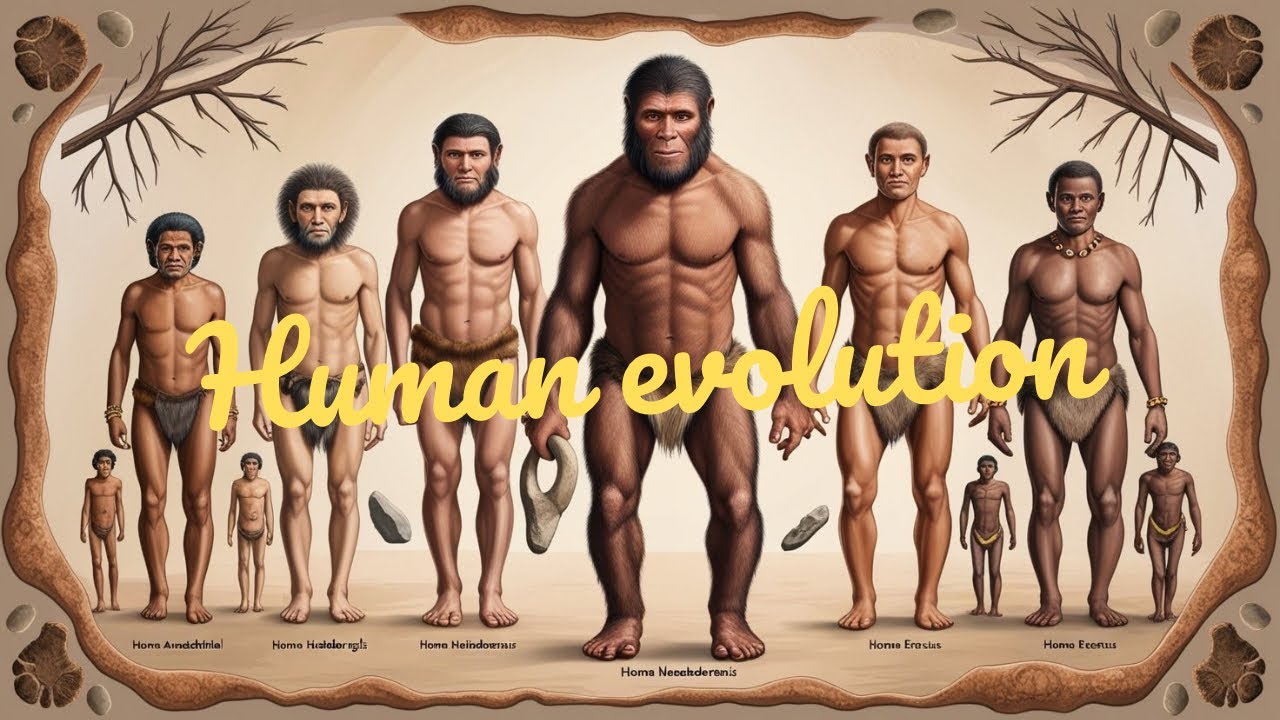
The Evolution of Humans: From Dryopithecus to Modern Homo Sapiens

Seven Million Years of Human Evolution in 12 Minutes
What Is Evolution & types of HUMANS | Dr Binocs Show | Peekaboo Kidz

มนุษย์มีกี่สายพันธุ์? | Point of View

Perjalanan 10 Menit Melalui Evolusi Manusia di Bumi

200.000+ Tahun Perjalanan Manusia, dalam 13 Menit
5.0 / 5 (0 votes)

