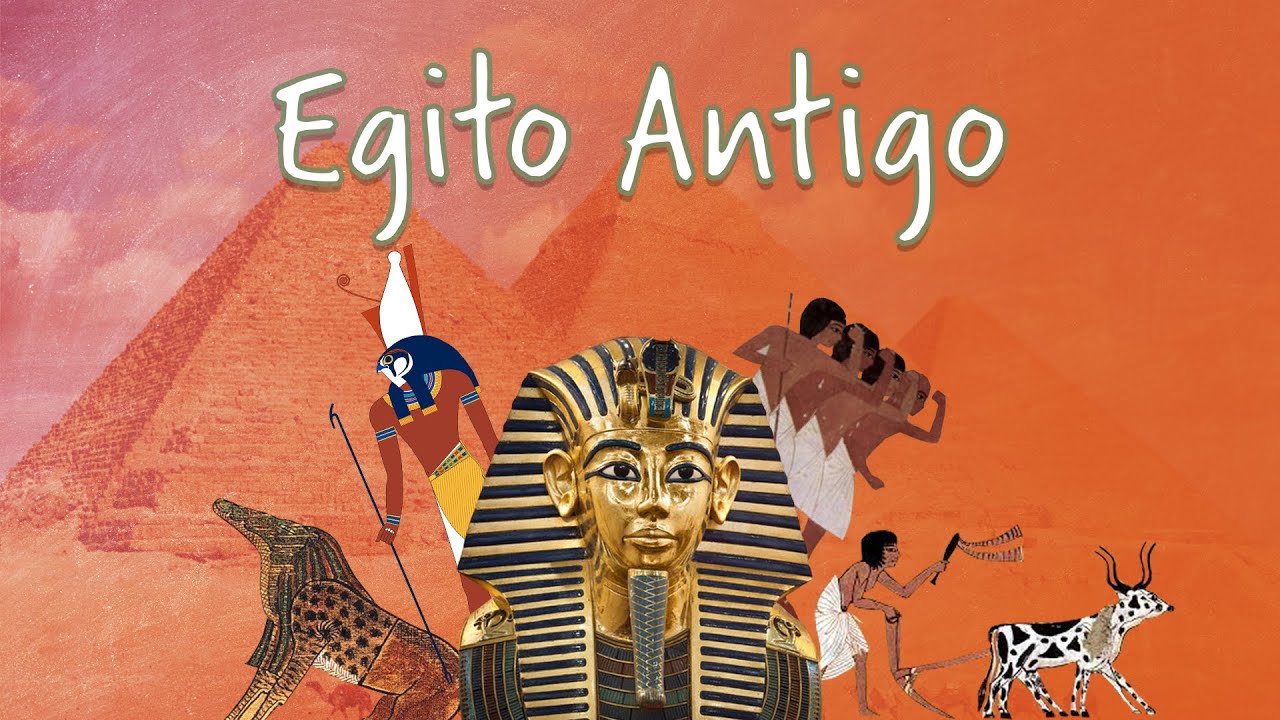
EGITO ANTIGO
Summary
TLDRThis video explores the rich history and culture of Ancient Egypt, highlighting its geography along the Nile, the unification of Upper and Lower Egypt, and the rise of powerful pharaohs. It delves into the economy, which relied on agriculture, fishing, livestock, craftsmanship, and river trade, and explains the social hierarchy from the divine pharaoh to nobles, soldiers, scribes, artisans, peasants, and slaves. The video also emphasizes the Egyptians' religious beliefs, including polytheism, anthropozoomorphic gods, and the practice of mummification. Contributions to mathematics, architecture, agriculture, astronomy, writing, and medicine are highlighted, illustrating how Ancient Egypt profoundly shaped human civilization.
Takeaways
- 🌍 Ancient Egypt was a major African civilization located in the northeast of Africa, along the Nile River, known for its deserts and access to the Mediterranean and Red Seas.
- 🏛️ The civilization developed along the Nile, dividing into Upper Egypt (south) and Lower Egypt (north), which were united around 3200 BCE under the first pharaoh, creating a centralized state.
- 🕌 Pharaohs were considered living gods, combining political and religious power, making Ancient Egypt a theocratic monarchy where all lands belonged to the pharaoh.
- 🌾 Agriculture was the economic foundation, relying on Nile flooding to fertilize the land, while also including fishing, animal husbandry, and craftsmanship.
- 🚤 The Nile facilitated trade and transport, making commerce an important part of the economy alongside collective labor and taxation.
- ⛪ Religion was polytheistic, with many gods being anthropozoomorphic (half-human, half-animal), and a strong belief in the afterlife, leading to practices like mummification and burial in sarcophagi.
- 👑 Egyptian society was hierarchical: Pharaoh at the top, followed by nobles, administrators, military, scribes, artisans, peasants, and slaves, with limited social mobility.
- 📐 Egyptians contributed to mathematics, architecture, and agriculture, inventing irrigation systems, plows, and using the Nile’s flooding as a natural calendar.
- ✍️ They developed hieroglyphic writing on papyrus, one of the earliest organized writing systems in the world, primarily used by scribes for records and administration.
- ⚕️ Through mummification, Egyptians advanced their understanding of human anatomy, which contributed to the development of early medicine.
Q & A
Where was Ancient Egyptian civilization primarily located?
-Ancient Egypt was located in the northeastern part of Africa, along the Nile River, and was bordered by the Mediterranean Sea and the Red Sea.
How was Ancient Egypt divided and what were these divisions called?
-Ancient Egypt was divided into two regions: Upper Egypt in the south and Lower Egypt in the north.
Who united Upper and Lower Egypt, and what was the significance of this unification?
-The unification was accomplished by the ruler of Upper Egypt, who became the first Pharaoh, establishing the first dynasty and creating a unified Egyptian state.
What role did the Nile River play in the economy of Ancient Egypt?
-The Nile was central to Egypt's economy, providing fertile soil for agriculture during floods, enabling irrigation, and supporting fishing, animal husbandry, and river trade.
What was the social structure of Ancient Egypt, from the Pharaoh down to slaves?
-The social hierarchy consisted of the Pharaoh at the top (considered a living god), followed by nobles and priests, military and scribes, artisans and merchants, peasants, and finally slaves, mostly war captives.
How did religion influence political power in Ancient Egypt?
-Egypt was a theocratic monarchy, where the Pharaoh was considered a god and political and religious authority were combined, giving the Pharaoh absolute control over the land and population.
Why did Egyptians practice mummification and use sarcophagi?
-Egyptians believed in an afterlife and thought the deceased needed their bodies preserved to return to life. Mummification and sarcophagi helped maintain the body for this purpose.
What contributions did Ancient Egyptians make to science and technology?
-They advanced mathematics, architecture (pyramids), agriculture (plows and irrigation), astronomy (using Nile floods and moon phases as a calendar), writing (hieroglyphs and papyrus), and medicine (through anatomical study from mummification).
How did agriculture shape the development of Egyptian society?
-Agriculture provided the economic foundation, allowing for food surplus, settlement along the Nile, population growth, taxation, and development of specialized labor, leading to social and technological advancements.
What does 'theocracy' mean in the context of Ancient Egypt?
-In Ancient Egypt, 'theocracy' means that the government was ruled by a divine figure—the Pharaoh—who was considered a god, combining religious authority with political power over all aspects of society.
Outlines

Dieser Bereich ist nur für Premium-Benutzer verfügbar. Bitte führen Sie ein Upgrade durch, um auf diesen Abschnitt zuzugreifen.
Upgrade durchführenMindmap

Dieser Bereich ist nur für Premium-Benutzer verfügbar. Bitte führen Sie ein Upgrade durch, um auf diesen Abschnitt zuzugreifen.
Upgrade durchführenKeywords

Dieser Bereich ist nur für Premium-Benutzer verfügbar. Bitte führen Sie ein Upgrade durch, um auf diesen Abschnitt zuzugreifen.
Upgrade durchführenHighlights

Dieser Bereich ist nur für Premium-Benutzer verfügbar. Bitte führen Sie ein Upgrade durch, um auf diesen Abschnitt zuzugreifen.
Upgrade durchführenTranscripts

Dieser Bereich ist nur für Premium-Benutzer verfügbar. Bitte führen Sie ein Upgrade durch, um auf diesen Abschnitt zuzugreifen.
Upgrade durchführenWeitere ähnliche Videos ansehen

Egito Antigo em animação para 6° ano.
Exploring Egyptian Civilization for Kids: Ancient Egyptian Culture Documentary - FreeSchool

Ancient Egypt 101 | Nile valley civilization | 5 minutes history | #history

Antico Egitto in (quasi) 20 minuti [SilverBrain]

As Grandes civilizações - O Antigo Egito / completo.
Egito Antigo
5.0 / 5 (0 votes)

