We Were Wrong About Cat Domestication and How Cats Spread Around the World
Summary
TLDRIn this engaging video, Anton explores the fascinating history of domestic cats, tracing their evolution from African wildcats to their widespread presence today. Highlighting recent genetic and archaeological studies, he challenges earlier assumptions about domestication, revealing that cats were likely first domesticated in Egypt through religious practices tied to the cult of Bastet. The video also details the spread of cats across Europe via Roman trade and conquest, and their later introduction to China through the Silk Road. Anton concludes by emphasizing the complexity of feline domestication and teases a follow-up on the mysterious parasite that affects humans, linked to cats.
Takeaways
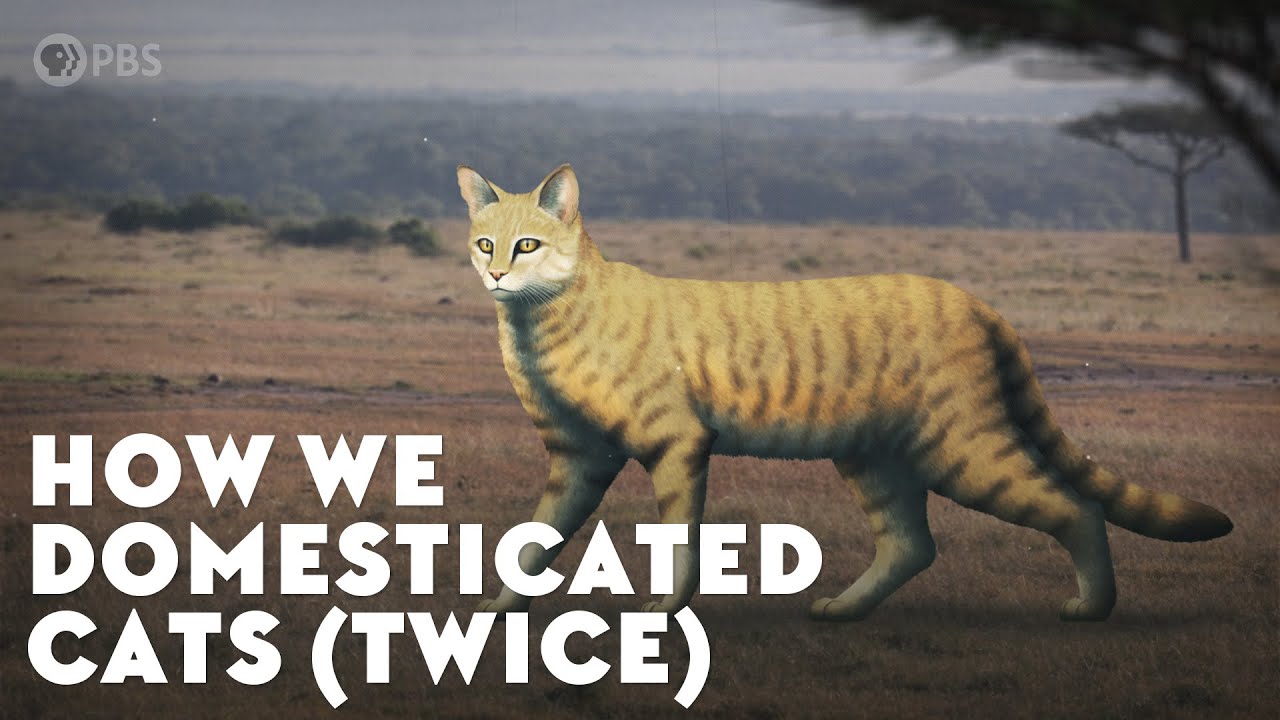
- 🐱 Domestic cats descend from the African wildcat (Felis lybica), which closely resembles modern cats.
- 📜 Earlier theories suggested cats were domesticated either in the Fertile Crescent or ancient Egypt, but new evidence favors Egypt.
- 🧬 Recent genetic studies (especially nuclear DNA) overturned the idea that cats spread with early Neolithic farmers.
- 🚫 Early European cats were not domesticated cats but native European wildcats (Felis silvestris).
- 🏺 Ancient Egypt played a central role in cat domestication through religious practices tied to the goddess Bastet.
- 🙏 Millions of cats were bred and mummified as religious offerings, likely selecting for tame and social traits.
- 🚢 A bizarre 19th-century event saw millions of Egyptian cat mummies shipped to England and used as fertilizer.
- 🌍 Domestic cats spread into Europe much later, primarily during the Roman Empire around the 1st century CE.
- ⚔️ The Romans likely helped distribute cats across Europe for pest control and trade purposes.
- 🐾 The spread of cats occurred in at least two waves, both originating from North African populations.
- 🌏 In ancient China, early 'cats' were actually leopard cats, which were never domesticated but lived near humans.
- 🛤️ True domestic cats arrived in China much later (around the 7th century CE) via trade routes like the Silk Road.
- ⏳ Compared to dogs, cats are a relatively recently domesticated species with a shorter history alongside humans.
- 🔬 Advances in genetic analysis were crucial in clarifying the complex and previously misunderstood history of cats.
- ❓ Many mysteries remain, including why Egyptians chose cats for worship and how they replaced lions in religious symbolism.
Q & A
What is the origin of domestic cats?
-Domestic cats descend from the African wildcat, Felis lybica, with genetic evidence linking them to populations in North Africa, particularly Tunisia.
What were the two main hypotheses regarding early cat domestication?
-The first hypothesis suggested domestication in the Levant region around 10,000 years ago, supported by a cat burial on Cyprus. The second pointed to ancient Egypt, supported by extensive cat mummification and cultural practices.
How did religious practices in Egypt influence cat domestication?
-Cats were mummified and revered in the cult of Bastet, the cat-headed goddess. Religious breeding likely favored social and docile cats, indirectly promoting domestication.
Why was the discovery of mummified cats in Egypt significant?
-The discovery of hundreds of thousands of mummified cats highlighted their cultural and religious importance and suggested large-scale human-controlled breeding, which contributed to domestication.
What did recent genetic studies reveal about cats in Europe during the Neolithic period?
-Nuclear DNA analysis revealed that cats in Neolithic Europe were mostly wild cats (Felis silvestris), not domesticated, and any shared genetic markers were due to hybridization, not human introduction.
When and how did domestic cats spread to Europe?
-Domestic cats arrived in Europe in two waves from North Africa: first around 3,000 years ago to Sardinia, and the second during the Roman Empire (~1st century CE), spreading rapidly across Europe, including Britain.
What evidence links Roman-era European cats to Egyptian cats?
-Genetic analysis shows strong maternal lineage connections between Egyptian mummified cats and cats found across Europe, indicating human-mediated dispersal during Roman expansion.
How did domestic cats arrive in China, and when?
-Cats arrived in China during the Tang Dynasty (7th century CE), likely via trade routes such as the Silk Road. Earlier Chinese cat-like species were wild leopard cats that became extinct around 200 CE.
What role did cats play in early agricultural societies?
-Cats exploited human settlements for food, primarily hunting pests, but in most early societies outside Egypt, this relationship was commensal rather than domesticated initially.
Why is cat domestication considered a more recent event compared to dogs?
-Unlike dogs, which co-evolved with humans for tens of thousands of years, cats became widespread domesticated animals relatively recently, primarily through religious practices and human-facilitated dispersal during the last few millennia.
What mysteries about ancient cat domestication remain unresolved?
-It remains unclear why Egyptians specifically selected cats for mummification, why they replaced lions in the cult of Bastet, and the exact motivations behind their religious and cultural prominence.
How did genetic studies help distinguish wild cats from domestic cats?
-Genetic studies, especially using nuclear DNA, allowed scientists to differentiate domestic cats from wild species, identify maternal lineages, and trace the geographical origins and spread of domestic populations.
Outlines

Dieser Bereich ist nur für Premium-Benutzer verfügbar. Bitte führen Sie ein Upgrade durch, um auf diesen Abschnitt zuzugreifen.
Upgrade durchführenMindmap

Dieser Bereich ist nur für Premium-Benutzer verfügbar. Bitte führen Sie ein Upgrade durch, um auf diesen Abschnitt zuzugreifen.
Upgrade durchführenKeywords

Dieser Bereich ist nur für Premium-Benutzer verfügbar. Bitte führen Sie ein Upgrade durch, um auf diesen Abschnitt zuzugreifen.
Upgrade durchführenHighlights

Dieser Bereich ist nur für Premium-Benutzer verfügbar. Bitte führen Sie ein Upgrade durch, um auf diesen Abschnitt zuzugreifen.
Upgrade durchführenTranscripts

Dieser Bereich ist nur für Premium-Benutzer verfügbar. Bitte führen Sie ein Upgrade durch, um auf diesen Abschnitt zuzugreifen.
Upgrade durchführen



5.0 / 5 (0 votes)

