PERBEDAAN PENGGUNAAN ADJECTIVE DAN ADVERB DALAM BAHASA INGGRIS
Summary
TLDRThis video lesson explains the proper usage of adjectives and adverbs in English, focusing on words like 'slow' and 'fast.' It clarifies how adjectives are used with linking verbs, while adverbs modify actions, often formed by adding '-ly' to adjectives. The instructor also covers irregular adverbs such as 'well' and 'hard,' which do not follow standard patterns. Through examples and exercises, viewers learn to distinguish between adjective and adverb usage in different contexts, ensuring accurate sentence construction. The video encourages engagement, offering online and offline classes for deeper learning, and emphasizes practical application through exercises and explanations.
Takeaways
- 😀 The video discusses the difference between adjectives and adverbs in English grammar.
- 😀 It explains how adding '-ly' to adjectives can transform them into adverbs of manner.
- 😀 Examples like 'slow' becoming 'slowly' are given to illustrate this transformation.
- 😀 The video highlights irregular adverbs, which do not follow the standard '-ly' transformation, such as 'good' becoming 'well' and 'fast' remaining 'fast'.
- 😀 Common irregular adverbs like 'hard' (stays 'hard'), 'late' (stays 'late'), and 'angry' (becomes 'angrily') are discussed.
- 😀 The importance of identifying whether a sentence requires an adjective or an adverb based on the verb used is emphasized.
- 😀 The video includes interactive exercises where viewers must decide between using adjectives or adverbs based on context.
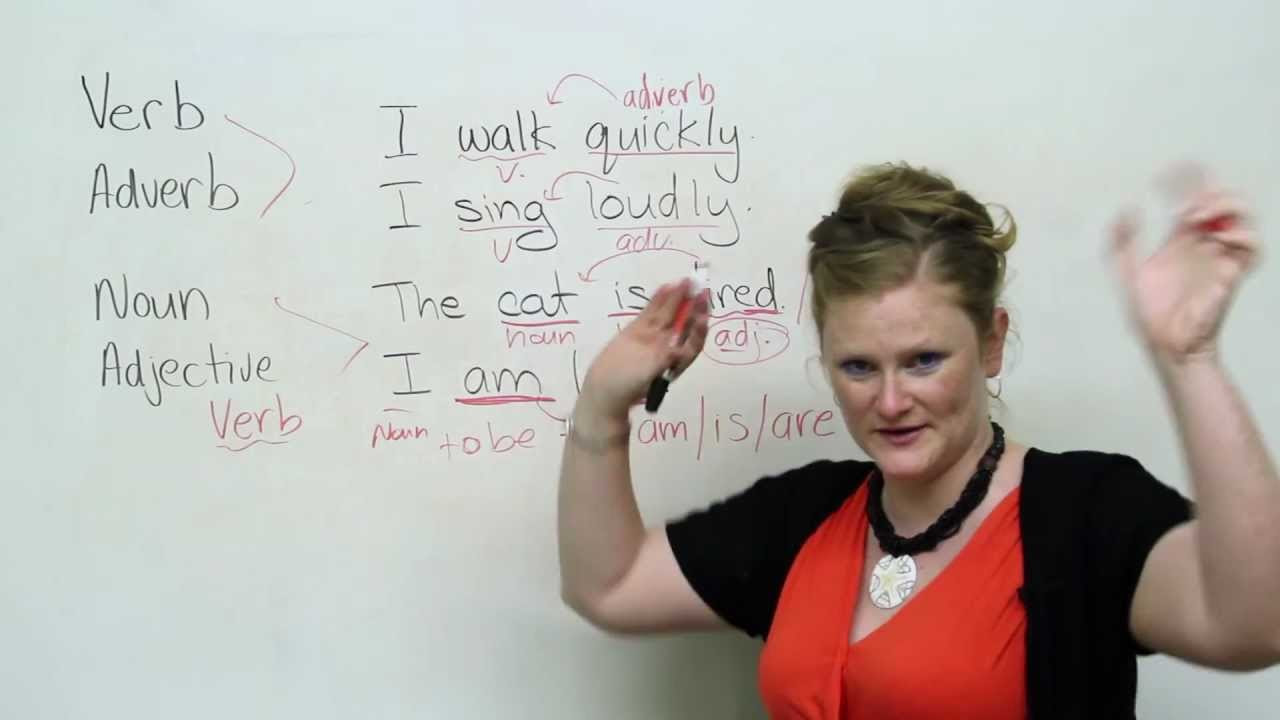
- 😀 For example, 'I walk slowly' uses the adverb form of 'slow', as 'walk' is not a linking verb.
- 😀 Linking verbs like 'is', 'looks', and 'seems' are typically followed by adjectives, while action verbs require adverbs.
- 😀 Viewers are encouraged to join online or offline English classes for more detailed lessons and practice.
Q & A
What is the main topic discussed in the video transcript?
-The video focuses on the use of adjectives and adverbs in English, particularly how certain words can change form when used as an adverb and how to determine the correct usage based on the verb context.
How can adjectives be turned into adverbs according to the video?
-Adjectives can be converted into adverbs by adding '-ly' at the end, which changes the word to describe how an action is performed, as in 'slow' becoming 'slowly'.
What are irregular adverbs and can you give examples mentioned in the transcript?
-Irregular adverbs are words whose adverb form does not follow the typical '-ly' pattern. Examples from the transcript include 'good' becoming 'well', 'fast' remaining 'fast', and 'hard' staying 'hard'.
How do you determine whether to use an adjective or adverb after a verb?
-The choice depends on the type of verb. If the verb is a linking verb, it is followed by an adjective. If it is an action verb that describes an action, it is followed by an adverb.
Can you explain the role of linking verbs in determining word forms?
-Linking verbs, such as 'be', 'seem', 'become', connect the subject to a description rather than an action. Words following linking verbs should be adjectives, not adverbs.
What example does the transcript provide for using an adverb with a non-linking verb?
-An example is 'I walk slowly,' where 'walk' is an action verb, so the correct form is the adverb 'slowly' instead of the adjective 'slow'.
What happens if you incorrectly use an adjective after an action verb?
-Using an adjective after an action verb, like saying 'I walk slow' instead of 'I walk slowly,' is grammatically incorrect because it does not properly describe how the action is performed.
How does the video explain determining whether 'fast' is used as an adjective or adverb?
-The word 'fast' is irregular because it remains the same in both forms. Context and the type of verb determine its usage, but no '-ly' is needed.
What guidance does the video provide for practicing these grammar rules?
-The video includes exercises where viewers identify whether to use adjectives or adverbs based on the verb type, including irregular cases and linking verbs, to reinforce learning.
Why is understanding the difference between adjectives and adverbs important in English?
-It is important because using the wrong form can lead to grammatical errors and confusion. Adjectives describe nouns or subjects, while adverbs describe verbs, showing how an action occurs.
Outlines

Dieser Bereich ist nur für Premium-Benutzer verfügbar. Bitte führen Sie ein Upgrade durch, um auf diesen Abschnitt zuzugreifen.
Upgrade durchführenMindmap

Dieser Bereich ist nur für Premium-Benutzer verfügbar. Bitte führen Sie ein Upgrade durch, um auf diesen Abschnitt zuzugreifen.
Upgrade durchführenKeywords

Dieser Bereich ist nur für Premium-Benutzer verfügbar. Bitte führen Sie ein Upgrade durch, um auf diesen Abschnitt zuzugreifen.
Upgrade durchführenHighlights

Dieser Bereich ist nur für Premium-Benutzer verfügbar. Bitte führen Sie ein Upgrade durch, um auf diesen Abschnitt zuzugreifen.
Upgrade durchführenTranscripts

Dieser Bereich ist nur für Premium-Benutzer verfügbar. Bitte führen Sie ein Upgrade durch, um auf diesen Abschnitt zuzugreifen.
Upgrade durchführenWeitere ähnliche Videos ansehen




5.0 / 5 (0 votes)

