Praktikum Geologi Struktur - Modul 6 - 3. Contoh Soal 3 (Rotasi)
Summary
TLDRThis educational video explores the concept of rotational movement in geology, focusing on rotations around axes perpendicular to planes. The instructor walks through two example problems, demonstrating how to calculate rotation angles, centers, and displacements using orthographic and combined methods for efficiency. Visual aids, including color-coded diagrams, help illustrate the steps: plotting initial positions, applying rotations, analyzing intersections, and deriving final orientations. The first example covers a simple single-layer rotation, while the second addresses a more complex scenario with two intersecting layers. Viewers gain a clear, practical understanding of rotational analysis and techniques for predicting geological layer positions after rotation.
Takeaways
- 😀 The video focuses on the concept of rotational movement of geological layers due to fault displacement.
- 😀 Rotations are analyzed with respect to axes perpendicular to the plane to simplify visualization and calculations.
- 😀 The instructor emphasizes using a combination of orthographic projection and graphical methods to solve rotation problems efficiently.
- 😀 In the first example, a layer rotates 50° counterclockwise and shifts 30° along a circular path.
- 😀 Visual representation of layers in diagrams is essential for understanding the effects of rotation and displacement.
- 😀 For complex cases, such as multiple layers (AC and BD), intersections and projections help determine rotation centers and angles.
- 😀 Determining the rotation center involves constructing an isosceles triangle from intersection points of the layers.
- -
- 😀 Accurate measurement of rotation angles, displacement distance, and direction is crucial for predicting final layer positions.
- 😀 The combination of rotational and translational analysis helps reduce errors and saves time compared to manual calculations alone.
- 😀 Understanding these methods allows geologists to accurately model the post-faulting positions of rock layers in the field.
- 😀 The video encourages learners to practice these steps, using diagrams and projections, to gain confidence in solving rotational geology problems.
Q & A
What is the main topic of the video lesson?
-The main topic of the video lesson is the concept and application of rotation in structural layers, focusing on rotations around an axis perpendicular to a plane.
What are the key elements that need to be measured when analyzing a rotation?
-The key elements are the center of rotation, the rotation angle, the displacement along the circular path, the direction of rotation (clockwise or counterclockwise), and the initial and final positions of the object or plane.
Which methods are suggested for solving rotation problems in the lesson?
-The lesson suggests using a combination of orthographic projection and other techniques to efficiently calculate the rotation, rather than relying solely on one method.
In the first example, what is the initial condition of the plane AC?
-The initial condition of plane AC is that it is located in the southwest direction with a tilt of 30°.
How is the rotation of the plane AC performed in the first example?
-The plane AC is rotated 50° counterclockwise, with adjustments made using orthographic projection to determine the new position of the plane.
What is the outcome of the first example after performing the rotation?
-The outcome is a new plane (illustrated in green) representing the final rotated position, with the rotation angle and displacement along the circle calculated from the projection.
What additional complexity is introduced in the second example?
-The second example involves two layers (AC and BD) with different positions and tilts, requiring calculation of both the rotation angle and the center of rotation using intersections and geometric projections.
How is the rotation angle determined in the second example?
-The rotation angle is determined by constructing an isosceles triangle using points of intersection of the layers as a base and calculating the apex angle, resulting in a rotation angle of approximately 64°.
Why is the combination of methods used instead of a single method?
-Using a combination of methods is more efficient, reduces time consumption, and improves accuracy compared to using only one method, especially when dealing with complex rotations.
What is the overall learning objective of these examples?
-The objective is to teach how to systematically determine the rotated position of structural planes, understand the geometric relationships involved, and apply methods like orthographic projection and triangulation to calculate rotation angles and centers.
Outlines

Dieser Bereich ist nur für Premium-Benutzer verfügbar. Bitte führen Sie ein Upgrade durch, um auf diesen Abschnitt zuzugreifen.
Upgrade durchführenMindmap

Dieser Bereich ist nur für Premium-Benutzer verfügbar. Bitte führen Sie ein Upgrade durch, um auf diesen Abschnitt zuzugreifen.
Upgrade durchführenKeywords

Dieser Bereich ist nur für Premium-Benutzer verfügbar. Bitte führen Sie ein Upgrade durch, um auf diesen Abschnitt zuzugreifen.
Upgrade durchführenHighlights

Dieser Bereich ist nur für Premium-Benutzer verfügbar. Bitte führen Sie ein Upgrade durch, um auf diesen Abschnitt zuzugreifen.
Upgrade durchführenTranscripts

Dieser Bereich ist nur für Premium-Benutzer verfügbar. Bitte führen Sie ein Upgrade durch, um auf diesen Abschnitt zuzugreifen.
Upgrade durchführenWeitere ähnliche Videos ansehen
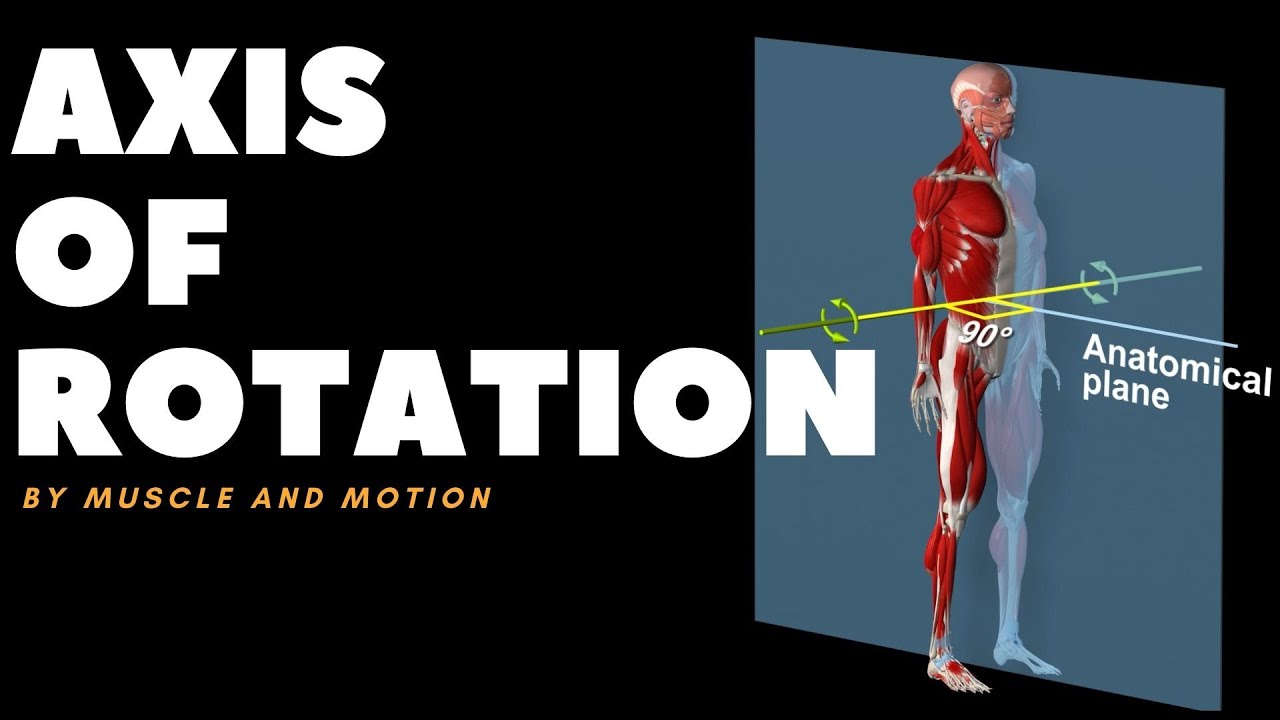
Understanding Axes of Movement/Rotation
ROTASI (PERPUTARAN) || TRANSFORMASI GEOMETRI

Understanding the Rotation Matrix

Posture: Spiral Line from Anatomy Trains
ANATOMI GERAK MANUSIA (BAG. 1) : ISTILAH ARAH, BIDANG ANATOMIS DAN SUMBU ANATOMIS.
Planos Anatômicos e Eixos de Movimento: Introdução à Anatomia parte 2
5.0 / 5 (0 votes)

