Stocks Have Dropped 7% - What's Next?
Summary
TLDRThe video analyzes the recent 7–10% drop in the stock market, highlighting the S&P 500's breakdown against gold as a key warning signal, historically linked to market tops and recessions. It examines labor trends, midterm year patterns, and technical behaviors like backtesting and rallies to the 21-week EMA. Historical comparisons to 1973, 2008, and Bitcoin’s market behavior provide context for potential outcomes. The speaker predicts a likely 10% drop, possible short-term rally, and further declines into late 2026, while emphasizing measured observation over panic, suggesting cautious positioning and monitoring for buying opportunities once market lows form.
Takeaways
- 📉 The stock market has dropped approximately 7% from recent highs, with expectations of a potential 10% decline.
- 💰 The S&P 500 is breaking down against gold, a historical indicator often preceding market tops and recessions.
- 🏦 Labor market data, including low layoffs and initial claims, does not preclude a recession; market drops often precede labor weakness.
- 📊 Historical comparisons to 1973 and 2008 suggest midterm years experience weaker stock market performance and controlled corrections.
- 📈 Bear market patterns typically include an initial drop, a counter-trend rally to the 21-week EMA, followed by further declines.
- 🪙 Bitcoin’s earlier distribution phase may serve as a leading indicator for the stock market’s potential moves.
- ⚖️ S&P 500 valuations against gold are more relevant today than comparisons to M2 money supply or dot-com bubble extremes.
- 🔄 Avoid panic selling after initial market drops; watch for rallies to key resistance levels before making major decisions.
- 📅 Historically, midterm-year bottoms often form around October, providing potential buying opportunities.
- 🛑 Longer-term risk exists if the market fails to reset and drifts near highs, potentially setting up a deeper future correction.
- 🛢️ Elevated oil prices in a late business cycle environment historically align with the onset of recessions.
- 📌 Seasonal and election-year trends indicate midterm years are generally weaker, reinforcing the potential for market corrections.
Q & A
Why does the speaker believe the stock market may drop 10% from its highs?
-The speaker cites the breakdown of the S&P 500 against gold as a key indicator. Historically, when the S&P 500 breaks down relative to gold, it has often preceded recessions and significant market corrections. Additionally, midterm year patterns and elevated liquidity risk metrics support the likelihood of a near-term drop.
How does the S&P 500 perform when compared to gold, according to the speaker?
-The S&P 500 has been underperforming gold for several years. Since 2022, the stock market is down about 45% relative to gold. Historically, when the S&P 500 breaks down against gold, it often signals a market top or the onset of broader declines.
What role do layoffs and initial claims play in predicting a recession?
-Layoffs and initial claims are not leading indicators for a recession. The speaker emphasizes that stock market declines typically precede layoffs, meaning a drop in the market is what often triggers increased unemployment, not the other way around.
Why does the speaker prefer comparing the S&P 500 to gold over money supply (M2)?
-Comparing the S&P 500 to gold provides a clearer picture of market cycles and potential tops. Money supply comparisons involve longer-term fractals and patterns that may not be as predictive or relevant to the current late-cycle environment, whereas gold valuation reflects real purchasing power and risk more directly.
What historical periods does the speaker reference to support his market outlook?
-The speaker references 1973, 2000, 2008, and more recent midterm-year patterns (2018, 2022). These periods are used to draw parallels for how the S&P 500 behaves against gold, during corrections, and in late-cycle or midterm-year environments.
How do midterm years historically affect the stock market?
-Midterm years are historically weaker for the stock market. Average performance shows drawdowns and volatility during these years, which can help reset market sentiment and provide buying opportunities after initial declines.
What is the significance of the 21-week EMA in this analysis?
-The 21-week EMA serves as a technical resistance point during market corrections. Historically, bear markets see rallies back to this EMA before continuing downward. Monitoring this level helps anticipate potential pauses or reversals in declines.
What potential market scenarios does the speaker outline for the rest of the year?
-The speaker outlines two main scenarios: 1) The S&P 500 drops about 10%, rallies to the 21-week EMA, then continues declining into the end of the year, potentially forming a buying opportunity. 2) A weaker correction where the market bounces back to highs without significant further upside, possibly setting the stage for a deeper drop later.
How does Bitcoin relate to the stock market in this discussion?
-Bitcoin is mentioned as a potential leading indicator. It has already gone through a distribution phase and fallen below its April 2025 lows, suggesting that equities may follow a similar downward path. This behavior may hint at where the stock market could be headed.
Why does the speaker caution against panic selling?
-Panic selling after an initial drop can be counterproductive because bear market rallies often test key technical levels like the 21-week EMA before continuing lower. Selling too early may result in missing rebounds and re-entering at higher prices during short-term rallies.
What is the speaker's long-term hope for the market pattern?
-The speaker hopes for a market correction that allows for sentiment reset without excessive upward spikes that create further exhaustion. Ideally, this would involve a low forming around October, similar to past midterm-year lows, offering a more manageable path back to upward trends.
How does the Dow Jones correction compare to the S&P 500 outlook?
-The Dow Jones is already down 10% from its high of 50,000 to 45,000, and the speaker predicts a potential further decline to around 40,000 later this year. This mirrors the S&P 500 correction scenario but emphasizes a larger nominal drawdown for the Dow.
Outlines

Dieser Bereich ist nur für Premium-Benutzer verfügbar. Bitte führen Sie ein Upgrade durch, um auf diesen Abschnitt zuzugreifen.
Upgrade durchführenMindmap

Dieser Bereich ist nur für Premium-Benutzer verfügbar. Bitte führen Sie ein Upgrade durch, um auf diesen Abschnitt zuzugreifen.
Upgrade durchführenKeywords

Dieser Bereich ist nur für Premium-Benutzer verfügbar. Bitte führen Sie ein Upgrade durch, um auf diesen Abschnitt zuzugreifen.
Upgrade durchführenHighlights

Dieser Bereich ist nur für Premium-Benutzer verfügbar. Bitte führen Sie ein Upgrade durch, um auf diesen Abschnitt zuzugreifen.
Upgrade durchführenTranscripts

Dieser Bereich ist nur für Premium-Benutzer verfügbar. Bitte führen Sie ein Upgrade durch, um auf diesen Abschnitt zuzugreifen.
Upgrade durchführen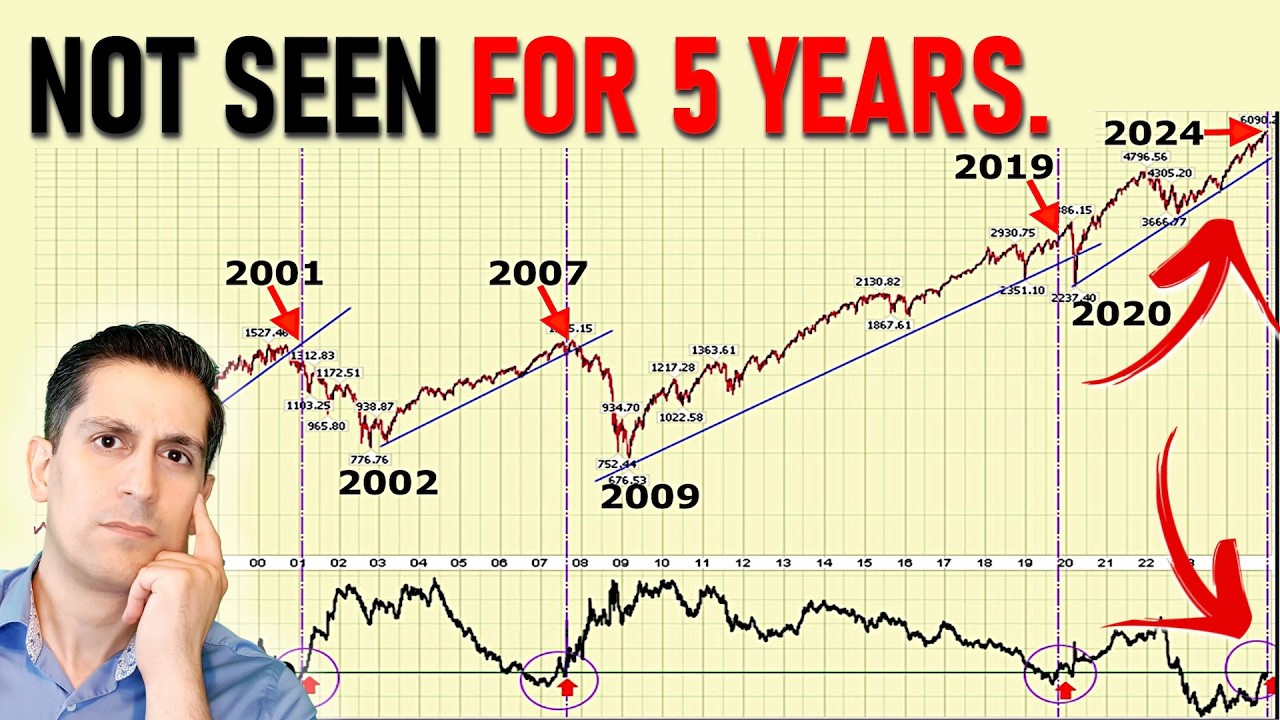





5.0 / 5 (0 votes)

