Turunan Fungsi Aljabar • Part 1: Konsep Dasar / Definisi Turunan Fungsi
Summary
TLDRIn this educational video, the host explains the concept of derivatives in algebraic functions. Starting with basic definitions and the rate of change between two points on a curve, the video introduces the derivative through limits. It provides examples of derivatives for constant, linear, quadratic, and cubic functions, demonstrating how to apply the definition of the derivative using simple algebraic formulas. The video concludes by highlighting the general rule for differentiating power functions and encourages viewers to practice more examples, setting the stage for further learning in calculus.
Takeaways
- 😀 The video introduces the concept of derivatives and how they are used to understand the rate of change in algebraic functions.
- 😀 A function is said to have a derivative when it is continuous and differentiable over a given interval.
- 😀 The definition of the derivative is explained using the concept of a limit, where the change in y (Δy) is divided by the change in x (Δx) as Δx approaches zero.
- 😀 The slope of the secant line between two points on a curve represents the average rate of change, while the slope of the tangent line represents the instantaneous rate of change.
- 😀 The notation for the derivative is commonly represented as F'(x) or dy/dx, depending on the function being analyzed.
- 😀 Derivatives can be computed using the limit definition, which involves finding the limit of Δx approaching zero for the difference between the function values at two points.
- 😀 When calculating derivatives for specific functions, the script demonstrates examples such as constant functions, linear functions, and polynomial functions.
- 😀 The derivative of a constant function is always zero, as constants do not change with respect to x.
- 😀 For power functions like x^n, the derivative is calculated using the formula F'(x) = n * x^(n-1), where n is the exponent of x.
- 😀 The video covers multiple examples to showcase how the power rule works in practice for different powers of x (e.g., x^2, x^3, x^4, etc.).
- 😀 The key takeaway is the formula for the derivative of a power function: if f(x) = x^n, then f'(x) = n * x^(n-1), where n is a constant exponent.
Q & A
What is the definition of a derivative in the context of this video?
-A derivative is defined as the rate of change of a function. It measures how a function's value changes as its input changes. Mathematically, it is represented as the limit of the ratio of changes in the function's output to changes in its input as the interval approaches zero.
What does the symbol 'F'(x) represent in the context of derivatives?
-'F'(x)' represents the derivative of the function F(x). It indicates the instantaneous rate of change of the function F with respect to x, essentially showing how the function behaves at each point.
What is the significance of the limit process in finding a derivative?
-The limit process allows us to calculate the instantaneous rate of change by considering the behavior of the function as the interval between two points (Δx) approaches zero. This makes the derivative the slope of the tangent line at a point on the curve.
What is the general formula for the derivative of a function y = F(x)?
-The general formula for the derivative of a function y = F(x) is represented as: y' = lim(Δx -> 0) [(F(x + Δx) - F(x)) / Δx], where Δx represents the change in x and the limit approaches zero.
How is the derivative of a constant function determined?
-The derivative of a constant function, such as F(x) = C, is always zero. This is because a constant function does not change as x changes, resulting in a rate of change of zero.
What is the derivative of the function F(x) = x?
-The derivative of F(x) = x is 1. This is because the rate of change of x with respect to x is constant, and the derivative of a linear function y = x is always 1.
What happens when you differentiate a function like F(x) = x²?
-When differentiating F(x) = x², the result is F'(x) = 2x. This is because the derivative of x raised to any power n is n * x^(n-1), where n = 2 in this case.
How do you compute the derivative of a function like F(x) = x³?
-To compute the derivative of F(x) = x³, we use the power rule. The derivative is F'(x) = 3x². This follows from the general formula where the exponent is multiplied by the base and the exponent is decreased by one.
What is the general rule for differentiating power functions, such as xⁿ?
-The general rule for differentiating power functions is: If F(x) = xⁿ, then F'(x) = n * x^(n-1). This rule applies for any constant exponent n.
What is the relationship between the derivative and the slope of the tangent line?
-The derivative at a given point gives the slope of the tangent line to the curve at that point. This means that the derivative represents how steep the curve is at any given point.
Outlines

Dieser Bereich ist nur für Premium-Benutzer verfügbar. Bitte führen Sie ein Upgrade durch, um auf diesen Abschnitt zuzugreifen.
Upgrade durchführenMindmap

Dieser Bereich ist nur für Premium-Benutzer verfügbar. Bitte führen Sie ein Upgrade durch, um auf diesen Abschnitt zuzugreifen.
Upgrade durchführenKeywords

Dieser Bereich ist nur für Premium-Benutzer verfügbar. Bitte führen Sie ein Upgrade durch, um auf diesen Abschnitt zuzugreifen.
Upgrade durchführenHighlights

Dieser Bereich ist nur für Premium-Benutzer verfügbar. Bitte führen Sie ein Upgrade durch, um auf diesen Abschnitt zuzugreifen.
Upgrade durchführenTranscripts

Dieser Bereich ist nur für Premium-Benutzer verfügbar. Bitte führen Sie ein Upgrade durch, um auf diesen Abschnitt zuzugreifen.
Upgrade durchführenWeitere ähnliche Videos ansehen
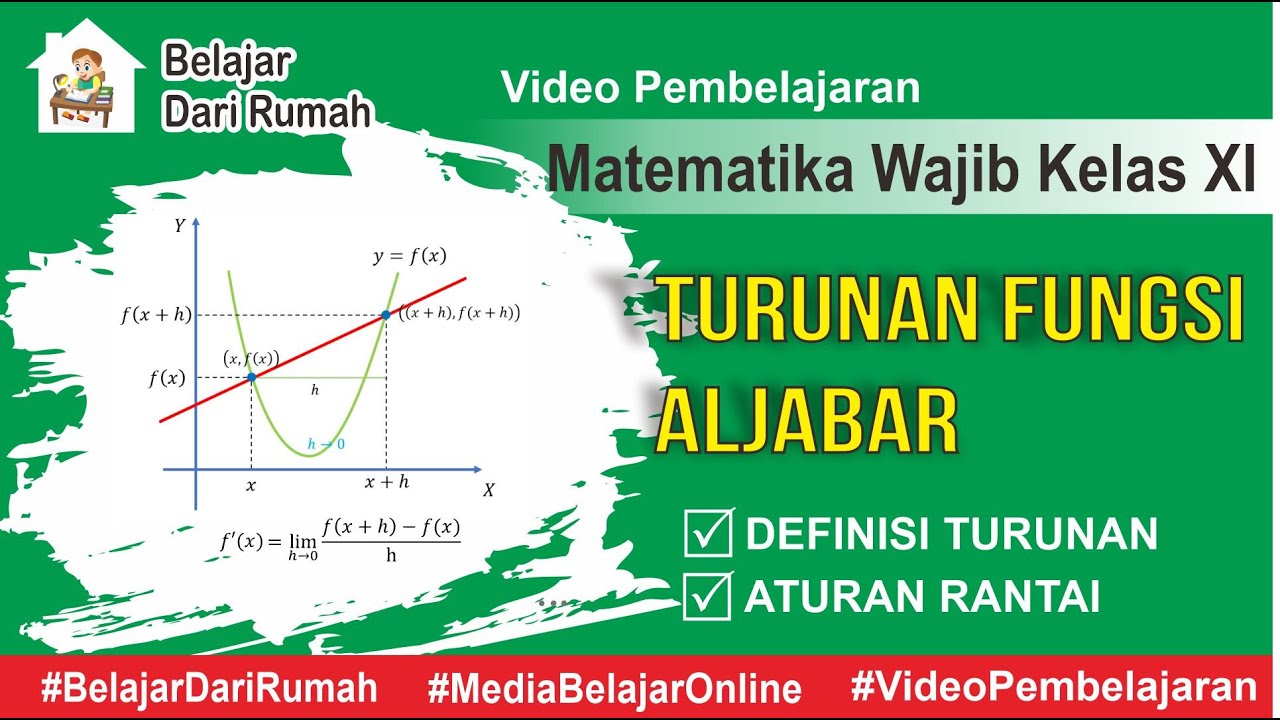
Konsep Dasar Turunan Fungsi Aljabar Matematika Wajib Kelas 11 m4thlab

TURUNAN FUNGSI ALJABAR

ĐẠO HÀM và ý nghĩa hình học (Derivative Intro) | Vật Lý Chill
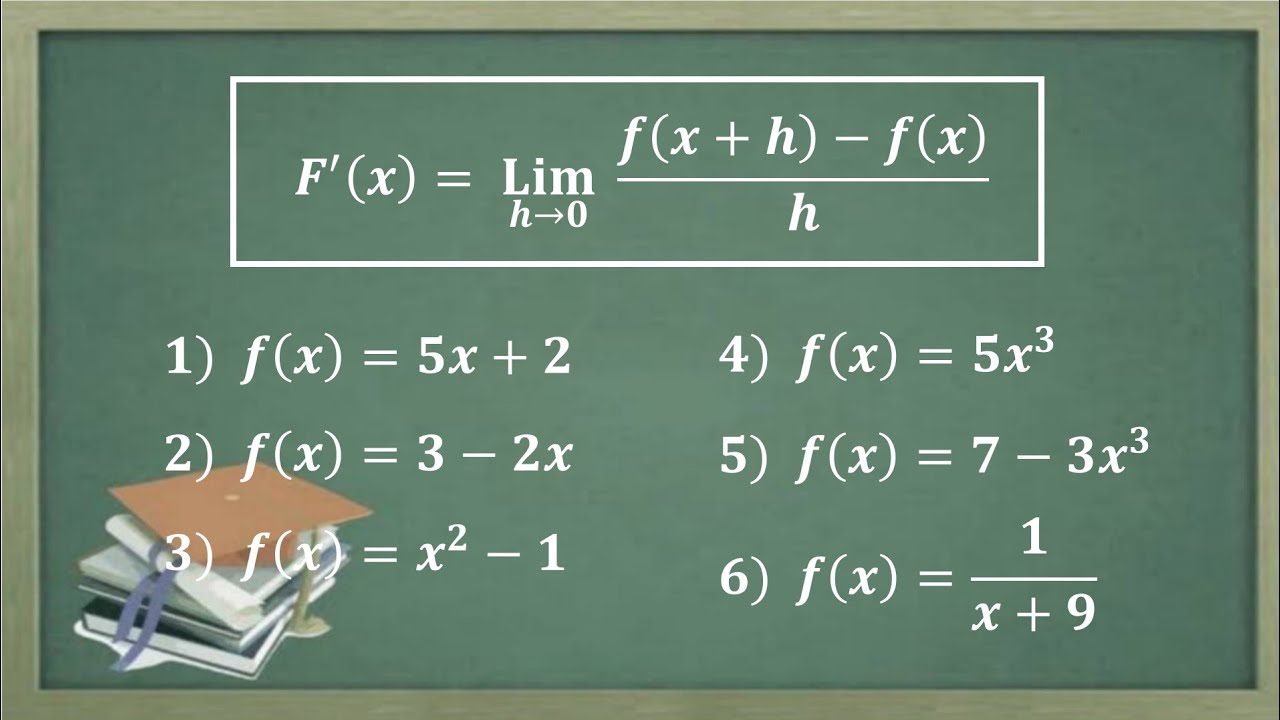
Turunan dengan menggunakan defnisi turunan Turunan menggunakan limit
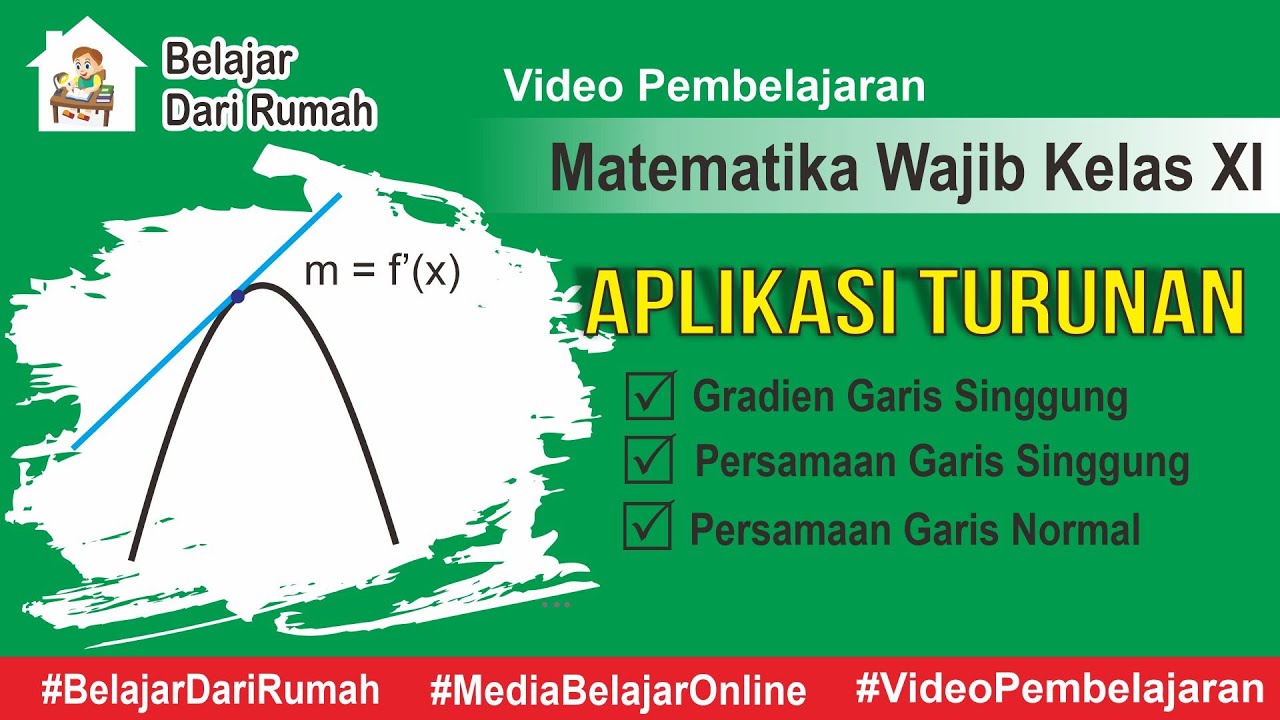
Aplikasi Turunan 1 | Gradien, Persamaan Garis Singgung dan Persamaan Garis Normal
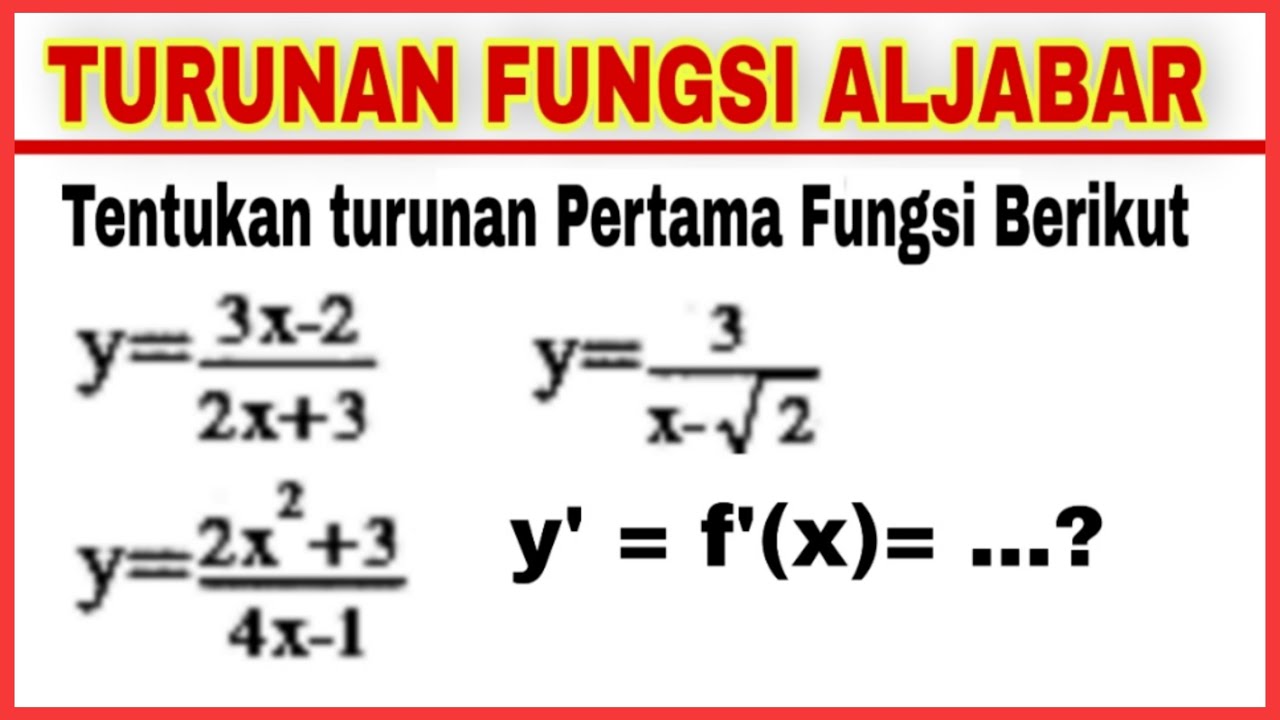
Matematika kelas 11 | Turunan Fungsi Aljabar bentuk pembagian
5.0 / 5 (0 votes)

