SISTEM ORGANISASI KEHIDUPAN : IPA KELAS 7 SMP
Summary
TLDRThis educational video on the organization of life systems in living organisms covers key concepts in biology for 7th-grade students. It explores the hierarchy of life, starting from the smallest unit, the cell, progressing through tissues, organs, and organ systems, to the largest levels like populations, communities, and the biosphere. The video explains the structure of cells, differentiating between prokaryotic and eukaryotic types, and details the essential cell components and functions. Additionally, it highlights differences between plant and animal cells, as well as various organ systems and their roles in both humans and plants.
Takeaways
- 😀 Living organisms have different levels of organization, ranging from cells to the biosphere.
- 😀 The smallest structural unit of living organisms is the cell, which forms tissues, organs, organ systems, and eventually organisms.
- 😀 Cells can be prokaryotic (without a membrane-bound nucleus) or eukaryotic (with a membrane-bound nucleus).
- 😀 Organisms made up of eukaryotic cells include animals, plants, fungi, and protists, while prokaryotes include bacteria.
- 😀 The cell membrane regulates the movement of substances in and out of the cell and is made up of lipids, proteins, and phosphates.
- 😀 The cytoplasm is where metabolic processes take place, and it contains various organelles like mitochondria and ribosomes.
- 😀 The nucleus controls cellular activities and contains DNA, which carries genetic information.
- 😀 Animal cells contain lysosomes and centrosomes, while plant cells have a cell wall, chloroplasts, and large vacuoles.
- 😀 Tissues are groups of similar cells performing specific functions; in animals, these include epithelial, connective, nerve, and muscle tissues.
- 😀 Plants have five types of tissues: meristematic, epidermal, parenchymal, supporting, and vascular (phloem and xylem).
- 😀 Organ systems in humans, like the digestive, respiratory, circulatory, and nervous systems, work together to support life, while plants also have organ systems for transport, respiration, and reproduction.
Q & A
What is the smallest unit that makes up all living organisms?
-The smallest unit that makes up all living organisms is the cell. A living organism is considered as such if it is composed of at least one cell.
What are the key structural levels of organization in living organisms?
-The key structural levels of organization in living organisms range from the smallest to the largest: cell, tissue, organ, organ system, individual, population, community, biome, and biosphere.
What distinguishes prokaryotic cells from eukaryotic cells?
-Prokaryotic cells lack a membrane-bound nucleus, while eukaryotic cells have a nucleus enclosed by a membrane. Prokaryotic cells are typically found in organisms like bacteria, while eukaryotic cells make up all other organisms.
What are the main components of a cell?
-The main components of a cell include the cell membrane, cytoplasm, nucleus, and various organelles such as mitochondria, ribosomes, and the Golgi apparatus.
What is the function of the cell membrane?
-The cell membrane protects the cell's contents and regulates the movement of substances in and out of the cell.
How do plant and animal cells differ in structure?
-Plant cells have a cell wall, large vacuoles, and plastids like chloroplasts. Animal cells lack these features, but they have structures like lysosomes and centrioles, which are absent in plant cells.
What is the role of mitochondria in a cell?
-Mitochondria are responsible for cellular respiration, providing energy for the cell by converting nutrients into ATP.
What are the types of tissues found in animals?
-The four main types of tissues in animals are epithelial tissue (covers surfaces), connective tissue (supports and binds other tissues), nervous tissue (transmits signals), and muscle tissue (enables movement).
What are the primary organs of a plant?
-The three main organs of a plant are the root, stem, and leaf. These organs work together to support the plant’s growth, nutrient absorption, and photosynthesis.
How do organ systems function in animals?
-Organ systems in animals, such as the digestive, respiratory, circulatory, and nervous systems, work together to perform specific life-sustaining functions like digestion, oxygen exchange, blood circulation, and coordination of body activities.
Outlines

Dieser Bereich ist nur für Premium-Benutzer verfügbar. Bitte führen Sie ein Upgrade durch, um auf diesen Abschnitt zuzugreifen.
Upgrade durchführenMindmap

Dieser Bereich ist nur für Premium-Benutzer verfügbar. Bitte führen Sie ein Upgrade durch, um auf diesen Abschnitt zuzugreifen.
Upgrade durchführenKeywords

Dieser Bereich ist nur für Premium-Benutzer verfügbar. Bitte führen Sie ein Upgrade durch, um auf diesen Abschnitt zuzugreifen.
Upgrade durchführenHighlights

Dieser Bereich ist nur für Premium-Benutzer verfügbar. Bitte führen Sie ein Upgrade durch, um auf diesen Abschnitt zuzugreifen.
Upgrade durchführenTranscripts

Dieser Bereich ist nur für Premium-Benutzer verfügbar. Bitte führen Sie ein Upgrade durch, um auf diesen Abschnitt zuzugreifen.
Upgrade durchführenWeitere ähnliche Videos ansehen
INTERAKSI MAKHLUK HIDUP DENGAN LINGKUNGAN || KOMPONEN BIOTIK DAN ABIOTIK IPA KELAS 7 SMP #ipakelas7
KLASIFIKASI MAHLUK HIDUP: IPA KELAS 7 SMP
IPA Kelas 7 Semester 1 : Klasifikasi Makhluk Hidup (Part 1 : Ciri-ciri Makhluk Hidup)

Rangkuman Materi IPA Kelas 7 Kurikulum Merdeka Semester 1 dan 2
Ep. 13 - Ecologia: conceitos básicos
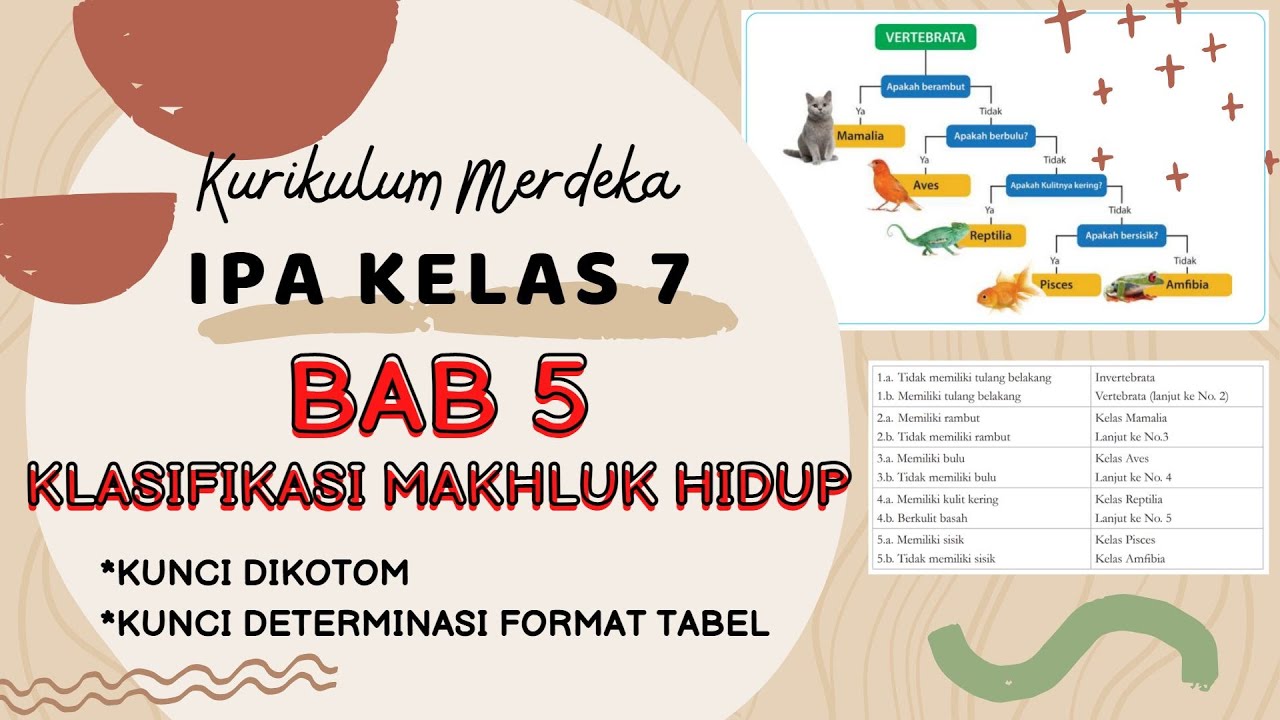
BAB 5 Klasifikasi Makhluk Hidup - Kunci Dikotom - Kunci Determinasi || IPA Kelas 7 Kurikulum Merdeka
5.0 / 5 (0 votes)

