VLSI.4.6.Number System Table
Summary
TLDRThis video explains the basics of various number systems, including binary, octal, decimal, and hexadecimal. It walks through the values from 0 to 15, showing how each system represents these values differently. The binary system, with only two logic levels, uses more digits for values beyond 1. In octal, values increment with each digit, while hexadecimal introduces alphabetic characters (A to F) to represent values from 10 to 15. The video offers a helpful table for quick reference and hints at future content on number system conversions.
Takeaways
- 🔢 The video reviews four number systems: decimal, binary, octal, and hexadecimal.
- 📊 A reference table is created showing numbers from 0 to 15 in all four number systems.
- 🔟 Hexadecimal has the highest base among the four systems, containing 16 symbols (0–9 and A–F).
- 0️⃣ The digit 0 is represented the same way in all four number systems.
- 1️⃣ The digit 1 is also represented the same across decimal, binary, octal, and hexadecimal.
- ⚙️ Binary uses only two digits (0 and 1), so higher values require moving to the next positional place.
- ➡️ The decimal number 2 is written as 10 in binary because binary has only two logic levels.
- 🔁 Up to decimal 7, octal and hexadecimal representations remain the same as decimal.
- 8️⃣ In octal, the decimal number 8 is written as 10 because octal digits range only from 0 to 7.
- 🔤 In hexadecimal, after 9 the letters A, B, C, D, E, and F represent values 10 through 15.
- 📚 The 0–15 table serves as a quick reference for converting between number systems.
- 🔄 Future lessons will expand on additional methods for converting between number systems.
Q & A
What are the four number systems discussed in the script?
-The four number systems discussed are binary, octal, decimal, and hexadecimal.
Why is hexadecimal considered the system with the highest number of elements?
-Hexadecimal has 16 elements, consisting of the digits 0-9 and the letters A-F, which is the highest number of elements among the four number systems.
How are the numbers 0 and 1 represented in all the number systems?
-The numbers 0 and 1 are represented the same way across all the number systems: binary, octal, decimal, and hexadecimal.
Why does the binary system need to use higher positions when representing numbers like 2?
-Binary only has two logic levels, 0 and 1. Therefore, to represent numbers higher than 1, it needs to move to the next higher position (e.g., 2 is represented as '10' in binary).
What is the binary representation of the number 3, and how does it compare to other systems?
-In binary, 3 is represented as '11'. In octal, decimal, and hexadecimal, it remains '3'.
How is the number 8 represented in octal, and why does it change format?
-In octal, 8 is represented as '10'. This is because octal only uses the digits 0-7, so once it exceeds 7, it moves to the next position, similar to how decimal works.
What is the pattern for converting numbers greater than 7 across the different systems?
-For numbers greater than 7, binary shifts to the next higher position (e.g., 8 is '1000' in binary), while in octal, the system moves to the next position as well (e.g., 8 becomes '10'). In hexadecimal, after 9, letters A-F are used to represent values 10-15.
What does the hexadecimal system use after the number 9?
-In hexadecimal, after 9, the letters A, B, C, D, E, and F are used to represent the values 10, 11, 12, 13, 14, and 15, respectively.
How does the number 15 appear in each of the number systems?
-In binary, 15 is represented as '1111', in octal as '17', in decimal as '15', and in hexadecimal as 'F'.
What is the purpose of the reference table provided in the script?
-The reference table provides a quick comparison for converting numbers from one system to another (binary, octal, decimal, and hexadecimal) for values between 0 and 15.
Outlines

Dieser Bereich ist nur für Premium-Benutzer verfügbar. Bitte führen Sie ein Upgrade durch, um auf diesen Abschnitt zuzugreifen.
Upgrade durchführenMindmap

Dieser Bereich ist nur für Premium-Benutzer verfügbar. Bitte führen Sie ein Upgrade durch, um auf diesen Abschnitt zuzugreifen.
Upgrade durchführenKeywords

Dieser Bereich ist nur für Premium-Benutzer verfügbar. Bitte führen Sie ein Upgrade durch, um auf diesen Abschnitt zuzugreifen.
Upgrade durchführenHighlights

Dieser Bereich ist nur für Premium-Benutzer verfügbar. Bitte führen Sie ein Upgrade durch, um auf diesen Abschnitt zuzugreifen.
Upgrade durchführenTranscripts

Dieser Bereich ist nur für Premium-Benutzer verfügbar. Bitte führen Sie ein Upgrade durch, um auf diesen Abschnitt zuzugreifen.
Upgrade durchführenWeitere ähnliche Videos ansehen

Tutorial Lengkap: Cara Konversi Bilangan Desimal ke Biner, Oktal dan Hexadesimal
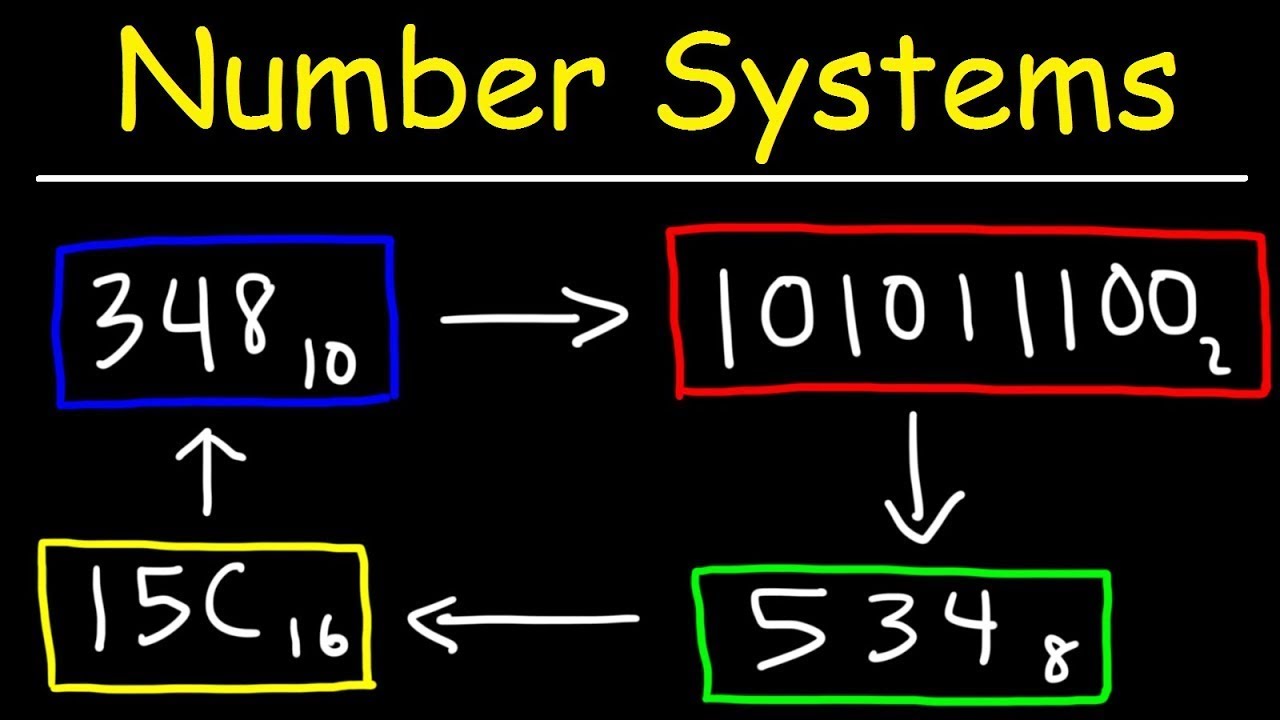
Number Systems Introduction - Decimal, Binary, Octal & Hexadecimal

Teknologi Digital • Part 1: Pengertian Teknologi Digital, Sistem Bilangan, dan Kode Biner
Konversi Bilangan Hexadesimal ke Basis Bilangan Yang Lain

Tutorial Lengkap: Konversi Bilangan Biner, Oktal, Desimal, dan Heksadesimal

SISTEM BILANGAN | Berpikir Komputasional | Informatika Kelas 8 Kurikulum Merdeka | Fase D
5.0 / 5 (0 votes)

