It's Her Story - Rosalind Franklin
Summary
TLDRRosalind Franklin, a pioneering scientist, made critical contributions to the discovery of DNA's structure. Born in 1920, she defied gender norms, excelling in chemistry and x-ray crystallography. Her key achievement in 1952 was capturing 'Photo 51,' an x-ray image that revealed DNA's double helix structure. Despite facing gender discrimination, Franklin’s work significantly influenced the groundbreaking discoveries of Watson and Crick. Though her contributions were overlooked during her lifetime, Franklin’s legacy in science, particularly in genetics and virology, is now widely recognized. Her story reflects both her brilliance and the struggles of women in science.
Takeaways
- 😀 Rosalind Franklin, born in London in 1920, was an exceptional scientist who contributed significantly to the discovery of DNA's structure.
- 😀 As a child, Rosalind was curious, loved science, and was determined to challenge gender norms by pursuing her passion for knowledge.
- 😀 After high school, Rosalind pursued a chemistry degree at Cambridge University, where she showed a passion for science despite societal expectations of women.
- 😀 During World War II, Rosalind stayed at Cambridge, volunteered as an air raid warden, and made important contributions to wartime chemistry.
- 😀 In 1945, after the war, Rosalind earned her PhD and made a name for herself as a researcher, impressing scientists in both England and France.
- 😀 In France, Rosalind felt empowered and appreciated as a scientist, where her male colleagues treated her as an equal, unlike in England.
- 😀 Rosalind became an expert in X-ray crystallography and was known for her skill at analyzing crystal structures to understand their atomic patterns.
- 😀 Her work on X-ray crystallography, especially her photos of DNA, was pivotal in the discovery of DNA’s double-helix structure.
- 😀 Despite her critical contributions to the discovery of DNA, Rosalind Franklin did not receive the recognition she deserved during her lifetime, as Watson and Crick used her data without credit.
- 😀 Rosalind’s groundbreaking research continued even after she was diagnosed with cancer, and she worked relentlessly until her death in 1958 at the age of 37.
Q & A
Who was Rosalind Franklin and why is she significant in science?
-Rosalind Franklin was a British chemist and expert in X-ray crystallography whose precise photograph of DNA—known as Photo 51—was critical in revealing DNA’s double-helix structure.
What early interests showed Rosalind Franklin’s scientific curiosity?
-From a young age she enjoyed observing the world closely, questioning how things worked, debating, playing strategy-based sports, and dedicating herself to academics.
How did her time in France influence her scientific career?
-In France, Franklin found intellectual freedom and was treated as an equal by male colleagues. She mastered X-ray crystallography there and became well-known for her expertise and leadership.
What challenges did Franklin face when she worked at King’s College London?
-Franklin experienced sexism, conflict with Maurice Wilkins over lab leadership, exclusion from the men-only lunchroom, and a lack of recognition for her contributions.
What is Photo 51 and why is it important?
-Photo 51 is Franklin’s X-ray diffraction image of DNA. Its X-shaped pattern provided key evidence that DNA is a double helix.
How did Watson and Crick use Franklin’s work without her knowledge?
-Maurice Wilkins secretly showed Photo 51 to James Watson, which helped Watson and Francis Crick solve the DNA structure. They later published without crediting Franklin’s contribution.
Did Rosalind Franklin receive recognition for her role in discovering DNA’s structure during her lifetime?
-No. Franklin died in 1958, and the truth about her contribution became widely acknowledged only years later. The 1962 Nobel Prize was awarded to Watson, Crick, and Wilkins without her.
What scientific contributions did Franklin make after her DNA research?
-At Birkbeck College, Franklin made groundbreaking discoveries about viruses, including the structure of the tobacco mosaic virus.
How did Franklin’s personality and work style impact her career?
-Franklin was assertive, rigorous, and deeply dedicated to her work. Her strong opinions sometimes caused conflict, but her determination allowed her to produce high-quality, influential research.
How did Rosalind Franklin continue working despite her illness?
-Even after being diagnosed with cancer, she started new projects, traveled to give lectures, and persisted in research—finishing her 37th scientific publication shortly before her death.
What is Rosalind Franklin’s legacy today?
-Franklin is now celebrated as a pioneering woman in science whose expert images and research were essential to understanding DNA and viruses. Her name stands as a cornerstone in biology and scientific discovery.
Outlines

Dieser Bereich ist nur für Premium-Benutzer verfügbar. Bitte führen Sie ein Upgrade durch, um auf diesen Abschnitt zuzugreifen.
Upgrade durchführenMindmap

Dieser Bereich ist nur für Premium-Benutzer verfügbar. Bitte führen Sie ein Upgrade durch, um auf diesen Abschnitt zuzugreifen.
Upgrade durchführenKeywords

Dieser Bereich ist nur für Premium-Benutzer verfügbar. Bitte führen Sie ein Upgrade durch, um auf diesen Abschnitt zuzugreifen.
Upgrade durchführenHighlights

Dieser Bereich ist nur für Premium-Benutzer verfügbar. Bitte führen Sie ein Upgrade durch, um auf diesen Abschnitt zuzugreifen.
Upgrade durchführenTranscripts

Dieser Bereich ist nur für Premium-Benutzer verfügbar. Bitte führen Sie ein Upgrade durch, um auf diesen Abschnitt zuzugreifen.
Upgrade durchführenWeitere ähnliche Videos ansehen

Rosalind Franklin: DNA's unsung hero - Cláudio L. Guerra

How Rosalind Franklin changed history

DNA Structure and Replication: Crash Course Biology #10

The DNA and Non-Mendelian Genetics (Incomplete Dominance): Knowledge Catalog Grade 9 Biology #7
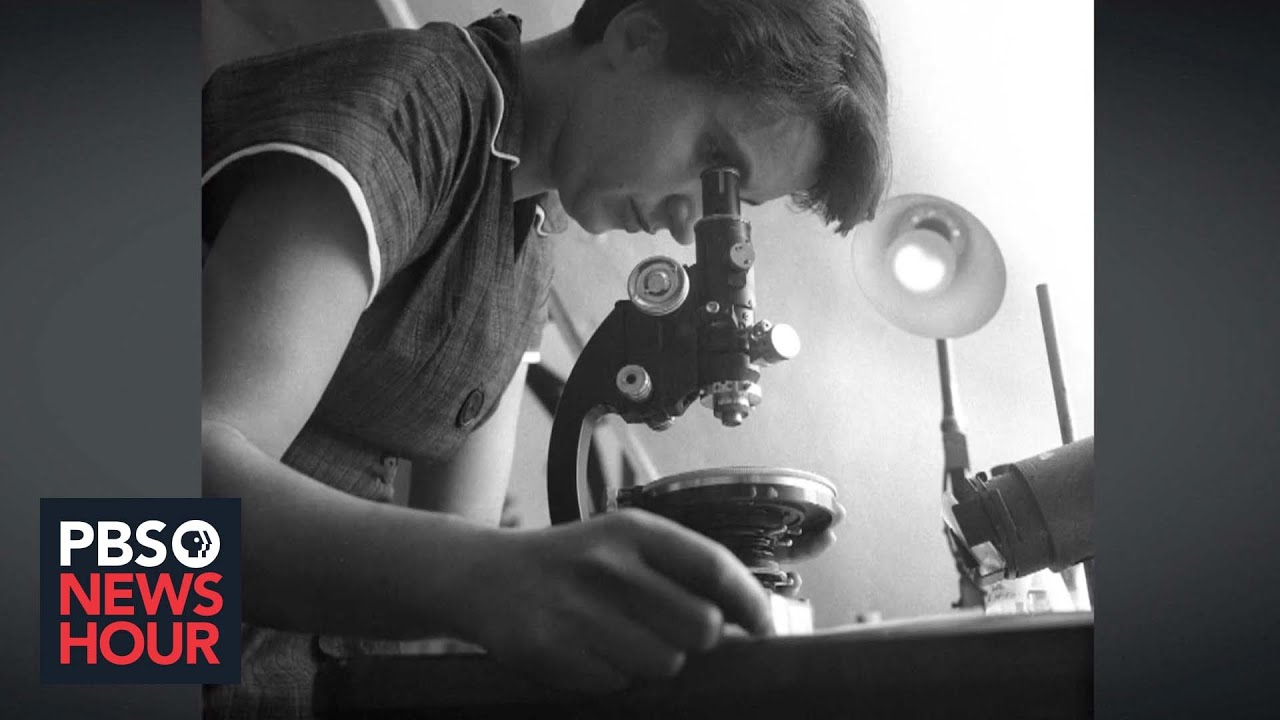
Why discovery of DNA's double helix was based on 'rip-off' of female scientist's data

Genetics - Structure of the Double Helix - Lesson 14 | Don't Memorise
5.0 / 5 (0 votes)

