Video 6: Direction Cosine Method: Rotation about Z Axis
Summary
TLDRThe transcript seems to focus on a discussion involving mathematical or engineering concepts, particularly dealing with vector transformations and rotations about various axes. The speaker explains the process of working with components, specifically rotating vectors, and calculates magnitudes and components of vectors in a coordinate system. They describe using trigonometric functions like cosine and sine to resolve vector components along different axes and perform matrix transformations. There is also reference to working with small numerical data and understanding rotations, highlighting steps of calculation for transformations about the z-axis.
Takeaways
- 😀 The transcript involves a discussion about rotating about axes and finding readings.
- 😀 There’s a reference to a location option that plays a role in the analysis or process being discussed.
- 😀 A component related to 'U' is discussed, possibly involving vector or matrix components.
- 😀 The significance of magnitudes is highlighted, particularly the magnitude of 'U1'.
- 😀 There's mention of writing the y-component of a vector in terms of cosine.
- 😀 The transcript suggests a focus on breaking down or analyzing the values of components based on cosine functions.
- 😀 A comparison between different components, such as X and Y components, is made during the analysis.
- 😀 There’s an emphasis on transformation related to rotating about the Z-axis.
- 😀 Some components are identified as small or significant in the context of transformation, with reference to specific columns.
- 😀 A rotational process is described in detail, suggesting an exploration of matrix operations or coordinate transformations.
- 😀 There are multiple references to variables and mathematical operations, like rotation and cosine, which point to the involvement of trigonometric calculations in the problem-solving process.
Q & A
What is being discussed in the transcript?
-The transcript appears to involve a technical discussion on rotations, possibly related to vector transformations or matrix operations in a three-dimensional space. It includes references to the rotation of vectors around axes and finding components of vectors along different axes.
What is meant by 'rotate about axes' in this context?
-'Rotate about axes' refers to rotating an object or vector around one of the three primary axes in 3D space (X, Y, Z). This operation is a key concept in transformations, where the position or orientation of an object is changed while maintaining its shape.
What does the speaker mean by 'the magnitude of U1'?
-The 'magnitude of U1' refers to calculating the length or size of a vector U1. This is typically done using the Euclidean norm or magnitude formula, which is the square root of the sum of the squares of its components.
What role do trigonometric functions like cosine play in the discussion?
-Trigonometric functions like cosine are used to break down vectors into their components along different axes. For example, the cosine of an angle is often used to find the component of a vector in the direction of a specific axis, such as the x or y axis.
Why is the speaker concerned with the 'y component' of the vector?
-The speaker is likely discussing how to find the specific component of the vector along the y-axis. This is important for understanding the vector's projection onto the y-axis, which can be calculated using the cosine of the angle between the vector and the y-axis.
What is meant by 'rotation about the z axis'?
-Rotation about the z-axis refers to rotating an object or vector in the 3D plane while keeping the z-coordinate constant. This is one of the standard rotation operations used in 3D transformations, often represented using rotation matrices.
How does the transformation matrix relate to rotation?
-A transformation matrix is used to perform linear operations on vectors, including rotations. When rotating about an axis, the transformation matrix modifies the coordinates of the vector in such a way that it reflects the rotation about that axis.
What does the speaker mean by 'components of you'?
-The phrase 'components of you' likely refers to the components of a vector in a certain coordinate system. In this case, the speaker is probably referring to the components of a vector along the X, Y, or Z axes.
What is the significance of 'dislocated' in this context?
-In this context, 'dislocated' could refer to a change in the position of a vector or point in space. It may be used to describe a shift in the coordinates of the vector after a transformation or rotation has occurred.
Why is the matrix described as a 'mess' in the transcript?
-The speaker describes the matrix as a 'mess' likely because the matrix is complicated, disorganized, or difficult to interpret. This could happen when dealing with transformation matrices that require careful manipulation and understanding of the relationships between the components.
Outlines

Dieser Bereich ist nur für Premium-Benutzer verfügbar. Bitte führen Sie ein Upgrade durch, um auf diesen Abschnitt zuzugreifen.
Upgrade durchführenMindmap

Dieser Bereich ist nur für Premium-Benutzer verfügbar. Bitte führen Sie ein Upgrade durch, um auf diesen Abschnitt zuzugreifen.
Upgrade durchführenKeywords

Dieser Bereich ist nur für Premium-Benutzer verfügbar. Bitte führen Sie ein Upgrade durch, um auf diesen Abschnitt zuzugreifen.
Upgrade durchführenHighlights

Dieser Bereich ist nur für Premium-Benutzer verfügbar. Bitte führen Sie ein Upgrade durch, um auf diesen Abschnitt zuzugreifen.
Upgrade durchführenTranscripts

Dieser Bereich ist nur für Premium-Benutzer verfügbar. Bitte führen Sie ein Upgrade durch, um auf diesen Abschnitt zuzugreifen.
Upgrade durchführenWeitere ähnliche Videos ansehen
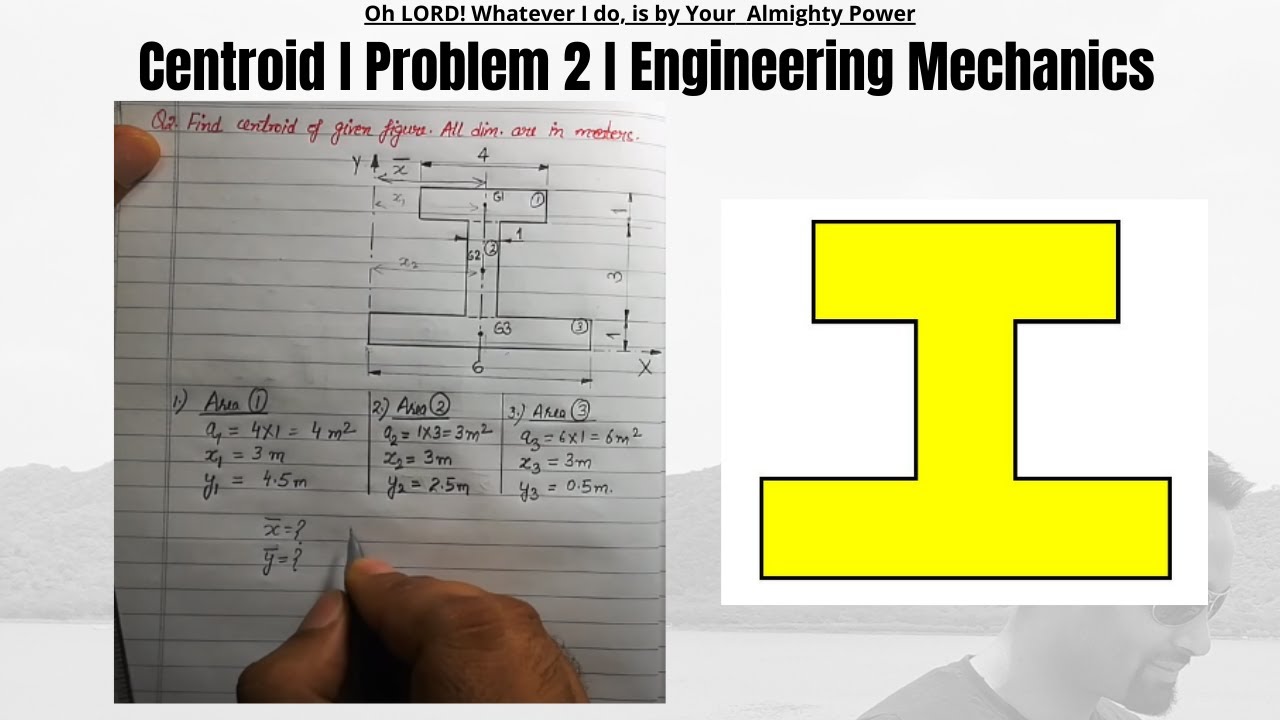
How to find Centroid of i section | Centre of gravity of I section | Problem 2 | Mechanics | 9.3
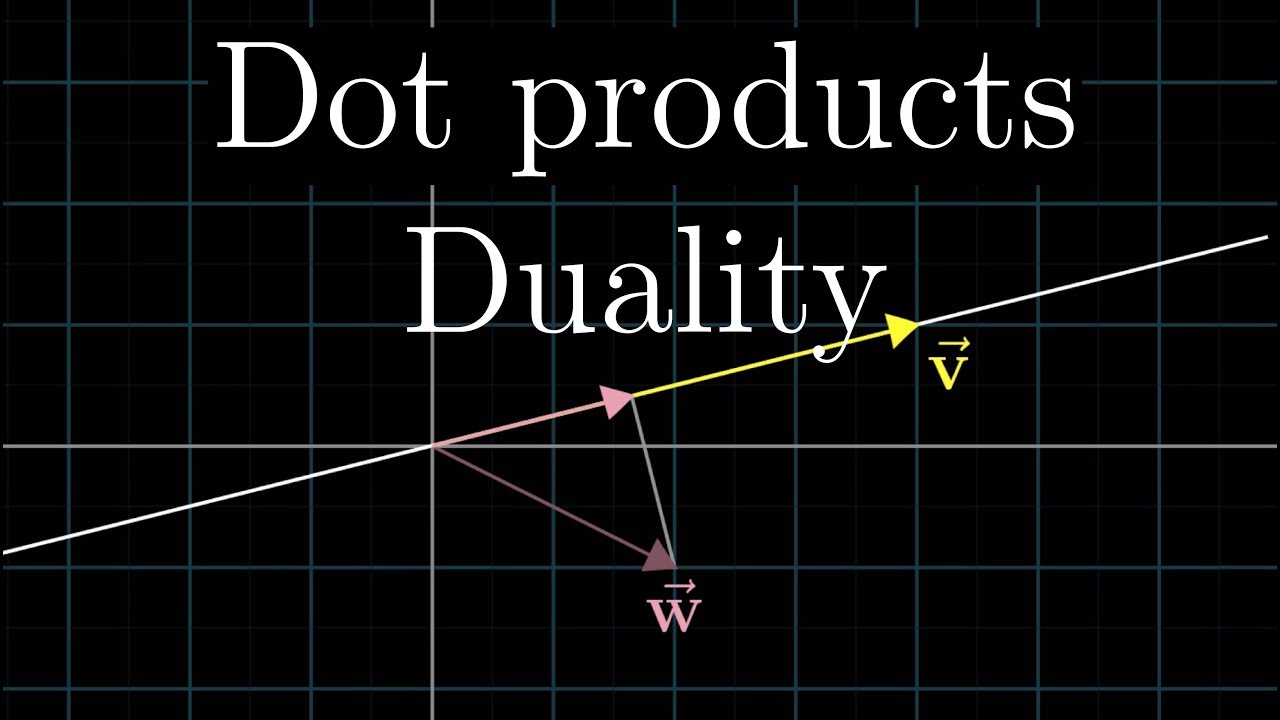
Dot products and duality | Chapter 9, Essence of linear algebra

Puentes- Proyecto G

ELEMENTOS DE HIDROMECÂNICA E HIDRÁULICA MARÍTIMA VÍDEO

Vektor 1
Osculating Plane | Curve in Space|Unit-1 (lect-8) | Differential Geometry | M.Sc previous Maths
5.0 / 5 (0 votes)

