COM101_Topic031
Summary
TLDRIn this lesson, the teacher explains how to form interrogative sentences using WH-words and auxiliary verbs like do, does, don’t, is, am, are. The lesson emphasizes the importance of politeness when asking questions and guides students through various examples, including questions about names, locations, preferences, and more. It also covers the use of auxiliaries in positive and negative forms. The students are encouraged to practice forming questions with the correct auxiliaries and WH-words, and the teacher reinforces the rules with multiple examples, ensuring a clear understanding of how to ask and answer questions.
Takeaways
- 😀 Interrogative sentences are used to ask questions and gather information about people or things.
- 😀 WH-words (who, what, where, when, why, how) are typically used at the beginning of interrogative sentences.
- 😀 Auxiliary verbs such as is, am, are, was, were, do, does, don’t, and doesn’t help form questions.
- 😀 Questions can be formed with WH-words or auxiliary verbs, depending on what kind of information is sought.
- 😀 Polite forms of questioning should be used, e.g., 'What is your name?' rather than 'Who are you?'
- 😀 In questions with 'does,' no 's' or 'es' is added to the main verb (e.g., 'Does she like books?' not 'Does she likes books').
- 😀 Negative questions can be formed using 'don’t' or 'doesn’t' (e.g., 'Don’t you like apples?' or 'Doesn’t she like books?').
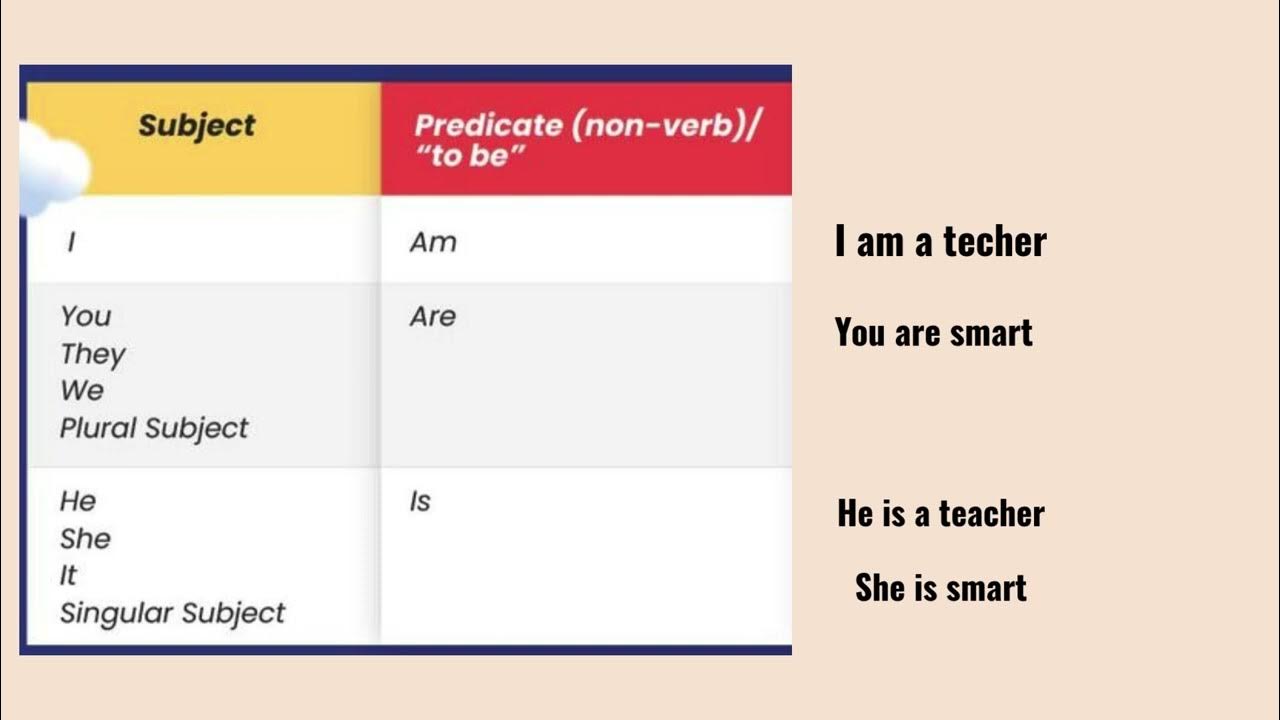
- 😀 'Do' or 'does' is used to form questions in the present tense, while 'is,' 'am,' or 'are' are used when the verb ends in '-ing'.
- 😀 When making questions with 'where' or 'how,' use appropriate WH-words based on context (e.g., 'Where do you come from?' or 'How do you go to college?').
- 😀 The main verb in questions formed with 'does' or 'doesn’t' remains in its base form without 's' or 'es'.
Q & A
What are interrogative sentences?
-Interrogative sentences are sentences that ask questions, often starting with wh-words (who, what, where, when, why, how) or auxiliary verbs like is, am, are, do, does, don’t, and doesn’t.
Why is 'Who are you?' considered impolite?
-'Who are you?' is considered impolite because it can sound confrontational, as if you are about to argue with the person. It’s better to ask, 'What is your name?' or 'Who is this?' to sound more polite.
What is the main purpose of using interrogative sentences?
-The main purpose of interrogative sentences is to seek information about a person, object, or situation.
How do auxiliary verbs like 'do', 'does', 'don’t', and 'doesn’t' function in questions?
-Auxiliary verbs like 'do', 'does', 'don’t', and 'doesn’t' are used to form questions, especially when the main verb is in its base form. For example, 'Do you like cake?' or 'Does she like books?'
What is the correct form of a question when using 'does'?
-When using 'does', the main verb does not take an 's' or 'es' at the end. For example, 'Does she like books?' (not 'Does she likes books?').
How do you form a negative question using 'do' and 'don’t'?
-To form a negative question, 'do' and 'don’t' are used. For example, 'Don’t you like apples?' is a negative question, similar to 'Do you like apples?'.
When should you use 'is', 'am', or 'are' in a question?
-'Is', 'am', and 'are' are used when the main verb has an 'ing' form or when asking about a state of being or condition. For example, 'Are you wearing a helmet?' or 'Is she coming?'
How do you make a question when asking about a location?
-When asking about a location, you typically use 'where'. For example, 'Where is your book?' or 'Where do you live?'
What is the difference between 'who' and 'whom' in questions?
-'Who' is used as the subject of the sentence, while 'whom' is used as the object. For example, 'Who is your teacher?' (subject) vs. 'Whom did you talk to?' (object).
What should you ask to find out about someone's preferences?
-To find out about someone's preferences, you can ask questions like 'What do you like?' or 'Which subject do you like the most?' These questions are designed to gather information about likes or choices.
Outlines

Dieser Bereich ist nur für Premium-Benutzer verfügbar. Bitte führen Sie ein Upgrade durch, um auf diesen Abschnitt zuzugreifen.
Upgrade durchführenMindmap

Dieser Bereich ist nur für Premium-Benutzer verfügbar. Bitte führen Sie ein Upgrade durch, um auf diesen Abschnitt zuzugreifen.
Upgrade durchführenKeywords

Dieser Bereich ist nur für Premium-Benutzer verfügbar. Bitte führen Sie ein Upgrade durch, um auf diesen Abschnitt zuzugreifen.
Upgrade durchführenHighlights

Dieser Bereich ist nur für Premium-Benutzer verfügbar. Bitte führen Sie ein Upgrade durch, um auf diesen Abschnitt zuzugreifen.
Upgrade durchführenTranscripts

Dieser Bereich ist nur für Premium-Benutzer verfügbar. Bitte führen Sie ein Upgrade durch, um auf diesen Abschnitt zuzugreifen.
Upgrade durchführenWeitere ähnliche Videos ansehen

Aprenda o SIMPLE PRESENT em 5 minutos

SIMPLE PRESENT TENSE - NOMINAL VERBAL LENGKAP (fungsi, formula, tobe, ciri-ciri, latihan soal)
ENGLISH Language Course2

WH - Questions Words - Brasil Escola

SIMPLE PAST TENSE Pengertian dan Contoh Kalimat Positif Negatif Interogatif dan Artinya Did Was Were

SIMPLE PRESENT (NEGATIVE & INTERROGATIVE)
5.0 / 5 (0 votes)

