Episode 2.2: Unstated Assumptions
Summary
TLDRThis video teaches viewers how to identify hidden or missing components in arguments, focusing on implied conclusions, unstated premises, and missing connections. Through practical examples, it demonstrates how arguments often leave conclusions or assumptions unsaid, making critical evaluation challenging. Viewers learn to carefully distinguish premises from conclusions, uncover underlying assumptions, and assess how claims are connected. The lesson emphasizes that clear, complete argument construction improves understanding, prevents misinterpretation, and strengthens critical thinking, enabling individuals to evaluate, accept, reject, or improve arguments effectively in discussions, debates, and decision-making scenarios.
Takeaways
- 🧠 Every argument has three essential components: a conclusion, premises, and a connection between them.
- 🔍 Implied conclusions occur when the main point is not explicitly stated, requiring the listener to infer it.
- ❗ Leaving conclusions unstated can lead to misunderstandings or unintended interpretations.
- 📝 Unstated premises are assumptions not directly expressed, often because they seem obvious or are forgotten.
- 🚦 Identifying unstated premises is crucial for evaluating the strength and validity of an argument.
- 🔗 Missing connections happen when the link between premises and conclusion is unclear or ambiguous.
- 👀 Clearly stating premises, conclusions, and connections makes arguments easier to evaluate, accept, reject, or improve.
- 💬 Asking questions about unclear elements helps uncover implied conclusions, unstated premises, and missing connections.
- -
- 📚 Examples, like college major choices or concert entry rules, illustrate how unstated pieces can confuse or weaken arguments.
- 🎯 The goal of critical thinking is to analyze arguments step by step, ensuring each component is clear and justified.
- 🛠 Carefully constructed arguments leave nothing for others to assume, making them more persuasive and actionable.
Q & A
What are the three key hidden or missing pieces in arguments highlighted in the transcript?
-The three key hidden or missing pieces are: 1) implied conclusions, 2) unstated premises, and 3) missing connections between premises and conclusions.
Why can leaving a conclusion unstated be problematic?
-Leaving a conclusion unstated can be problematic because it forces the listener or reader to infer the intended point, which may lead to misunderstandings or unintended interpretations of the argument.
What example does the transcript give to illustrate an implied conclusion?
-An example given is a conversation about college majors where a friend says 'the whole point of going to college is to get a job,' implying that one shouldn't major in fields like history or literature, but the conclusion is not explicitly stated.
What are unstated premises, and why are they common in arguments?
-Unstated premises are assumptions or claims that are left out of an argument because they seem obvious or known. They are common because people often forget to mention them, assuming everyone knows them, but this can weaken the argument if the assumptions are not shared or justified.
Can you provide an example of an unstated premise from the transcript?
-Yes, one example is the concert scenario where you exclaim 'you have to be at least 18 to get in.' The unstated premises are: 1) you must show ID to prove your age, and 2) you left your ID at home. Without these premises, the friend cannot understand why you'll be late.
What is a missing connection in an argument, and how can it cause confusion?
-A missing connection occurs when the logical link between premises and the conclusion is not explicitly stated. It can cause confusion because it may be unclear which claim supports which conclusion, potentially leading to misinterpretation of the argument's intent.
How does the transcript illustrate missing connections with the example of children's internet use?
-The transcript shows that it's unclear whether children spend more time online because they are lonely or if they are lonely because they spend more time online. The connection between cause and effect is missing, resulting in two very different interpretations of the situation.
What is the recommended approach for making strong arguments according to the transcript?
-Strong arguments require clearly stating all conclusions and premises, ensuring the connections between them are explicit, and checking that any assumptions are valid and justified. This makes arguments easier to evaluate, improve, and act upon.
Why is it important to question unstated premises when analyzing an argument?
-Questioning unstated premises is important because these assumptions may be unjustified, incorrect, or controversial. Evaluating them allows critical thinkers to assess the strength of the argument and identify possible improvements or refutations.
How can identifying implied conclusions, unstated premises, and missing connections improve critical thinking?
-Identifying these elements improves critical thinking by allowing individuals to fully understand the argument, recognize potential weaknesses, clarify ambiguous points, and make more informed judgments about whether to accept, reject, or refine the argument.
What danger arises if others infer premises or conclusions that were left unstated?
-The danger is that others may infer premises or conclusions that the arguer did not intend, leading to misunderstandings, miscommunication, or flawed decisions based on incorrect interpretations of the argument.
Outlines

هذا القسم متوفر فقط للمشتركين. يرجى الترقية للوصول إلى هذه الميزة.
قم بالترقية الآنMindmap

هذا القسم متوفر فقط للمشتركين. يرجى الترقية للوصول إلى هذه الميزة.
قم بالترقية الآنKeywords

هذا القسم متوفر فقط للمشتركين. يرجى الترقية للوصول إلى هذه الميزة.
قم بالترقية الآنHighlights

هذا القسم متوفر فقط للمشتركين. يرجى الترقية للوصول إلى هذه الميزة.
قم بالترقية الآنTranscripts

هذا القسم متوفر فقط للمشتركين. يرجى الترقية للوصول إلى هذه الميزة.
قم بالترقية الآن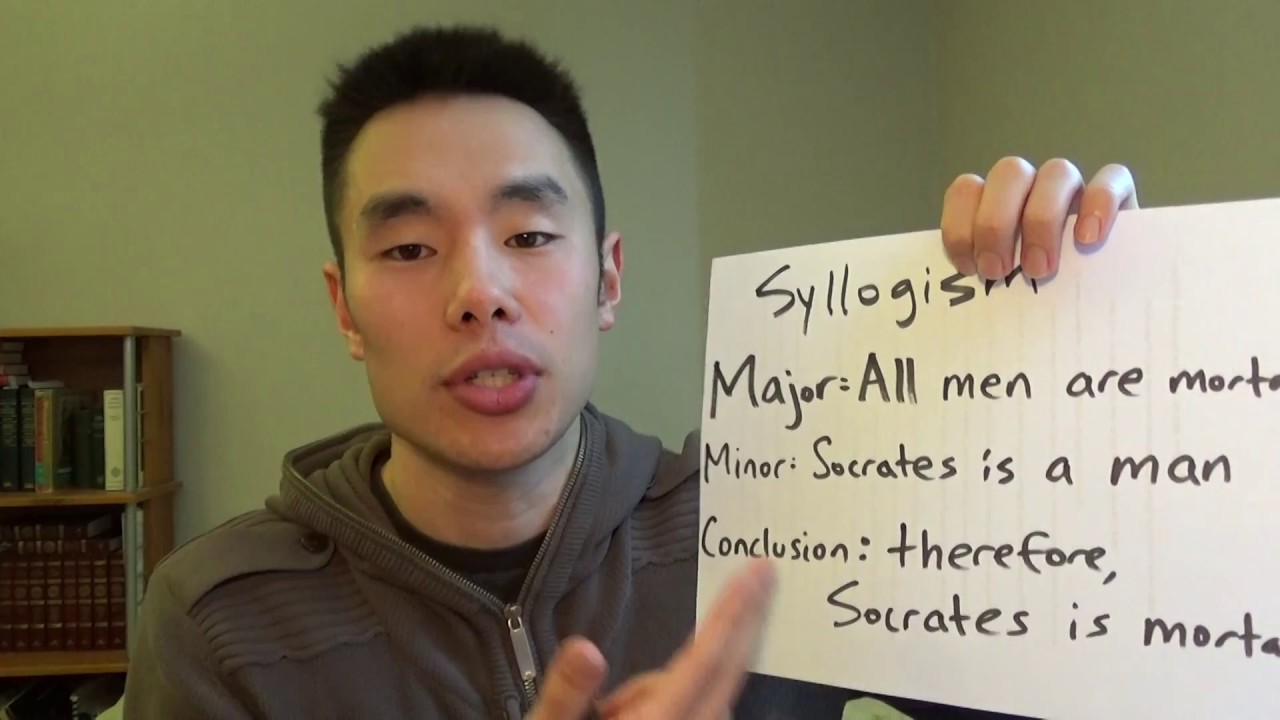



5.0 / 5 (0 votes)

