Class 10th All Chemistry reactions in just 20 minutes by Ashu Sir | Final Board Exam
Summary
TLDRThe video provides a comprehensive overview of key chemistry reactions, including combination, displacement, and neutralization reactions. It also covers processes like photosynthesis, respiration, and thermal decomposition. The speaker explains complex chemical reactions in a simple, engaging way, with a focus on exam-relevant details. Key reactions such as the heating of magnesium, calcium carbonate, and various salts are discussed, along with their observations and products. The speaker motivates students to subscribe to additional educational content and emphasizes the importance of quality learning, particularly for upcoming exams. The video is a helpful resource for students preparing for chemistry exams.
Takeaways
- 😀 The script focuses on explaining key chemistry reactions in a simplified manner to help students understand and memorize them effectively for exams.
- 😀 A major theme is the importance of understanding chemical reactions and observing key details, such as flame colors and heat releases, during experiments.
- 😀 Various reactions like combination, displacement, double displacement, and thermal decomposition are discussed with practical examples, such as magnesium ribbon burning or heating calcium carbonate.
- 😀 Photosynthesis and respiration are highlighted with emphasis on their importance in biological systems, mentioning the key substances like CO2, water, glucose, and oxygen involved.
- 😀 The script encourages memorizing the products of common reactions, such as heating iron sulfate, calcium carbonate, or lead nitrate, as these often appear in exams.
- 😀 Practical examples are given for identifying reaction products and color changes, including zinc sulfate, copper sulfate, and iron sulfate.
- 😀 Key exceptions are pointed out, such as when acids react with metals and how some reactions behave differently depending on the metal used (e.g., magnesium, aluminum, zinc).
- 😀 The script advises on studying the decomposition of substances like baking soda, washing soda, and the formation of important compounds like sodium carbonate and calcium hydroxide.
- 😀 Attention is given to crucial laboratory tests, like using lime water to test for CO2 and understanding the role of acids and bases in reactions like neutralization.
- 😀 Lastly, the script promotes a focus on quality over quantity when preparing for exams and encourages students to subscribe to educational content for continuous learning, particularly for the 11th-grade syllabus.
Q & A
Why is magnesium combustion considered highly observable in exams?
-When magnesium burns in oxygen, it forms a white powder (MgO) and emits a dazzling white flame. The flame type and color change are common exam questions.
What is the difference in water consumption in photosynthesis in biology versus actual chemistry reactions?
-In biology, the overall photosynthesis equation may show 6 H₂O, but the actual process consumes 12 H₂O and releases 6 H₂O, so both versions might appear in questions.
What products are formed when iron(II) sulfate is strongly heated?
-FeSO₄ when strongly heated decomposes to Fe₂O₃, SO₂, and SO₃ gases, producing a red-brown color similar to rust.
Which metals do not react with acids to produce hydrogen gas, and why?
-Copper, gold, silver, and platinum do not react with acids because they are less reactive than hydrogen, so no H₂ gas is formed.
How can hydrogen gas be distinguished during metal-acid reactions?
-Hydrogen gas can be identified by its 'pop' sound when ignited, a classic test in experiments.
What is the principle behind the formation of bleaching powder (CaOCl₂)?
-Bleaching powder is formed by passing chlorine gas through lime water (Ca(OH)₂), producing CaOCl₂ and water. This is an application of the chlor-alkali process.
What happens when excess CO₂ is passed through limewater?
-Excess CO₂ reacts with CaCO₃ to form Ca(HCO₃)₂, which is soluble in water, causing the limewater to turn colorless again.
Describe the reaction between a strong acid and a weak base.
-When a strong acid reacts with a weak base (e.g., Al(OH)₃), the resulting salt is acidic rather than neutral, as the weak base does not fully neutralize the strong acid.
What is the main difference between combination and displacement reactions?
-In a combination reaction, two or more reactants form a single product. In a displacement reaction, a more reactive element displaces a less reactive element from its compound.
Explain the dehydration of alcohol to form an alkene.
-Alcohol undergoes dehydration in the presence of concentrated H₂SO₄ at 443 K. Water is eliminated, forming an alkene through an elimination reaction.
What is the unique property of iron when it reacts with steam?
-Iron reacts with steam to form Fe₃O₄, which is unique among metal oxides because it is a mixed oxide rather than the common FeO or Fe₂O₃.
How are esterification and saponification reactions related?
-Esterification forms sweet-smelling esters from carboxylic acids and alcohols in acidic conditions, whereas saponification is the hydrolysis of esters in basic conditions, producing soap and alcohol.
Outlines

هذا القسم متوفر فقط للمشتركين. يرجى الترقية للوصول إلى هذه الميزة.
قم بالترقية الآنMindmap

هذا القسم متوفر فقط للمشتركين. يرجى الترقية للوصول إلى هذه الميزة.
قم بالترقية الآنKeywords

هذا القسم متوفر فقط للمشتركين. يرجى الترقية للوصول إلى هذه الميزة.
قم بالترقية الآنHighlights

هذا القسم متوفر فقط للمشتركين. يرجى الترقية للوصول إلى هذه الميزة.
قم بالترقية الآنTranscripts

هذا القسم متوفر فقط للمشتركين. يرجى الترقية للوصول إلى هذه الميزة.
قم بالترقية الآنتصفح المزيد من مقاطع الفيديو ذات الصلة

Major Types of Chemical Reactions (Explanation, Examples, & Practice)
Kurikulum Merdeka Rangkuman IPA Kelas 9 BAB 5

Lab Experiment #3: Types of Chemical Reactions.
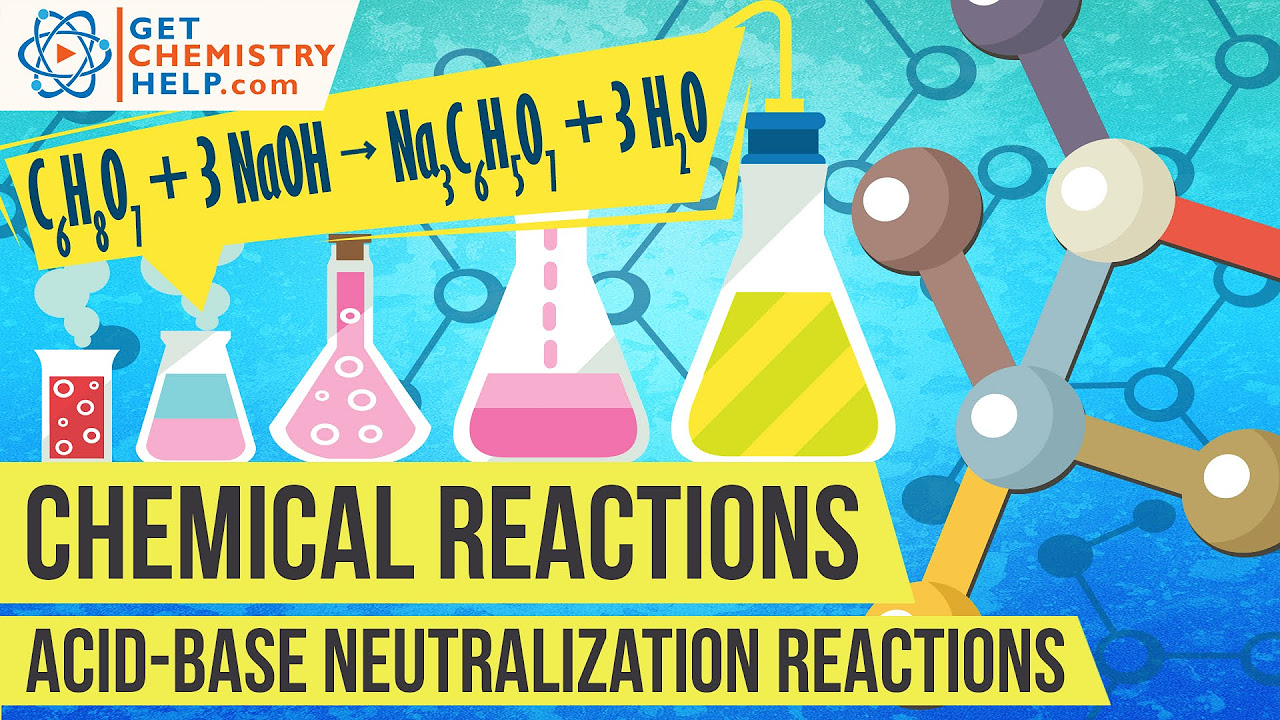
Chemistry Lesson: Acid-Base Neutralization Reactions
01. Introduction to Chemical Reaction | SSC Chemistry | English Version | Fahad's Tutorial
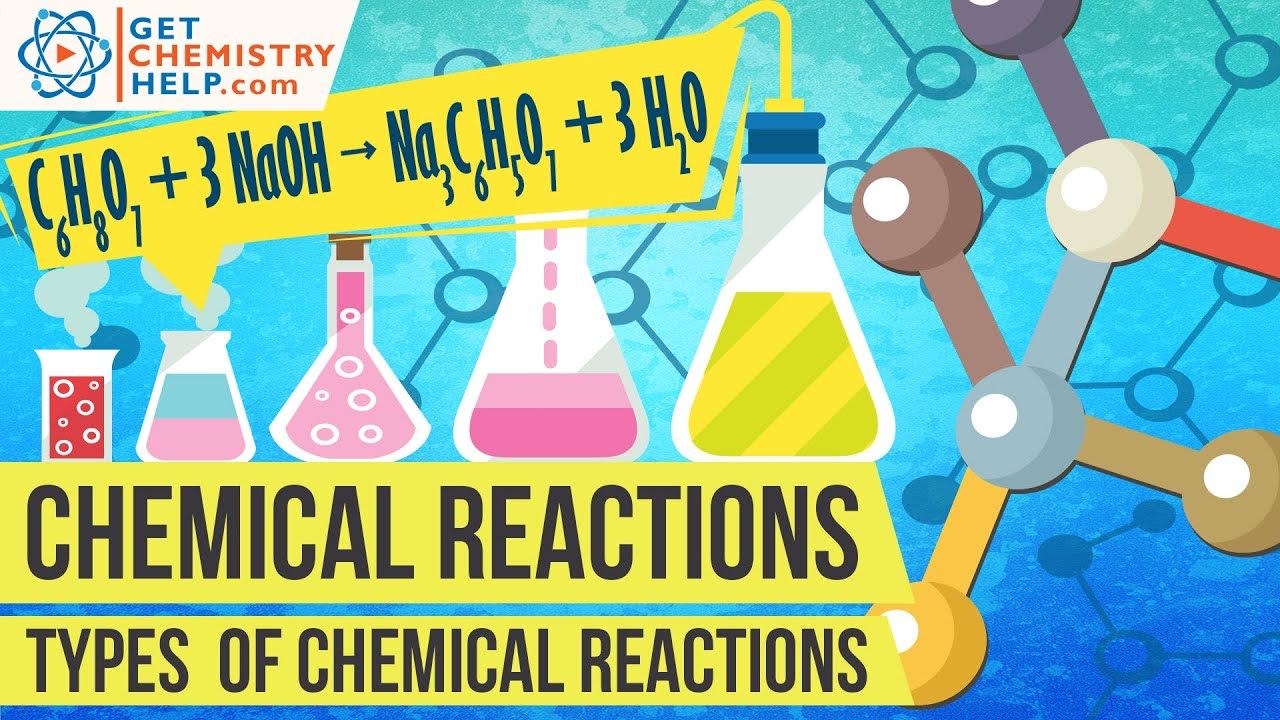
Chemistry Lesson: Types of Chemical Reactions
5.0 / 5 (0 votes)

