Alat Optik • Part 2: Cara Menghitung Ukuran Kacamata Miopi dan Hipermetropi
Summary
TLDRThis video tutorial explains how to calculate the required lens power for individuals with myopia (nearsightedness) and hypermetropia (farsightedness). Through various examples, the presenter walks viewers through the process of determining the strength of eyeglass lenses using formulas for near and far points. Key concepts include calculating diopters based on given conditions, such as a person's far point or near point, and understanding how lens prescriptions help normalize vision. The video also provides practical tips on interpreting lens measurements and adjusting prescriptions for optimal vision correction.
Takeaways
- 😀 The video covers the second part of a lesson about calculating the necessary prescription for glasses for people with myopia (nearsightedness) and hypermetropia (farsightedness).
- 😀 Myopia is corrected with concave lenses, while hypermetropia requires convex lenses, both of which are measured in diopters.
- 😀 To calculate the prescription for myopia, the focal length formula (F = 100 / P) is used to determine the lens strength.
- 😀 For myopia, the prescription typically has a negative value, meaning the lens diverges light to correct for distant vision problems.
- 😀 The first example in the script discusses a person with myopia who has a far point of 2 meters and requires a -0.5 diopter lens for normal vision.
- 😀 For hypermetropia, the script illustrates how to calculate the lens strength using similar formulas and includes a case where a person with hypermetropia needs a +2.5 diopter lens to see clearly at 30 cm.
- 😀 The script explains how to calculate the near point shift when a person’s glasses prescription changes, using an example of a person who switched from 2 diopters to 3 diopters for their hypermetropia.
- 😀 The near point shift is calculated by comparing the first and second prescriptions to find how much the person’s vision range has improved, such as the 50 cm shift in the second example.
- 😀 The importance of understanding focal lengths (F) and using proper formulas to calculate the necessary corrective lens strength for both myopia and hypermetropia is emphasized.
- 😀 The video concludes by encouraging viewers to review the lesson and ask questions or leave feedback in the comments.
Q & A
What is the formula used to calculate the focal length (F) of a lens?
-The formula to calculate the focal length (F) is F = 100 / P, where P is the lens power in diopters.
How is the focal length (F) calculated for a person with myopia (nearsightedness)?
-For a person with myopia, the focal length is calculated using the formula F = 100 / P, where P is negative. In this case, the distance of the far point (titik jauh) is used, and the focal length is negative because the person is trying to see distant objects clearly.
What does a negative diopter value mean for someone with myopia?
-A negative diopter value indicates that the person has myopia (nearsightedness) and requires concave lenses to correct their vision. The negative sign represents the diverging nature of the lens.
How can the power of a lens be calculated if the focal length is known?
-The power of the lens (P) is calculated using the formula P = 100 / F, where F is the focal length of the lens in centimeters.
What is the significance of the 25 cm distance in the calculation for people with hypermetropia (farsightedness)?
-For people with hypermetropia, the 25 cm distance is considered the normal near point. If they want to see objects closer than 25 cm, corrective lenses are required to shift the near point to a more comfortable distance.
In the case of hypermetropia, what does a positive diopter value indicate?
-A positive diopter value indicates that the person has hypermetropia (farsightedness) and needs convex lenses to bring the near point closer. The positive sign represents the converging nature of the lens.
How does the near point shift when a person with hypermetropia changes their glasses prescription from 2 diopters to 3 diopters?
-When a person with hypermetropia changes their glasses prescription from 2 diopters to 3 diopters, the near point (titik dekat) moves farther away. In this case, the near point shifts by 50 cm, indicating a change in the power of the lens.
What is the process to calculate the near point for a person with hypermetropia when the prescription is known?
-To calculate the near point, first calculate the focal length (F) using the formula F = 100 / P, where P is the lens power in diopters. Then, use the formula F = 1 / (1 / S + 1 / D) to calculate the near point, where S is the distance at which the person can clearly see and D is the distance of the near point.
Why is it necessary to convert distances into centimeters when calculating lens power?
-It is necessary to convert distances into centimeters to maintain consistent units when calculating lens power, as the standard formula for lens power uses centimeters. This ensures accurate results.
What are the different ways that myopia and hypermetropia are corrected using lenses?
-Myopia is corrected with concave lenses (negative diopters), which diverge light rays and bring the far point closer. Hypermetropia is corrected with convex lenses (positive diopters), which converge light rays and bring the near point closer.
Outlines

هذا القسم متوفر فقط للمشتركين. يرجى الترقية للوصول إلى هذه الميزة.
قم بالترقية الآنMindmap

هذا القسم متوفر فقط للمشتركين. يرجى الترقية للوصول إلى هذه الميزة.
قم بالترقية الآنKeywords

هذا القسم متوفر فقط للمشتركين. يرجى الترقية للوصول إلى هذه الميزة.
قم بالترقية الآنHighlights

هذا القسم متوفر فقط للمشتركين. يرجى الترقية للوصول إلى هذه الميزة.
قم بالترقية الآنTranscripts

هذا القسم متوفر فقط للمشتركين. يرجى الترقية للوصول إلى هذه الميزة.
قم بالترقية الآنتصفح المزيد من مقاطع الفيديو ذات الصلة
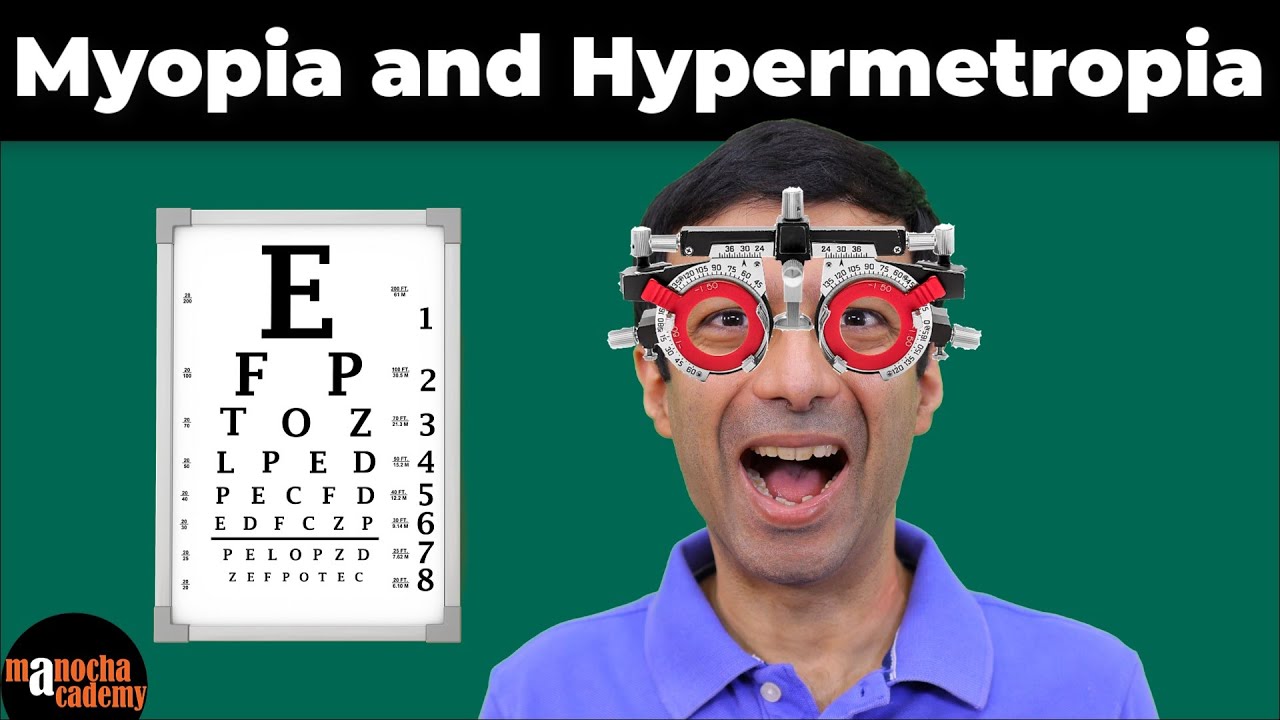
Myopia and Hypermetropia

Cahaya dan Alat Optik: Cacat Mata (Miopi, Hipermetropi dan Presbiopi) - SMP Kelas 8 | Part 3

Alat Optik • Part 1: Mata, Gangguan Penglihatan Miopi Hipermetropi, & Kacamata

Kelainan Sistem Indera Penglihatan : Mata

Apa Bedanya Mata Minus, Plus, Silinder?

Cahaya dan Alat Optik Kelas 8 SMP (Part-5) Latihan Soal Mata dan Kekuatan Lensa
5.0 / 5 (0 votes)

