DSS - MODELO DE DAHLGREN E WHITEHEAD
Summary
TLDRIn this video, Rana Rut Amorim explains the concept of social determinants of health, highlighting that health is shaped by various factors beyond just the absence of disease. Using the WHO's model, she breaks down health determinants into four layers: lifestyle (proximal determinants), community networks (intermediate determinants), and socio-economic, cultural, and environmental conditions (macrodeterminants). She emphasizes how public policies, access to healthcare, and community involvement impact health outcomes. The video stresses the need for policies that address social inequalities and improve living conditions to ensure equitable health for all.
Takeaways
- 😀 Health is not just the absence of disease, but influenced by various social, economic, cultural, and environmental factors.
- 🌍 Health is socially determined, meaning that social conditions have a significant impact on an individual's health outcomes.
- 📊 The Dahlgren and Whitehead model breaks down health determinants into layers, including individual, social, intermediate, and macro factors.
- ⚪ Microdeterminants are lifestyle factors such as diet, tobacco, and alcohol use, which individuals can modify through behavior changes.
- 🟤 Social networks and community support play a crucial role in improving population health by enhancing participation in public policies and social control.
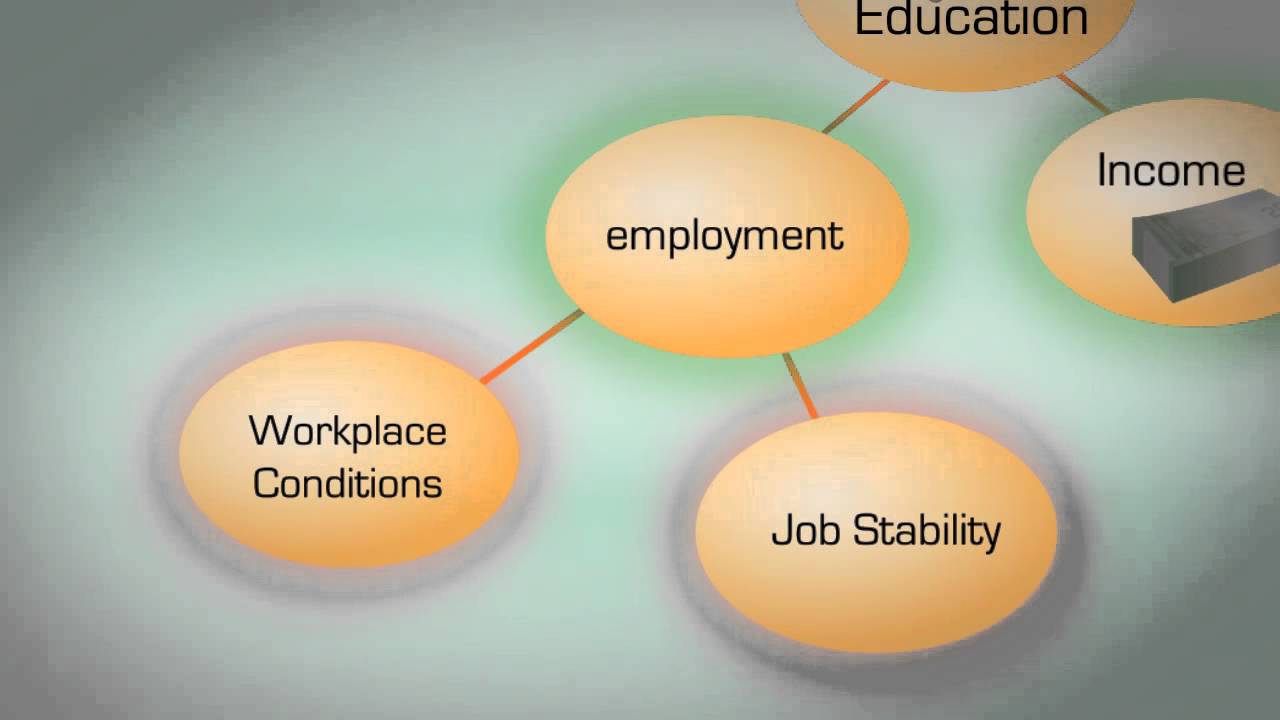
- 🌈 Intermediate determinants include work conditions, education, housing, and access to health services, which are influenced by public policies.
- ⚫ Macrodeterminants are broader social, economic, cultural, and environmental conditions that influence all other layers of health determinants.
- 🚸 Age, sex, and genetic factors, although not social determinants, still affect health outcomes and can lead to natural inequalities between different groups.
- ⚖️ Health inequalities are rooted in social conditions such as poor sanitation, inadequate nutrition, and low income, which lead to disparities in disease prevalence and life expectancy.
- 🏛️ The SUS (Unified Health System) is responsible for identifying and addressing social health determinants through public policies aimed at reducing health inequalities.
- ✅ Improving public health requires comprehensive policies that ensure equitable access to resources like healthcare, education, food, and sanitation.
Q & A
What is the modern concept of health according to the transcript?
-Health is not just the absence of disease or a state of well-being, but is influenced by multiple determinants and conditioning factors that affect individuals and populations.
Who is the speaker in the video, and what topic does she discuss?
-The speaker is Rana Amorim, and she discusses a model of social determinants of health, explaining how different factors affect health outcomes.
What is the Darn & Wi model mentioned in the transcript?
-It is a widely recognized model of social determinants of health, adopted by the World Health Organization, which categorizes determinants into micro, intermediate, and macro levels.
What are microdeterminants, and what do they include?
-Microdeterminants are proximal factors closest to the individual, mainly related to lifestyle choices such as diet, tobacco or alcohol use, and behaviors that individuals can change.
How do social networks and community support influence health?
-They form part of the intermediate layer and provide protection by strengthening community engagement in public policies, social control, and behavior change.
What are intermediate determinants, and what examples are given?
-Intermediate determinants depend on public policies and include working and living conditions, education, agricultural production, unemployment, sanitation, healthcare services, and housing.
What are macrodeterminants or distal determinants?
-Macrodeterminants are broad socioeconomic, cultural, and environmental conditions that shape the living conditions of populations and strongly influence the other determinant layers.
Why are some health inequalities considered 'acceptable'?
-Differences due to age or sex, such as between young and elderly populations, are natural and expected, unlike inequalities caused by social disadvantages.
How does social disadvantage affect health?
-People in socially disadvantaged situations face greater risks of disease due to exposure to hazardous conditions and reduced access to healthcare and other essential resources.
What role does the Brazilian Unified Health System (SUS) have regarding social determinants?
-According to the Organic Health Law (Law 8080/1990), SUS is responsible for identifying and disseminating the determinants and conditioning factors of health and ensuring public policies that improve living conditions.
Why is it insufficient to only encourage healthy behaviors?
-Because behavior change depends on access to resources such as healthy food, safe spaces for exercise, sanitation, transportation, education, and healthcare, which are shaped by social determinants.
What is necessary to reduce social health inequalities?
-Effective public policies tailored to population realities, ensuring access to adequate living conditions, education, healthcare, and other social resources to allow people to live with dignity.
Outlines

هذا القسم متوفر فقط للمشتركين. يرجى الترقية للوصول إلى هذه الميزة.
قم بالترقية الآنMindmap

هذا القسم متوفر فقط للمشتركين. يرجى الترقية للوصول إلى هذه الميزة.
قم بالترقية الآنKeywords

هذا القسم متوفر فقط للمشتركين. يرجى الترقية للوصول إلى هذه الميزة.
قم بالترقية الآنHighlights

هذا القسم متوفر فقط للمشتركين. يرجى الترقية للوصول إلى هذه الميزة.
قم بالترقية الآنTranscripts

هذا القسم متوفر فقط للمشتركين. يرجى الترقية للوصول إلى هذه الميزة.
قم بالترقية الآن



5.0 / 5 (0 votes)

