OSI Model Animation | How OSI works | OSI Explained | master spark
Summary
TLDRThis video provides a clear and engaging explanation of the OSI (Open Systems Interconnection) model, breaking down its seven layers with real-world analogies like airline companies and pizza delivery services. The video explains how these layers simplify the complex process of data communication by dividing it into manageable, specialized tasks. From physical transmission to application-level protocols, each layer plays a critical role in ensuring efficient and error-free network communication. The video emphasizes how this layered approach allows easier development, maintenance, and troubleshooting of network systems.
Takeaways
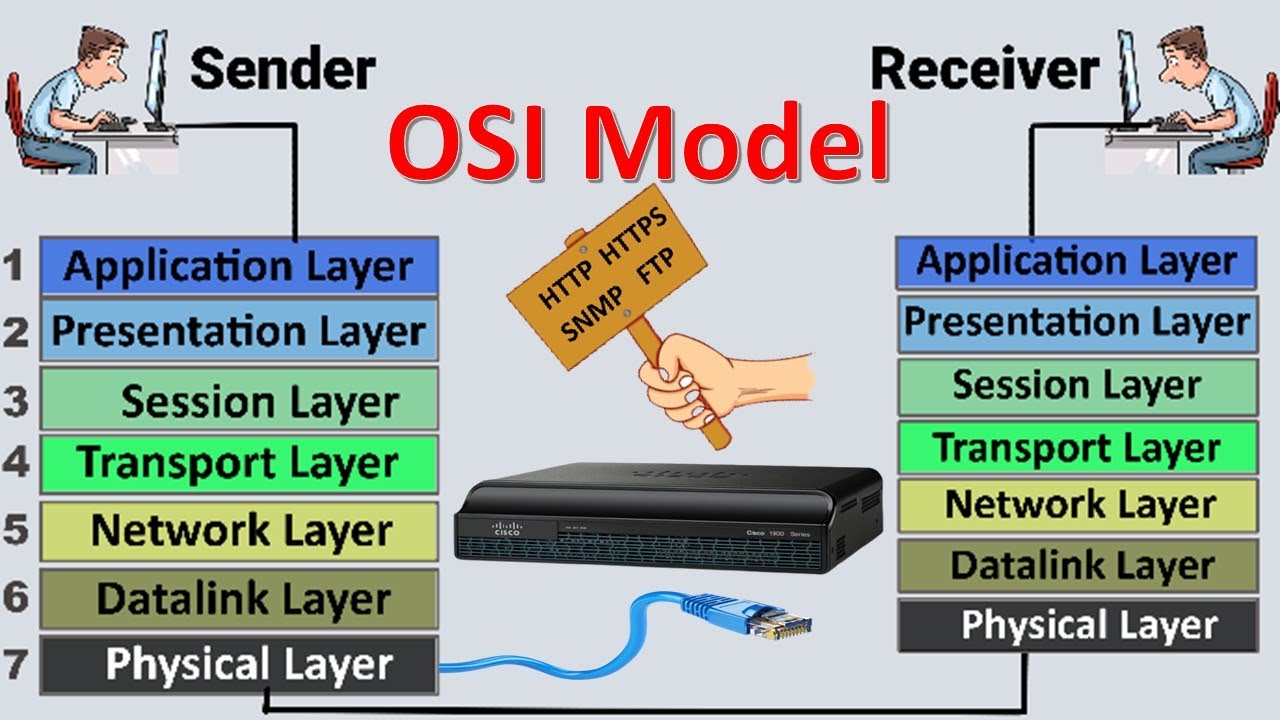
- 😀 The OSI model divides networking functions into 7 layers, making complex processes easier to understand.
- 😀 Layered architecture is essential because it allows specialists to focus on specific areas without affecting others.
- 😀 An example of layering is the pizza company analogy: different workers perform specific tasks (order-taking, pizza-making, delivery) without overlapping roles.
- 😀 The OSI model enhances the development speed and system quality because each layer is self-contained and independent of others.
- 😀 The King's letter scenario effectively illustrates how data moves through different layers in networking, with each 'actor' representing a different layer of the OSI model.
- 😀 The OSI model's 7 layers are: Application, Presentation, Session, Transport, Network, Data Link, and Physical.
- 😀 In the Application layer, users interact with network-aware applications like browsers or email clients, similar to how the King initiates communication.
- 😀 The Presentation layer handles data translation, encryption, and compression, much like how the minister translates the letter's language.
- 😀 The Session layer manages connections between systems, similar to how the secretary confirms and manages communication between the two palaces.
- 😀 The Transport layer ensures reliable delivery of data, segmenting it into packets and assigning sequence numbers, like the coordinator breaking the letter into chunks.
- 😀 The Network layer deals with routing data to its destination, much like the transport officer deciding the best path for the letter's delivery.
Q & A
What is the OSI model and why was it created?
-The OSI model (Open Systems Interconnection model) is a conceptual framework used to understand how different networking protocols interact in a communication system. It was created by the International Organization for Standardization (ISO) in 1984 to simplify the complex task of understanding and implementing networking systems by dividing the communication process into seven distinct layers.
Why is layering important in networking?
-Layering in networking helps break down complex tasks into manageable sections. It allows for specialization in each layer, making development faster, more efficient, and easier to troubleshoot. Each layer has defined functions, and changing one layer doesn't affect the others as long as the input and output stay the same.
Can you explain the analogy of the airline company used in the video?
-The airline company analogy compares the OSI model to an organization where different employees perform specific tasks. For instance, guards, computer scientists, and pilots all have specialized roles. Similarly, in networking, each layer has a specific role, and by separating tasks, the system becomes more efficient and manageable.
What does the pizza company analogy demonstrate in the context of the OSI model?
-The pizza company analogy shows how dividing tasks between different roles (receptionist, chef, and delivery person) mirrors how the OSI model divides networking tasks. Just like each pizza company employee focuses on a specific task, each layer in the OSI model handles a different part of the networking process.
How does the King's letter analogy explain the OSI model?
-In the King's letter analogy, each step in sending the letter from one king to another represents a layer in the OSI model. For example, translating the letter to French corresponds to the Presentation layer, and segmenting the letter corresponds to the Transport layer. This analogy shows how data is processed and transmitted through multiple stages in networking.
What is the role of the Application layer in the OSI model?
-The Application layer is the topmost layer where users directly interact with network-aware applications, like web browsers or email clients. It provides services for applications to communicate over the network and is responsible for initiating and managing the communication process.
How does the Presentation layer function in the OSI model?
-The Presentation layer is responsible for translating, encrypting, and compressing data. It ensures that data is in a format that the receiving system can understand. For example, it might convert data from one character encoding (like ASCII) to another or compress the data to reduce transmission time.
What is the role of the Session layer in the OSI model?
-The Session layer establishes, manages, and terminates communication sessions between applications. For example, in a social media app like Facebook, the session layer ensures you stay logged in until you log out, without needing to authenticate yourself for each message or action.
What does the Transport layer do in the OSI model?
-The Transport layer is responsible for breaking down large messages into smaller, manageable segments and ensuring they are delivered correctly. It also assigns sequence numbers to ensure the data is reassembled in the correct order at the destination. It can operate in connectionless or connection-oriented modes.
How does the Network layer function in the OSI model?
-The Network layer is responsible for determining the best path for data to travel from source to destination. It adds the destination IP address to the data packet and makes routing decisions to ensure the packet reaches the correct destination.
What is the role of the Data Link layer and the Physical layer in the OSI model?
-The Data Link layer ensures error-free data transfer between two devices on the same network, managing the link between them. The Physical layer is the lowest layer, handling the transmission of raw bits over the physical medium, such as cables or wireless signals.
Outlines

هذا القسم متوفر فقط للمشتركين. يرجى الترقية للوصول إلى هذه الميزة.
قم بالترقية الآنMindmap

هذا القسم متوفر فقط للمشتركين. يرجى الترقية للوصول إلى هذه الميزة.
قم بالترقية الآنKeywords

هذا القسم متوفر فقط للمشتركين. يرجى الترقية للوصول إلى هذه الميزة.
قم بالترقية الآنHighlights

هذا القسم متوفر فقط للمشتركين. يرجى الترقية للوصول إلى هذه الميزة.
قم بالترقية الآنTranscripts

هذا القسم متوفر فقط للمشتركين. يرجى الترقية للوصول إلى هذه الميزة.
قم بالترقية الآنتصفح المزيد من مقاطع الفيديو ذات الصلة
OSI Model | OSI Model Explained | OSI Animation | OSI Model in easiest Way | OSI 7 Layers

O que é o Modelo OSI? Aula 08

Animasi Alur Kerja OSI Layer

Understanding the OSI Model - CompTIA Network+ N10-007 - 1.2

Understanding the OSI Model - CompTIA Network+ N10-009 - 1.1

Animasi OSI LAYER (Mekanisme Perjalanan Data Pada OSI Model)
5.0 / 5 (0 votes)

