Kimia Hijau (Green Chemistry) | Kimia Di Sekitar Kita | 12 Prinsip Kimia Hijau
Summary
TLDRIn this video, the concept of Green Chemistry (Kimia Hijau) is introduced, focusing on its principles that aim to create safer, more sustainable chemical processes. The video highlights the importance of reducing harmful chemicals, optimizing reactions, and using renewable resources. It explains the 12 principles of Green Chemistry, such as waste prevention, energy efficiency, and safer chemicals. Additionally, the video offers practical examples of Green Chemistry in everyday life and industry, including the use of natural dyes in batik, eco-friendly plastics, and sustainable cleaning methods.
Takeaways
- 😀 Green chemistry (kimia hijau) focuses on designing chemical processes and products that are safe, efficient, and environmentally friendly.
- 😀 Green chemistry aims to reduce or eliminate the use of hazardous chemicals that harm humans, animals, and the environment.
- 😀 The 12 principles of green chemistry guide the planning and production of chemical products in an environmentally sustainable way.
- 😀 Principle 1: Preventing waste is preferred over cleaning up waste after it's formed by designing processes that minimize waste generation.
- 😀 Principle 2: Maximizing the economic value of atoms, aiming to reduce waste at the molecular level by ensuring that more reactants become part of the final product.
- 😀 Principle 3: Designing safer chemical syntheses by choosing reactions that are as safe as possible, considering the hazards of reactants and products.
- 😀 Principle 4: Selecting safer chemicals for processes based on their chemical properties, toxicity, and environmental impact.
- 😀 Principle 5: Using safer solvents and reaction conditions by minimizing the need for solvents or using the least hazardous ones.
- 😀 Principle 6: Improving energy efficiency by choosing reactions that require less energy and avoiding unnecessary heating or cooling.
- 😀 Principle 7: Using renewable materials to reduce environmental damage and ensure sustainability in chemical processes.
- 😀 Practical applications of green chemistry include using reusable shopping bags, natural cleaning products, and solar energy to reduce environmental impact.
- 😀 Industrial examples of green chemistry include using natural dyes in batik, replacing harmful solvents in dry cleaning with safer alternatives, and producing biodegradable plastics.
Q & A
What is green chemistry?
-Green chemistry, or kimia hijau, is an approach to planning, producing, and using chemical products that are beneficial and environmentally friendly, reducing or even eliminating the use of harmful chemicals for humans, animals, and the environment.
How did traditional chemical processes differ from green chemistry?
-Traditional chemical processes focused on economic factors, like maximizing production speed and quantity, often overlooking the harmful impacts on humans and the environment, leading to toxic waste, carcinogens, and pollution.
Who were the key figures behind the development of green chemistry?
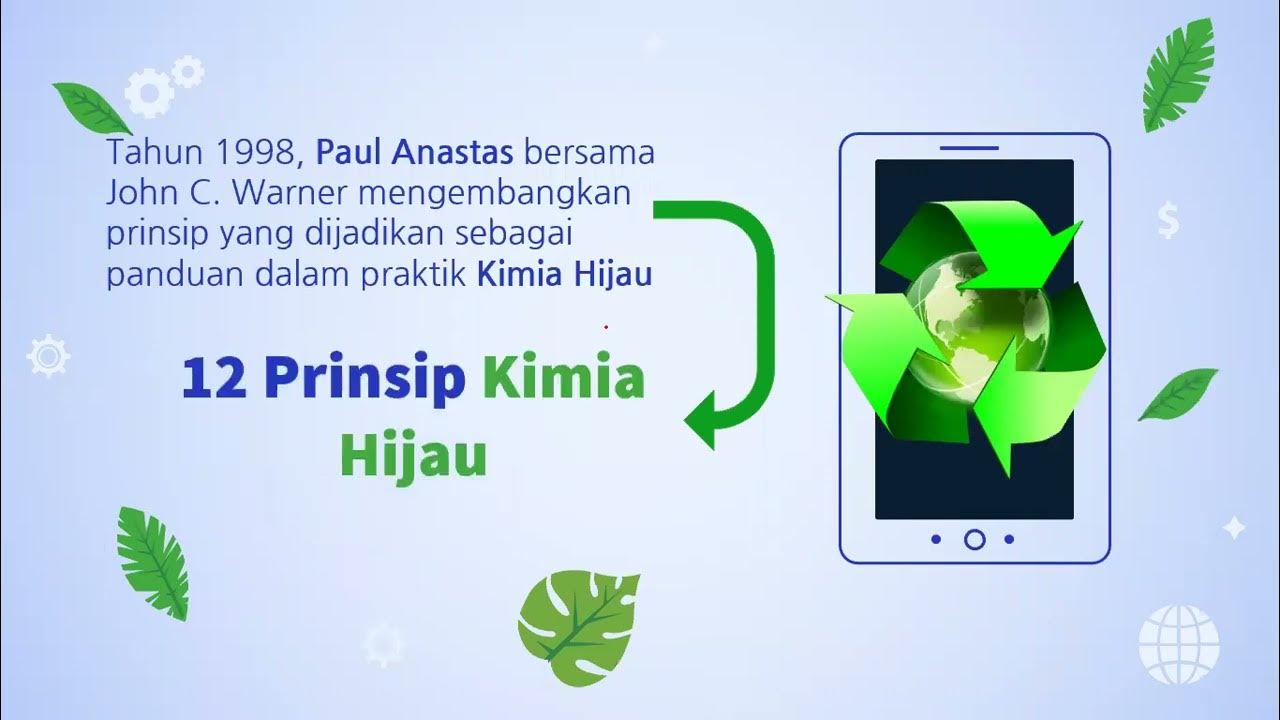
-Paul Anastas and John Warner are the two key figures who developed the guidelines known as the 12 Principles of Green Chemistry to manage chemicals in industrial processes.
What is the first principle of green chemistry?
-The first principle is 'prevention of waste.' This emphasizes designing chemical processes to minimize or prevent waste formation rather than relying on waste cleanup or disposal methods.
What does the second principle of green chemistry focus on?
-The second principle, 'Maximizing atom economy,' focuses on ensuring that all atoms in a chemical reaction contribute to the final product, reducing molecular waste.
How does the third principle of green chemistry guide chemical synthesis?
-The third principle advocates for the design of chemical reactions that are as safe as possible, considering both the chemicals involved and the potential hazards they might produce.
What role does energy efficiency play in green chemistry?
-The sixth principle, 'Design for energy efficiency,' encourages the selection of reactions that require minimal energy, such as avoiding excessive heating or cooling, to enhance process sustainability.
Why is renewable raw material use important in green chemistry?
-The seventh principle promotes using renewable raw materials, as it helps reduce environmental damage and supports sustainability by reducing reliance on finite resources.
How does green chemistry contribute to reducing pollution in daily life?
-Green chemistry can be applied in everyday actions, such as using reusable shopping bags, natural household cleaners like vinegar and baking soda, and herbal soaps, all of which reduce environmental harm.
What are some industrial examples of green chemistry in practice?
-Some examples include the use of natural dyes in batik production, replacing toxic dry cleaning solvents with carbon dioxide, and using biodegradable plastics made from cassava starch.
Outlines

هذا القسم متوفر فقط للمشتركين. يرجى الترقية للوصول إلى هذه الميزة.
قم بالترقية الآنMindmap

هذا القسم متوفر فقط للمشتركين. يرجى الترقية للوصول إلى هذه الميزة.
قم بالترقية الآنKeywords

هذا القسم متوفر فقط للمشتركين. يرجى الترقية للوصول إلى هذه الميزة.
قم بالترقية الآنHighlights

هذا القسم متوفر فقط للمشتركين. يرجى الترقية للوصول إلى هذه الميزة.
قم بالترقية الآنTranscripts

هذا القسم متوفر فقط للمشتركين. يرجى الترقية للوصول إلى هذه الميزة.
قم بالترقية الآنتصفح المزيد من مقاطع الفيديو ذات الصلة

Kimia Hijau/Green Chemistry, penerapan dan contohnya - Kimia kelas 10 Kurikulum Merdeka
KIMIA HIJAU : 12 Prinsip Kimia Hijau dan Penerapannya

Kimia Hijau dalam Pembangunan Berkelanjutan 2030 - Kurikulum Merdeka - Kimia X

Eps 1 : Pentingnya Kimia Hijau

PRINSIP KIMIA HIJAU DAN APLIKASI NYATA DALAM KEHIDUPAN SEHARI-HARI

Animasi 12 Prinsip Green Chemistry 🥽🥼🌲🌿 atau Gerakan Kimia Hijau - Kurikulum Merdeka
5.0 / 5 (0 votes)

