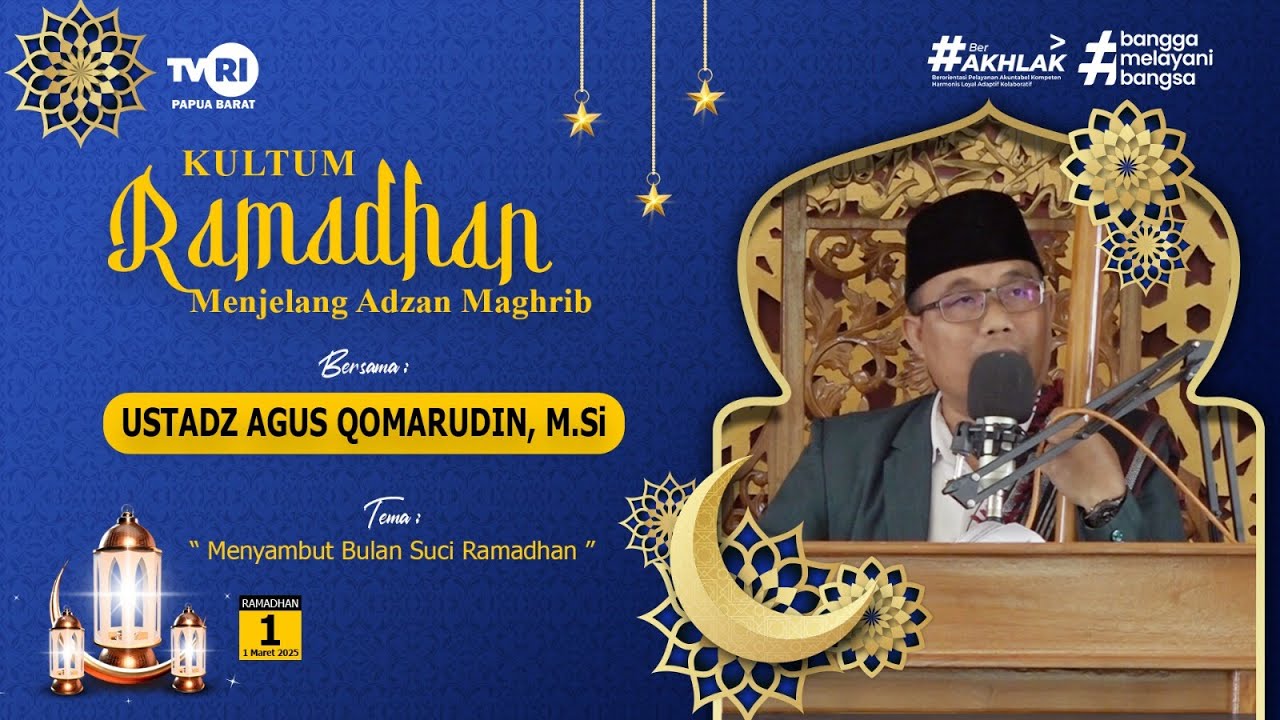
Tausiyah Ramadhan 1447 H | Ustadz Ahmad Ali Shodiq, S.Pd.I
Summary
TLDRIn this heartfelt sermon, the speaker reflects on the blessings of Allah and the significance of the holy month of Ramadan. He emphasizes the perfection of human creation and the responsibility to use our intellect and faith to choose the path of righteousness. Drawing from Surah As-Syams, the speaker urges viewers to strive for taqwa (God-consciousness) through consistent worship and good deeds. He highlights the importance of fasting, prayer, and other acts of devotion during Ramadan as a means to achieve closeness to Allah, ultimately leading to success in the Hereafter.
Takeaways
- 😀 The speaker begins by praising Allah for the opportunity to experience Ramadan and for the blessings of this holy month.
- 😀 Ramadan is a time to strengthen one’s relationship with Allah through devotion, worship, and self-discipline.
- 😀 The Quranic reference from Surah As-Syams (verses 7-10) highlights the dual nature of human potential—towards good (taqwa) or evil (fujur).
- 😀 Humans have been created with perfection, having been endowed with the intellect to distinguish right from wrong.
- 😀 Allah has given humans the ability to choose their path—either the path of righteousness (taqwa) or the path of sin (fujur).
- 😀 Ramadan serves as an opportunity to harness one's potential for good, by actively choosing the path of taqwa.
- 😀 The speaker emphasizes the importance of using one’s intellect and faith to make choices that align with righteousness.
- 😀 Fasting, praying, and performing other acts of worship during Ramadan are seen as ways to develop closer ties with Allah and strengthen one's faith.
- 😀 The speaker prays for perseverance, patience, and consistency in worship throughout the month of Ramadan.
- 😀 The ultimate goal is to be among those who attain taqwa (piety), as this is the best provision for the hereafter.
- 😀 The speaker closes with a prayer for ease in fulfilling the worship duties of Ramadan and a reminder that those who remain steadfast in their devotion will be rewarded.
Q & A
What is the primary message of the speaker in the script?
-The primary message is the importance of utilizing the month of Ramadan for spiritual growth, highlighting the significance of utilizing one's intellect and faith to choose the path of righteousness (taqwa) and avoiding the path of corruption (fujur).
What verse from the Qur'an does the speaker refer to in the script?
-The speaker refers to Surah Ash-Shams, specifically verses 7 to 10, which discuss the creation of humans in the best form, the two paths available to them (righteousness and corruption), and the role of the intellect in making the right choices.
What does the speaker emphasize about the human intellect in the context of Ramadan?
-The speaker emphasizes that Allah has endowed humans with intellect to distinguish between right and wrong. During Ramadan, it is crucial to use this intellect and faith to choose the path of taqwa, leading to spiritual success.
How does the speaker explain the concept of 'taqwa' in the context of Ramadan?
-Taqwa refers to being conscious of Allah and maintaining a strong relationship with Him by avoiding sinful behavior and striving to do good. During Ramadan, the speaker encourages viewers to strengthen their taqwa through fasting, prayer, and other acts of worship.
What role does Ramadan play in the journey towards 'taqwa'?
-Ramadan is seen as an opportunity to strive towards taqwa by engaging in consistent acts of worship such as fasting, prayer, and reflection. It serves as a reminder of the importance of discipline, faith, and self-control, which are essential for spiritual growth.
What are the consequences mentioned for those who do not use their intellect and faith properly?
-Those who fail to use their intellect and faith appropriately are at risk of straying from the path of righteousness (taqwa) and may fall into corruption (fujur), thus distancing themselves from Allah's mercy.
What does the speaker mean by the 'best provision' for the journey to Allah?
-The best provision for the journey to Allah is 'taqwa'. It is the most valuable asset one can carry into the Hereafter, ensuring a successful return to Allah, free from the regrets of not following the righteous path.
Why does the speaker mention the potential difficulty some people may face during Ramadan?
-The speaker acknowledges that not everyone is able to carry out acts of worship during Ramadan, even though they may sincerely believe in Allah. He prays that Allah makes it easy for everyone to perform their religious duties and gain the benefits of the month.
What is the speaker’s hope for the viewers in the month of Ramadan?
-The speaker hopes that viewers will receive the strength, perseverance, and spiritual discipline required to make the most of Ramadan, using it as a means to grow closer to Allah and attain taqwa.
How does the speaker conclude the message to the viewers?
-The speaker concludes with a prayer for success, invoking Allah’s help and seeking His forgiveness. He also extends a peaceful greeting to the viewers, asking for Allah’s mercy on all.
Outlines

هذا القسم متوفر فقط للمشتركين. يرجى الترقية للوصول إلى هذه الميزة.
قم بالترقية الآنMindmap

هذا القسم متوفر فقط للمشتركين. يرجى الترقية للوصول إلى هذه الميزة.
قم بالترقية الآنKeywords

هذا القسم متوفر فقط للمشتركين. يرجى الترقية للوصول إلى هذه الميزة.
قم بالترقية الآنHighlights

هذا القسم متوفر فقط للمشتركين. يرجى الترقية للوصول إلى هذه الميزة.
قم بالترقية الآنTranscripts

هذا القسم متوفر فقط للمشتركين. يرجى الترقية للوصول إلى هذه الميزة.
قم بالترقية الآنتصفح المزيد من مقاطع الفيديو ذات الصلة



5.0 / 5 (0 votes)

