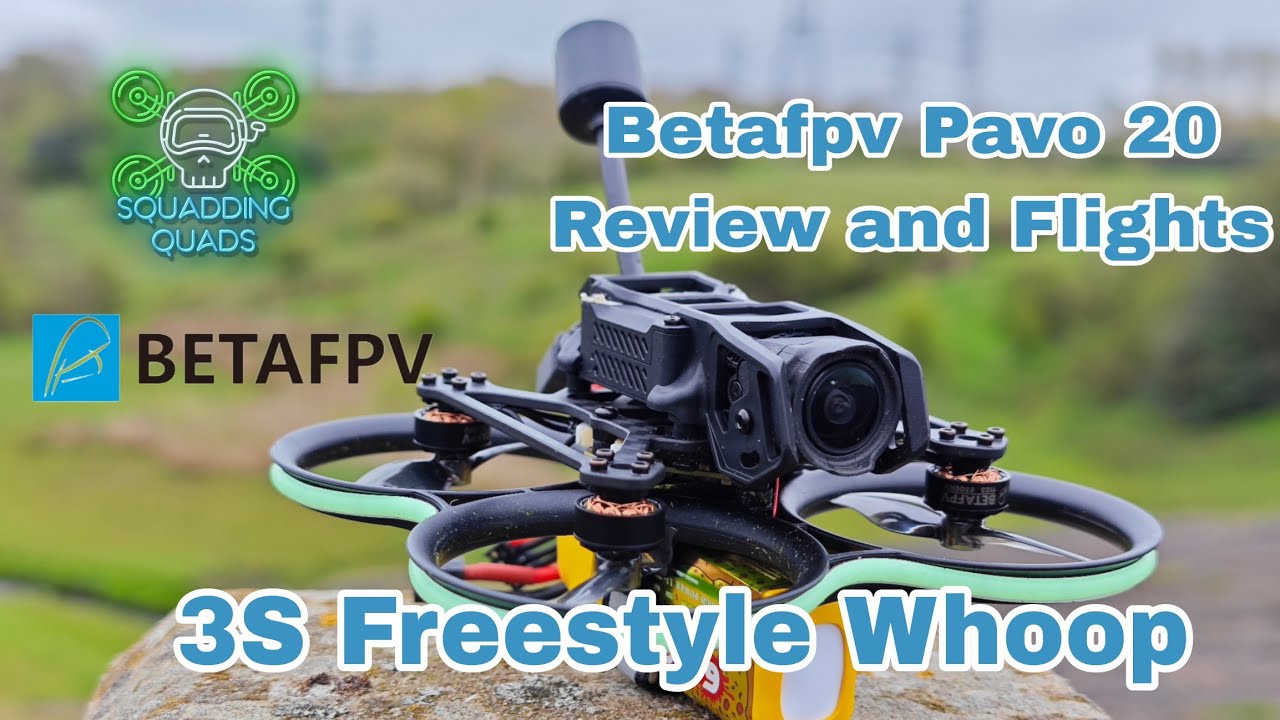
BetaFPV Pavo20 Review 😋
Summary
TLDRIn this video, the presenter explores the Beta FPV Pavo 20, a compact 2-inch drone, comparing it to the larger Pavo 25 and other tiny drones. The review covers flight performance, weight distribution, and usability, highlighting the Pavo 20's light 136g build, stable handling, and good battery life. While it lacks the capacity to carry a GoPro, making it less suitable for some users, its affordability, ease of setup, and suitability for O3 systems make it ideal for beginners and festival or outdoor flying under 250g. The video provides practical insights into the drone's pros, cons, and ideal use cases.
Takeaways
- 😀 The Beta FPV Pavo 20 is a smaller 2-inch drone compared to the Pavo 25, but not the smallest digital option available.
- 😀 It is designed primarily for FPV video capture, not for carrying a GoPro.
- 😀 The drone uses the same video system as the Pavo 25, compatible with O3 setups, though it can work without an O3-compatible goggles.
- 😀 Its weight is very light at 136 g with battery, making it highly maneuverable and easy to handle.
- 😀 The drone features a two-blade propeller setup, providing quieter operation than typical three-blade props.
- 😀 The Pavo 20 shows good flight stability and control due to its optimized weight distribution, with the battery on the bottom and video system on top.
- 😀 Flight speed is moderate, around 50–70 km/h, and it performs well in light wind conditions.
- 😀 Advantages include more power and better wind resistance than smaller tiny Whoop drones, precise flight capability, and suitability for beginners.
- 😀 One of the main drawbacks is that it cannot carry a GoPro, which limits its use for users who prefer GoPro footage.
- 😀 The Pavo 20 is very affordable, around $105 without a video system, and the battery life is good, lasting around 6 minutes per flight in typical use.
- 😀 It is especially suited for outdoor events or festival flying where keeping the drone under 250 g is necessary, and for those flying only with O3 or similar systems.
Q & A
What is the Beta FPV Pavo 20, and how does it compare in size to the Pavo 25?
-The Beta FPV Pavo 20 is a smaller 2-inch FPV drone compared to the Pavo 25, which is slightly larger. It is designed for lightweight digital FPV use rather than carrying a GoPro.
Can the Pavo 20 carry a GoPro for filming?
-No, the Pavo 20 is not designed to carry a GoPro. It is intended for FPV video systems like O3 or Walkera FPV setups.
What is the weight of the Pavo 20 with battery and ready to fly?
-The Pavo 20 weighs 136 grams with the battery installed, which is significantly lighter than the legal 250-gram limit in most regions.
How does the flight performance of the Pavo 20 compare to similar drones?
-The Pavo 20 has better flight performance than the Pavo 25 with a GoPro or a tiny Whoop because of its optimized weight distribution, with the battery on the bottom and video system on top.
What are the advantages of having a 2-blade propeller on the Pavo 20?
-The 2-blade propellers make less noise and are lighter, which improves overall flight efficiency, though typically three-blade props give a smoother sound.
What is the expected top speed of the Pavo 20?
-The Pavo 20 can reach speeds around 50–70 km/h, which is sufficient for most casual flying and small outdoor events.
What makes the Pavo 20 suitable for beginners or casual FPV pilots?
-It is affordable, lightweight, simple to set up, and flies well without complex modifications, making it ideal for beginners or those who want a ready-to-fly FPV drone.
What is the estimated flight time of the Pavo 20 on a single battery?
-In the test flight, the Pavo 20 flew for about 6 minutes with the Walkera 550mAh battery, indicating good battery efficiency for its size.
What are the limitations of the Pavo 20 for FPV enthusiasts?
-It cannot carry a GoPro, limiting it for cinewhoop-style filming. It is primarily suited for pilots flying under 250 grams using small FPV cameras.
In what scenarios would the Pavo 20 be preferred over the Pavo 25 or tiny Whoops?
-The Pavo 20 is ideal for festivals or events where a lightweight drone is needed under 250 grams, for pilots who only fly FPV systems without GoPro, or for beginners looking for an affordable and simple setup.
Does the Pavo 20 include an integrated receiver, and what are the options?
-Yes, the Pavo 20 can come with a built-in ELRS (ExpressLRS) receiver, but the test unit also included a Crossfire receiver for additional compatibility. Using the built-in receiver can make the drone lighter.
What are some notable features of the Pavo 20's design that improve flight stability?
-The Pavo 20 has a well-balanced weight distribution with the battery at the bottom and video components at the top, making it stable and precise even through tight spaces or tree canopies.
Outlines

هذا القسم متوفر فقط للمشتركين. يرجى الترقية للوصول إلى هذه الميزة.
قم بالترقية الآنMindmap

هذا القسم متوفر فقط للمشتركين. يرجى الترقية للوصول إلى هذه الميزة.
قم بالترقية الآنKeywords

هذا القسم متوفر فقط للمشتركين. يرجى الترقية للوصول إلى هذه الميزة.
قم بالترقية الآنHighlights

هذا القسم متوفر فقط للمشتركين. يرجى الترقية للوصول إلى هذه الميزة.
قم بالترقية الآنTranscripts

هذا القسم متوفر فقط للمشتركين. يرجى الترقية للوصول إلى هذه الميزة.
قم بالترقية الآنتصفح المزيد من مقاطع الفيديو ذات الصلة


5.0 / 5 (0 votes)

