Introdução (Aula 01, parte 2)
Summary
TLDRThis video script explores the evolution of economic methods and theories, delving into the contrasting schools of thought in economics, such as classical, neoclassical, and historical approaches. It examines the debates around methodology, the role of state intervention, and the use of deductive reasoning in theory development. The script highlights pivotal texts and ideas from key economists, such as Milton Friedman and the Austrian school, while also addressing the role of rhetoric and mathematical formalism in economic discourse. Additionally, it touches on emerging fields like behavioral economics and its challenge to traditional rationality, offering a deep reflection on the future of economic science.
Takeaways
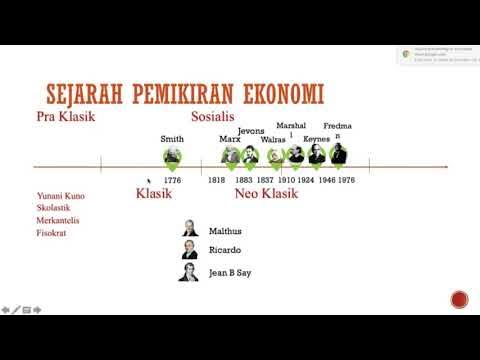
- 📚 The course explores the methodology of economics from classical to neoclassical thinkers, emphasizing historical context and debates over method.
- 🏛️ The 19th-century debate between the German Historical School and English classical economists highlights methodological differences, particularly the use of inductive vs. deductive approaches.
- 👨🏫 Key figures include Jorge Newe and Milton Friedman, who contributed to reconciling historical and classical approaches and discussed the realism of economic assumptions.
- 🔬 The course emphasizes the importance of methodological rigor and critical examination of economic theory, including its ability to guide policy.
- 🗣️ Economic rhetoric is analyzed, focusing on how economists communicate complex ideas to both peers and the general public, balancing technical language and accessibility.
- 📊 Mathematical formalization and instrumentalism are central, highlighting the role of models and quantitative tools in economic analysis.
- 💡 Realism in economic theory is questioned through examples like the 'market for lemons,' illustrating the interplay between theoretical assumptions and real-world applicability.
- 🧠 Behavioral economics and neuroeconomics challenge traditional notions of rationality, integrating emotions, social behavior, and empirical findings from psychology and animal studies.
- ⚖️ The program addresses scientific methodology, including issues like induction, paradigm shifts, and the persistence and proliferation of theories in the field.
- 🎯 Overall, the course aims to stimulate critical thinking and informed discussion, rather than achieving definitive answers, encouraging students to engage with economic ideas thoughtfully.
Q & A
What is the main objective of the next stage of the course described in the transcript?
-The next stage focuses on reading and analyzing texts written by classical and neoclassical economists, particularly those discussing methodological issues in economics.
Why does the instructor emphasize studying historical economic texts?
-The instructor believes that historical texts remain relevant and can shed light on current economic issues, helping students understand how past ideas still influence modern debates.
What was the key methodological disagreement between the classical economists and the German historical school?
-The classical economists relied on a deductive approach, while the German historical school criticized this and advocated for an inductive, historically grounded method that incorporated social and institutional factors.
How did the methodological debate impact students in institutions like Cambridge?
-Students became confused because different professors presented conflicting approaches—some teaching traditional theory while others criticized it and promoted historical, inductive methods.
What was the role of John Neville Keynes in the methodological debate?
-John Neville Keynes attempted to reconcile the differences between the classical and historical schools, arguing that both approaches had valid contributions.
What significant contribution did Lionel Robbins make to economic methodology?
-Lionel Robbins defined economics as the science of scarcity, focusing on how limited resources are allocated to meet human needs, which became a cornerstone of neoclassical economics.
What methodological stance did Milton Friedman defend in his 1953 essay?
-Friedman argued that economic theories can be based on unrealistic assumptions as long as they produce accurate predictions, emphasizing an instrumentalist approach.
What is meant by the 'rhetorical nature of economics' discussed in the course?
-It refers to the idea that economists construct persuasive narratives and use tools like mathematics to present arguments, raising questions about whether economics is purely objective or also influenced by communication strategies.
Why is communication with the general public considered important for economists?
-Because economic ideas often influence public policy, economists must effectively communicate their findings to non-specialists rather than relying solely on technical language understood only by experts.
What is the debate surrounding realism in economic theories?
-The debate concerns whether theories need realistic assumptions or whether logical consistency and predictive power are sufficient, even if assumptions are simplified or unrealistic.
What is the significance of the 'market for lemons' example mentioned in the transcript?
-It illustrates how theoretical models based on plausible assumptions—such as information asymmetry—can provide powerful insights without extensive empirical data.
How does behavioral economics challenge traditional economic assumptions?
-Behavioral economics questions the assumption of fully rational agents by incorporating psychological, emotional, and social factors that influence decision-making.
What role does neuroeconomics play in understanding economic behavior?
-Neuroeconomics studies the neural and emotional processes behind decision-making, highlighting how factors like emotions and physical states affect economic choices.
What are Thomas Kuhn's contributions to the philosophy of science mentioned in the transcript?
-Thomas Kuhn introduced the concept of paradigms and argued that science progresses through paradigm shifts, where existing frameworks are replaced by new ones during periods of scientific revolution.
What are the principles of tenacity and proliferation in scientific research?
-The principle of tenacity suggests that established theories tend to persist even when challenged, while the principle of proliferation encourages the development of new theories to advance scientific understanding.
What is the instructor’s view on the purpose of studying methodology in economics?
-The instructor believes it is not to reach definitive answers but to stimulate critical thinking and improve the quality of intellectual discussion.
How does the course address the future of economics?
-It explores whether mainstream neoclassical economics is evolving and how new approaches like behavioral economics and complexity theory may influence its future direction.
Outlines

此内容仅限付费用户访问。 请升级后访问。
立即升级Mindmap

此内容仅限付费用户访问。 请升级后访问。
立即升级Keywords

此内容仅限付费用户访问。 请升级后访问。
立即升级Highlights

此内容仅限付费用户访问。 请升级后访问。
立即升级Transcripts

此内容仅限付费用户访问。 请升级后访问。
立即升级



5.0 / 5 (0 votes)

