Aula 02 - Estrutura das embarcações
Summary
TLDRThis educational video offers an in-depth lesson on maritime navigation, specifically focusing on the various parts and markings of a boat. It covers key concepts such as relative markings, structural components like longarinas, and the mechanics of boat movements, including pitching and rolling. The video also explores essential navigation tools like the rudder and helm, as well as the specifics of docking, mooring, and anchoring. With practical advice on handling adverse weather conditions and crucial tips for maneuvering a vessel, this lesson equips learners with the foundational knowledge needed for safe navigation and boat handling.
Takeaways
- 😀 The vessel's relative markings are divided into 45-degree increments, with 360 degrees representing the full circle, with key directions such as 'proa' (0°), 'boreste' (45°), 'traves' (90°), 'popa' (180°), and 'bombordo' (270°).
- 😀 The structural parts of a vessel include longarinas (longitudinal beams), cavernas (transverse frames), and valls (structures supporting the hull's covering).
- 😀 Stability concepts such as the movements of pitching (catulo) and rolling (balanço) are important for understanding a vessel's behavior in rough seas. Pitching involves vertical oscillations, while rolling involves lateral oscillations.
- 😀 In case of bad weather, it's important to accelerate when going up waves and decelerate before descending to ensure smooth navigation.
- 😀 Correct weight distribution aboard a vessel is crucial for stability; too much weight at the bow or stern can lead to undesirable effects like 'raba' (excess weight at the stern) or 'avant' (excess weight at the bow).
- 😀 A well-distributed load prevents issues like 'adriça' (balanced weight), and the importance of maintaining the vessel’s center of gravity is highlighted.
- 😀 The 'leme' (rudder) and 'timão' (helm) are key instruments for steering a vessel. The rudder consists of parts like the 'madril', 'cana', and 'porta'. Only the 'porta' (rudder blade) moves, and it's controlled by the 'timão'.
- 😀 In docking and undocking operations, several cables (espias) are used to secure the vessel. Different types include 'lance', 'spring', and 'traves', each with distinct purposes such as preventing the vessel from drifting or controlling its movement.
- 😀 Various types of anchors are mentioned, with the Danforth anchor being most commonly used for recreational vessels due to its design, which is suitable for soft seabeds like mud or sand.
- 😀 When anchoring, the length of the anchor line should be three times the depth of the water for short stays, and five times for overnight or poor weather conditions to ensure the vessel remains firmly anchored.
- 😀 The process of 'fundiamento' (anchoring) involves placing an anchor and securing the vessel. It's critical to ensure the anchor holds fast, especially in areas with harder seabeds, to avoid the anchor dragging.
Q & A
What is the reference for the boat's relative markings?
-The reference for the boat's relative markings starts at 000°, which corresponds to the bow (proa). The measurements go clockwise from 0 to 360 degrees in 45-degree increments.
What are the structural components of a boat mentioned in the transcript?
-The structural components mentioned include longarinas (longitudinal pieces from bow to stern), cavernas (pieces connecting the longarinas to the deck), and valls (structures that receive the decking).
What is the significance of the term 'bordo livre' in relation to a boat?
-Borda livre refers to the distance from the waterline to the deck of the boat. It's also known as the costado, which represents the side structure of the boat.
How is 'calado' defined on a boat?
-Calado refers to the depth of the boat from the waterline to the bottom of the hull, indicating how much of the boat is submerged in the water.
What is the difference between pitching and rolling in terms of boat stability?
-Pitching (catulo) is the vertical oscillation of the boat from bow to stern, while rolling (balanço) is the lateral oscillation from one side to the other (port to starboard).
What does the term 'em embarcação treinada' refer to?
-Em embarcação treinada refers to a boat in perfect condition for navigation, where the weight distribution and equipment are balanced for optimal performance.
What is 'ao quebramento' and how does it affect a boat?
-Ao quebramento occurs when there's excess weight at the bow or stern, causing the boat to curve upwards. It leads to instability and poor handling.
How do the leme (rudder) and timão (helm) function on a boat?
-The leme is the main device for steering the boat, usually made of metal or wood. It works by moving the water, and it is controlled by the timão, which is the wheel or tiller used by the navigator to change the direction of the boat.
What is the role of the 'cabo' (rope) in docking and undocking a boat?
-The 'cabo' (rope) is used in docking (atacação) and undocking (desatracação) to secure the boat to the dock or another vessel. Different types of ropes, such as lanzantes and springs, serve to control the boat's movement.
What does the term 'âncora' (anchor) refer to, and what types are mentioned?
-The âncora is a heavy metal device used to anchor the boat to the seafloor. The Danforth anchor, which is commonly used for sandy or soft bottoms, is highlighted, as it has movable arms and is ideal for smaller vessels like recreational boats.
Outlines

此内容仅限付费用户访问。 请升级后访问。
立即升级Mindmap

此内容仅限付费用户访问。 请升级后访问。
立即升级Keywords

此内容仅限付费用户访问。 请升级后访问。
立即升级Highlights

此内容仅限付费用户访问。 请升级后访问。
立即升级Transcripts

此内容仅限付费用户访问。 请升级后访问。
立即升级浏览更多相关视频

#pelayaran #navigasipelayaran SIMBOL SIMBOL PADA PETA LAUT

Draft Reading (How to read Ship’s Draft) | Marino Guide 002

Video Pembelajaran bahasa Jawa Kelas 7; Carita Ramayana "Kidang Kencana" & Unsur Intrinsik

Alat-alat Navigasi dikapal dan Fungsinya | Kerja Kapal
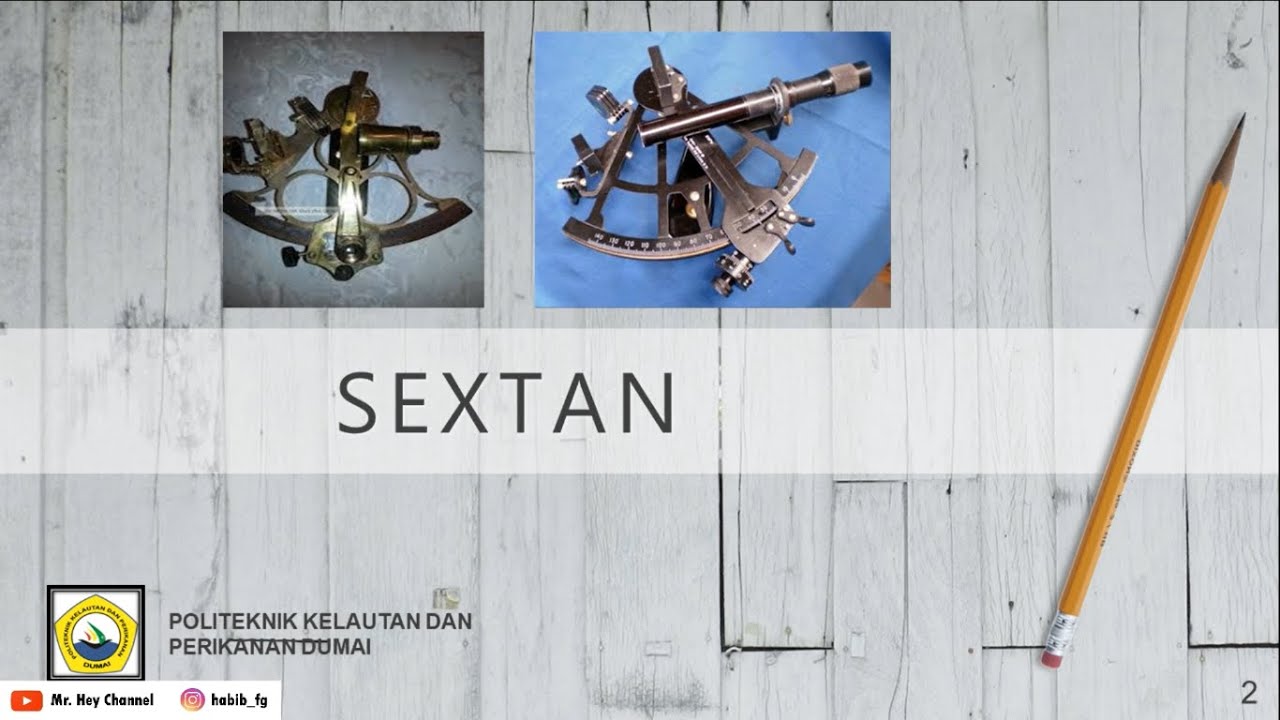
Ilmu Pelayaran Astronomi (Part 1 - SEXTAN)

Angiospermas, Reino Plantae - plantas com flor (mais grão de pólen, tubo polínico, óvulo e sementes)
5.0 / 5 (0 votes)

