Primary v Secondary Headache (with Red Flags) | Tension Type Headache, Migraine & Cluster Headache
Summary
TLDRHeadaches are divided into primary and secondary types. Primary headaches, such as tension-type, migraines, and cluster headaches, are the most common, with tension headaches affecting 60-80% of the population. Secondary headaches result from underlying conditions like tumors or infections. Tension headaches are treated with hydration and over-the-counter painkillers, while chronic cases may require prescribed medications. Migraines can be severe with symptoms like nausea and aura, treated with triptans and prevention strategies. Cluster headaches are excruciating, often triggered by alcohol, and may require oxygen therapy. Red flags for secondary headaches include sudden, severe pain or new onset in older patients, highlighting the need for investigation.
Takeaways
- 😀 Primary headaches include tension-type headaches, migraines, and cluster headaches, with tension headaches being the most common.
- 😀 Tension-type headaches are often described as a band of pressure around the head, and are more common in teenagers and young adults.
- 😀 Migraines are moderate to severe, often unilateral, and may be accompanied by nausea, vomiting, and visual auras.
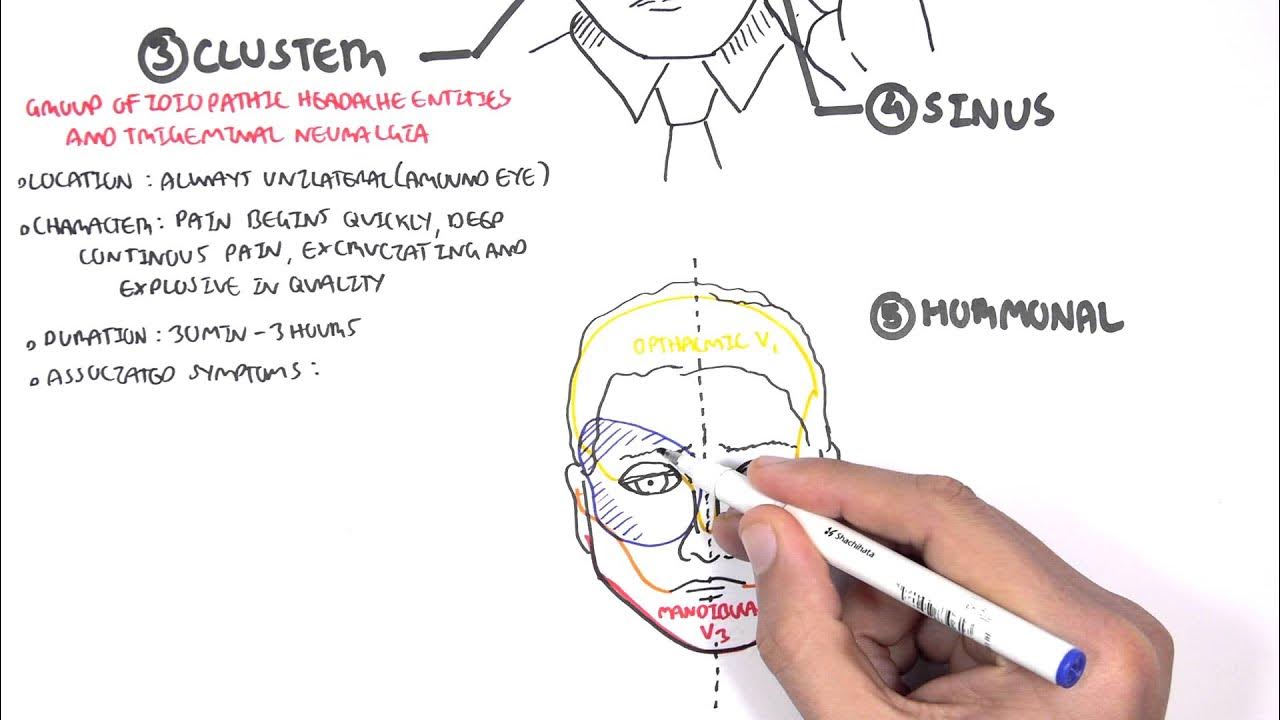
- 😀 Cluster headaches are severe, unilateral headaches that occur around the eye or temple, often triggered by alcohol consumption.
- 😀 Secondary headaches are caused by an underlying condition, such as infections, tumors, or medication overuse.
- 😀 Red flags for secondary headaches include sudden onset thunderclap headaches, new headaches in people over 50, and headaches with nausea, suggesting intracranial hypertension.
- 😀 Migraines may require beta blockers or anticonvulsants for prevention, while acute treatment often involves pain relievers and triptans.
- 😀 Cluster headaches can be treated acutely with oxygen therapy, and prevention may involve medications like verapamil or lithium.
- 😀 Medication overuse headaches occur when pain relief medications are overused for 15+ days per month, often requiring gradual withdrawal or hospital admission.
- 😀 It's essential to differentiate between primary and secondary headaches to avoid missing serious underlying conditions like brain tumors or infections.
Q & A
What is the difference between primary and secondary headaches?
-Primary headaches are disorders where the headache itself is the main issue, such as tension-type headaches, migraines, and cluster headaches. Secondary headaches are caused by an underlying condition, like tumors, infections, or medication overuse.
What are the most common types of primary headaches?
-The most common types of primary headaches are tension-type headaches, migraines, and cluster headaches. Tension-type headaches affect 60-80% of the population, migraines affect around 15%, and cluster headaches affect about 0.1%.
How are tension-type headaches typically described?
-Tension-type headaches are often described as a band of pressure around the head, with aching, dull pain. They are commonly felt bilaterally (on both sides of the head) and may also cause tenderness in the scalp, neck, and shoulders.
What factors increase the risk of tension-type headaches?
-Risk factors for tension-type headaches include anxiety, stress, poor sleep, and they are more common in teenagers and young adults.
What are the treatment options for episodic tension-type headaches?
-Episodic tension-type headaches can be treated with hydration, exercise, and over-the-counter pain relief, such as paracetamol or NSAIDs.
How do chronic tension-type headaches differ in treatment?
-Chronic tension-type headaches may require prescribed medications like tricyclic antidepressants (e.g., amitriptyline) or selective serotonin reuptake inhibitors (SSRIs) like fluoxetine. Benzodiazepines can also be used.
What are the main characteristics of migraines?
-Migraines are moderate to severe headaches, often unilateral, with a throbbing or pulsating nature. They may be accompanied by symptoms like nausea, vomiting, photophobia, and phonophobia. One in three sufferers may experience an aura.
What is a 'thunderclap headache' and what conditions could it indicate?
-A thunderclap headache is an acute, explosive headache often described as the worst headache of the patient's life. It could indicate conditions like subarachnoid hemorrhage, pituitary apoplexy, intracranial hypotension, or arterial dissection.
How are cluster headaches typically treated?
-Cluster headaches are treated acutely with oxygen therapy and tryptans. For prevention, medications like calcium channel blockers (e.g., verapamil), lithium, or topiramate may be used. In some cases, deep brain or occipital nerve stimulation can be effective.
What defines medication overuse headaches and how are they treated?
-Medication overuse headaches occur when a person uses acute headache medications (like NSAIDs or triptans) for 15 or more days per month. Treatment may involve gradually stopping the medication, sometimes with admission for withdrawal, but there is no fixed regime.
Outlines

此内容仅限付费用户访问。 请升级后访问。
立即升级Mindmap

此内容仅限付费用户访问。 请升级后访问。
立即升级Keywords

此内容仅限付费用户访问。 请升级后访问。
立即升级Highlights

此内容仅限付费用户访问。 请升级后访问。
立即升级Transcripts

此内容仅限付费用户访问。 请升级后访问。
立即升级



5.0 / 5 (0 votes)

