Language Teaching Methods: Silent Way
Summary
TLDRGaetano Catania's Silent Way method revolutionizes language learning by prioritizing student responsibility over direct teacher instruction. In this approach, teachers act as guides, using minimal direct speech and focusing on error correction, peer learning, and self-discovery. The method emphasizes building from known to unknown concepts, using visual tools like color-coded charts and floor plans to aid comprehension. Students learn autonomously, correcting their own mistakes and progressing at their own pace. The method encourages long-term retention and fosters critical thinking, as learners develop their own inner standards for language accuracy.
Takeaways
- 😀 The Silent Way teaching method emphasizes that language learning should be faster and more effective by subordinating teaching to learning, with the teacher's role being secondary.
- 😀 In the Silent Way, the teacher bases the lesson on what the students need to learn at that moment, not just what the teacher wants to teach.
- 😀 Students are encouraged to be responsible for their own learning, and the teacher provides minimal help, guiding students through self-discovery and self-correction.
- 😀 The teacher uses a variety of tools (color-coded word charts, floor plans, gestures) to facilitate student engagement and promote active learning.
- 😀 The method focuses on student participation, with the teacher encouraging students to learn from one another and correct their own mistakes.
- 😀 In this lesson, the students practiced using prepositions and furniture-related vocabulary by constructing a floor plan and describing different rooms and objects.
- 😀 The teacher is silent in terms of direct language modeling, instead guiding students to practice and use the language on their own.
- 😀 Error correction is student-driven, allowing learners to correct themselves and internalize language rules, rather than relying on the teacher to provide answers.
- 😀 Feedback from students is an integral part of the learning process, with the teacher observing and adapting the lesson based on what students have understood and learned.
- 😀 The Silent Way fosters a deeper internal understanding of language by focusing on developing students' own inner criteria for correctness, rather than mere repetition.
Q & A
What is the central principle of Gaetano Catania's Silent Way method?
-The central principle of Gaetano Catania's Silent Way method is that teaching should be subordinated to learning. This means that the teacher's actions are based on what the students are learning at the moment, not on what the teacher wants to teach.
How does the Silent Way method differ from traditional teaching approaches?
-The Silent Way method differs from traditional teaching approaches in that the teacher does not model the language directly. Instead, the teacher provides cues and guides students to discover language rules themselves, encouraging self-correction and active participation.
What role does the teacher play in a Silent Way classroom?
-In a Silent Way classroom, the teacher plays a facilitator's role, providing minimal direct instruction. The teacher uses tools like gestures, charts, and student collaboration to guide the learning process, allowing students to take responsibility for their own language production.
Why is self-correction emphasized in the Silent Way method?
-Self-correction is emphasized because it helps students internalize language rules and retain them longer. If students simply receive answers from the teacher, they are less likely to remember the information. Allowing them to find the corrections themselves encourages deeper learning.
What is the purpose of the color-coded word chart in the Silent Way method?
-The color-coded word chart in the Silent Way method helps students visually distinguish different English sounds. Each sound is assigned a specific color, which aids in the learning process by making phonetic differences more visible and memorable.
How do students learn from each other in the Silent Way approach?
-Students learn from each other in the Silent Way approach by listening to the sentences and responses of their peers. Those standing in the back of the room can observe and learn from the actions of students seated at the table, encouraging peer-to-peer learning.
Why does the teacher in the Silent Way method avoid modeling the language directly?
-The teacher avoids modeling the language directly because the focus is on helping students develop their own inner criteria for correctness. By not providing a model, students are encouraged to pay closer attention to their own language use and to learn to self-correct.
What kind of student feedback does the teacher rely on in the Silent Way method?
-The teacher relies on both indirect feedback (observing student responses during lessons) and direct feedback from students about what they have learned. This helps the teacher understand what students have grasped and where further focus is needed.
What does Catania believe about the speed of language learning?
-Catania believed that language learning could occur at a much faster rate than traditionally expected. However, he also noted that teaching often interferes with the natural pace of learning, which is why his approach is more student-centered and less teacher-driven.
What is the significance of the floor plan activity in the Silent Way lesson?
-The floor plan activity is significant because it encourages students to engage with the vocabulary and prepositions related to describing a house. Students take responsibility for constructing the floor plan and practicing relevant language structures, which reinforces their understanding of the vocabulary in a practical context.
Outlines

此内容仅限付费用户访问。 请升级后访问。
立即升级Mindmap

此内容仅限付费用户访问。 请升级后访问。
立即升级Keywords

此内容仅限付费用户访问。 请升级后访问。
立即升级Highlights

此内容仅限付费用户访问。 请升级后访问。
立即升级Transcripts

此内容仅限付费用户访问。 请升级后访问。
立即升级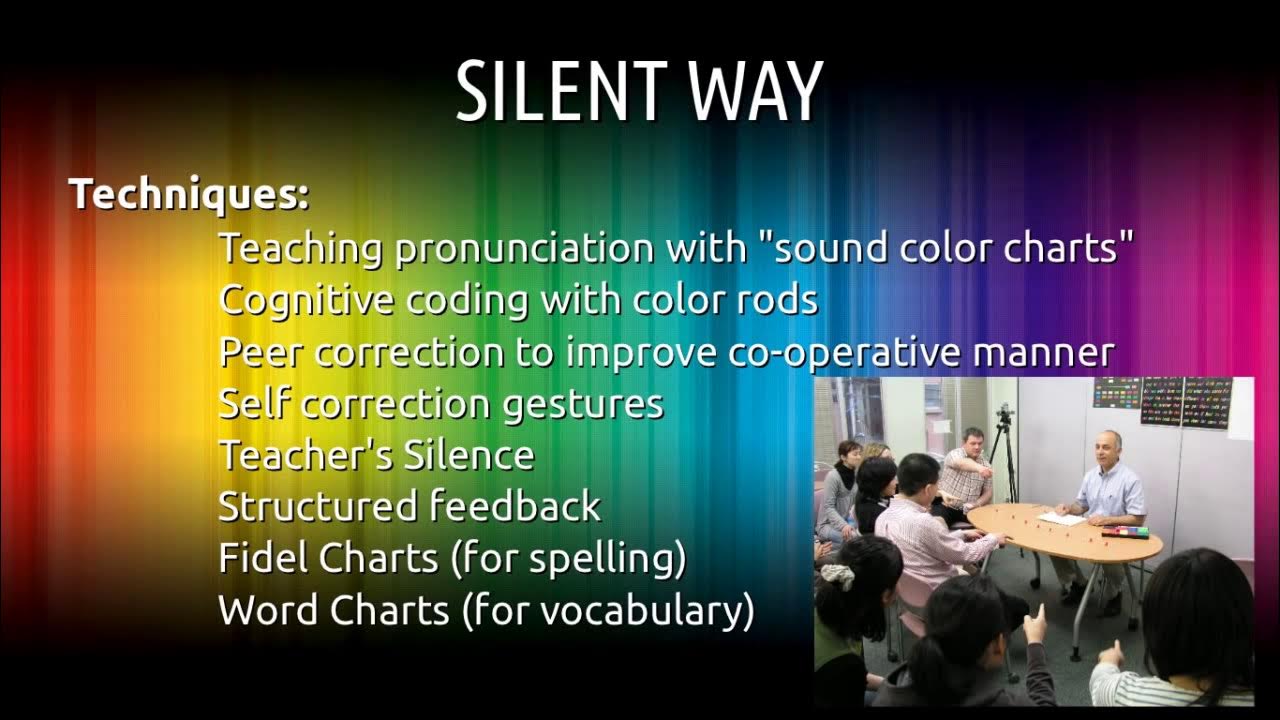


5.0 / 5 (0 votes)

